On Being (Totally) Honest with Our Congregants

I just started reading Bishop John Shelby Spong’s Jesus for the Non-Religious, and this quote from the first chapter really struck me:

Critical Biblical scholarship, having now passed through several generations, forms the frame of reference in which the Christian academy works, dramatically separating the Bible from the assumptions held by the average pew-sitters in our various churches. Yet clergy, trained for the most part in the academy, seem to join a conspiracy of silence to suppress this knowledge, fearful that if that average pew-sitter learned the content of the real debate, his or her faith would be destroyed- and with it, more importantly, his or her support for institutional Christianity.
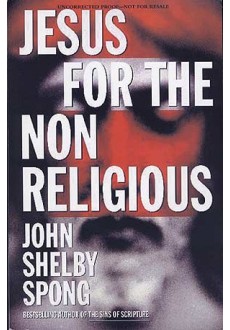
jesus for the nonreligiousBishop Spong really gets a one of the things that drives me towards ministry and Biblical scholarship. It drives me absolutely crazy that ministers go to seminary, and spend years getting MDivs and Doctorates and learning so much great theology and scholarship, and then when they get placed with a congregation, they bring almost none of it with them.

This has always been something that bugged me since I get back into church six years ago. As I studied and learned on my own, I always wondered why pastors never seemed to bring challenging, scholarly stuff in, stuff I knew they had learned and believed and trusted.

I resolved, when I felt a calling in my own life, that I would never fail to share what I learned in seminary with the congregants I serve. Even if it was uncomfortable and challenging and hard, even if it meant a church and I needed to part ways, I never want to sugarcoat or lie hold things back or lie. I never want to compromise my own belief and theology and faith for the sake of not making waves. If I believe that stuff I learn to be true, then I have an obligation to share it and stand up for it.

And it’s not just a hard-nosed or stubborn opinion of mine. I have too much respect for and trust in my future congregants, in their honesty and intelligence and good will, that I don’t want to lie to them, or take it easy on them. I want to challenge them, to make them think and disagree and debate, because that’s what I want, and that’s what people deserve. They deserve the truth, and they deserve to contemplate and accept or reject new ideas on their own, instead of at my discretion. They deserve a religious leader who will engage honestly and intellectually with them, no matter what.

That’s something I admire about Bishop Spong. And that’s why I really couldn’t agree more with his point here.

Everybody is At Fault in Oregon

oregon-standoffThe “standoff” happening in Oregon right brings out the worst in my mood. There are few things that grind my gears more than grown men running around in the woods somewhere playing militia with their guns.

Me and my friend did that.

When I was 8.

Then I turned 9.

John Pavlovitz really articulated this really, really well:

This is grown men angry playing dress-up.
This is weekend warrior fantasizing, using live ammo.
It’s a Wild West daydream come to life in a way that only white men could get away with.
It is petulance and tough guy bullying wrapped in nationalism and covered with the flag.

All of the threats and the taunts to the President and the “cold dead hand” posturing of these men reveal the truth. What we have here is little more than a bunch of dudes doing Civil War reenactments on Saturday afternoons, only the war they’re commemorating is the one they’re trying to create. It’s a future hero story they’re dying to write for themselves, and so they stand in the town square now with their hands at their sides amid bouncing tumbleweeds and swinging saloon doors, hoping for a chance to draw their weapons, take out the bad guys, and ride off both virtuous and victorious.

If these gentlemen were truly interested in confronting the Government and in speaking truth to Power and in defending innocent, marginalized people against unmerited violence, they would have already assembled months ago in Ferguson or Baltimore or Cleveland to say that black lives really do matter—but that is not the agenda here.

This is basically how I feel about those guys. Grow up. Get a life. Stop with the little boy persecution complex.

But, I want to make a distinct point: The problem I have with these guys is their tactics, not their motivations.

And I think any progressive who has taken a stand against mandatory minimums, the failures of our criminal justice system, and the overreach of authority should as well.

The back story in Oregon is basically this: two ranchers, Dwight Hammond and his son Steven, were convicted in 2001 of arson, after a controlled burn on their land spread to federally-protected land. There was a dispute between the Hammonds and the Department of Justice over why they set the fire, but in the end, Dwight and Steven were convicted to three months and one year, respectively, in federal custody. They both served their time and were released.

However, the law they were convicted under required a five-year mandatory minimum. The original judge in the case wrote that the minimum required was “grossly disproportionate” and would “shock his conscience” to apply. The DOJ, though, appealed on the grounds that the minimum needed to be applied, and the 9th Circuit District Court ruled in the government’s favor. Dwight and Steven Hammond were ordered to turn themselves in and serve their five year sentences for a fire fifteen years ago that did less than $1000 damage to federal land.

This is an injustice.

The Hammonds in no way need to serve five years in a federal prison. Hell, the small sentences they received were probably excessive enough. This is the ostensible reason the Oregon militia has seized the federal facility.

I know, their complaints have also expanded to encompass generalized claims about government overreach, and the illegitimacy of the federal government in general. This is largely due to the involvement of Ammon Bundy, son of Nevada freeloader Cliven Bundy, who has taken up the Hammonds’ cause to advance his own agenda. That is not the issue I am agreeing with. The Hammonds’ complaint, however, is legitimate.

Progressives all agree that mandatory minimums are ridiculous, and fail to advance true justice in our country. This is exactly what we mean by that. We need to see past the ridiculous militiamen and the standoff narrative to recognize that their is grounds for constructive alliances here, to address something that overwhelmingly affects the oppressed and marginalized in this country, but in this case, has struck the privileged.

Labeling the men in Oregon “terrorists” and calling for the government to go in guns blazing, to treat them like ISIS, is to abandon all we have worked for in criminal justice reform. The point is to reign in the ability of the police and the government that empowers them from doing things like going in guns blazing against American citizens. It’s to bring about real justice and peaceful resolution of conflict in situations all across the country.

This is a perfect opportunity for the progressive community to make real progress on an issue near and dear to us. Let’s not let the ridiculous and irrational militia boys, and their outrageous rhetoric, get in the way of that opportunity.

Blogging the NT: Ephesians 4-6

bloggingthentOne of the great themes of the Pauline and pseudo-Pauline corpus is the idea of Christian unity arising from the diversity of the people. We see it in this reading, in chapter 4. The author writes,

I therefore, the prisoner in the Lord, beg you to lead a life worthy of the calling to which you have been called, 2 with all humility and gentleness, with patience, bearing with one another in love, 3 making every effort to maintain the unity of the Spirit in the bond of peace. 4 There is one body and one Spirit, just as you were called to the one hope of your calling, 5 one Lord, one faith, one baptism, 6 one God and Father of all, who is above all and through all and in all.7 But each of us was given grace according to the measure of Christ’s gift. 8 Therefore it is said,

“When he ascended on high he made captivity itself a captive;
he gave gifts to his people.”
9 (When it says, “He ascended,” what does it mean but that he had also descended[a] into the lower parts of the earth? 10 He who descended is the same one who ascended far above all the heavens, so that he might fill all things.) 11 The gifts he gave were that some would be apostles, some prophets, some evangelists, some pastors and teachers, 12 to equip the saints for the work of ministry, for building up the body of Christ, 13 until all of us come to the unity of the faith and of the knowledge of the Son of God, to maturity, to the measure of the full stature of Christ. 14 We must no longer be children, tossed to and fro and blown about by every wind of doctrine, by people’s trickery, by their craftiness in deceitful scheming. 15 But speaking the truth in love, we must grow up in every way into him who is the head, into Christ, 16 from whom the whole body, joined and knit together by every ligament with which it is equipped, as each part is working properly, promotes the body’s growth in building itself up in love.

One of the great challenges of modern progressive Christianity is walking the fine line of diversity and unity. Richard Beck, on his great Experimental Theology blog that I keep plugging, wrote this on Monday:

To take one example, as Westerners progressive (and conservative) Christians privilege individualism over collectivism. And as any church leader will tell you, this individualism makes it very difficult for Western Christians to live as the church. Trying to do church with Western Christians is like herding cats.

And to sharpen the point, I think progressive Christians are particularly and especially bad at doing church. According to the research of Jonathan Haidt conservatives tend to value in-group solidarity more than their progressive counterparts.

We progressives greatly value and trumpet the Protestant ethic of the individual. The power and ability of each person to shape their lives and experience God in their way is something we hold near and dear. And we should. This is one of the things that makes us great, that makes progressive Christianity so vibrant and intellectually alive.

But it can also be our undoing. In the drive for our churches to take action, to be a social presence, each member takes the position that their primary interest is the most important one, and thus the one the church should be focusing on. This leads to inaction, when we can’t get together and compromise on what we should be focusing our energies on.

Paul in his letters constantly stressed the importance of building a unified church by valuing and desiring the individuals who make it up. We progressives need to find a way to practice personal humility, and remember that we are stronger together, working towards a common goal, than we are each forming a committee of one to stroke our pet issue. We have see the importance of what the corporate whole decides to focus on, and use our various talents and energies in the furtherance of that collective goal.

Next: Colossian 1-2

For an explanation on this series, click here.