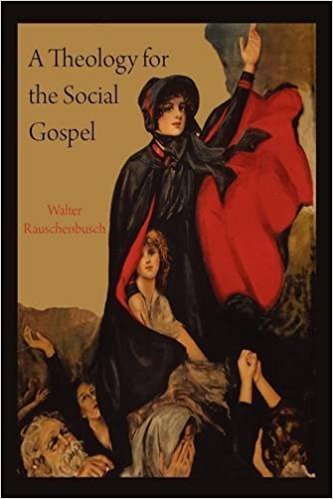
“Theology Needs Periodical Rejuvenation”

Theology needs periodical rejuvenation. Its greatest danger is not mutilation but senility. It is strong and vital when it expresses in large reasoning what youthful religion feels and thinks. When people have to be indoctrinated laboriously in order to understand theology at all, it become a dead burden. The dogmas and theological ideas of the early Church were those ideas which at the time were needed to hold the Church together, to rally its forces, and to give it victorious energy against antagonistic powers. Today many of those ideas are without present significance. Our reverence for them is a kind of ancestor worship. To hold laboriously to a religious belief which does not hold us, is an attenuated form of asceticism; we chastise and starve our intellect to sanctify it by holy beliefs. The social gospel does not need the aid of church authority to get hold of our hearts. It gets hold in spite of such authority when necessary. It will do for us what the Nicene theology did in the fourth century, and the Reformation theology in the sixteenth. Without it theology will inevitably become more and more a reminiscence.

The great religious thinkers who created theology were always leaders who were shaping ideas to meet actual situations. The new theology of Paul was a product of fresh religious experience and of practical necessities. His idea of the Jewish law had been abrogated by Christ’s death was worked out in order to set his mission to the Gentiles free from the crippling grip of the past and to make an international religion of Christianity. Luther worked out the doctrine of “justification by faith” because he had found by experience that it gave him a surer and happier way to God than the effort to win merit by his own works. But that doctrine became the foundation of a new theology for whole nations because it proved to be the battle-cry of a great social and religious upheaval and the effective means of breaking down the semi-political power of the clergy, of shutting up monasteries, of secularizing church property, and of increasing the economic and political power of city councils and princes. There is nothing else in sight today which has the power to rejuvenate theology except the consciousness of vast sins and sufferings, and the longing for righteousness and a new life, which are expressed in the social gospel.”

-Walter Rauschenbusch, A Theology for the Social Gospel, pg. 13-14

The Heresy of Make America Great Again

By now, I’m sure you’ve seen coverage or video of First Baptist Dallas’ “Make America Great Again” hymn and all-around freedom fest on Fourth of July Weekend in Washington DC. If you haven’t, and you think you can stomach it, here it is:

I’ll give you a minute to go vomit, if you need to.

The “Make America Great Again” song – and really, the whole MAGA concept – is about as anti-Christian as one can get. The fact that a major church in America can really build an entire brand around MAGA just shows the theological bankruptcy of much of American Christianity. Most Christians, it seems, regard no more than a few verses of the Bible – those having to do with “gnashing of teeth” and Jesus being the only choice and those allegedly about sexual orientation – and discard the rest, especially those places about justice and compassion and mercy and caring for the least, the lost, and the alien.

The Way exemplified by Jesus, as we read it in the Gospels, is anti-empire. Jesus consistently stood against the coercive use of power – economic, political, military – in pursuit of human achievement. Jesus understood that so often power is used by one tribe or group against another, and that as a result, people suffered.

Instead of wielding power and promoting an “us-against-them” ideology, Jesus showed that abundant life comes through love of neighbor, through spreading a big tent over all humanity, and welcoming everyone in, especially those on the margins of society. Jesus stood against empire, showing its moral bankruptcy through his use of the power of love for its own sake.

MAGA and Trump are empire at its worst. Trump’s governing ethos has been the coercion of power in the pursuit of money and influence for a small group of people over and against every one else – against foreigners and immigrants and black people and LGBT people and Muslims and liberals and poor people. Trump cares only about himself, and his most ardent followers care only about themselves. They live in an economy of scarcity, in which the stuff of life is rare and must be hoarded and kept away from the undeserving and the sinners. A Christianity that sides with MAGA is nothing but pure heresy, a disgusting perversion of the words and deeds of Christ.

Jesus’ Way is the Way of Abundance: abundance of love and compassion and mercy and life, for all people. Jesus stood with the least against the powers because he knew abundance was the reality of God’s kingdom, and the only way to show it was to raise of the weak and show that their elevation didn’t mean a reduction of others. “A rising tide lifts all boats,” indeed.

Christianity isn’t about nationalism and America First and conquering others and victory. Christianity doesn’t take sides, and certainly doesn’t identify with America. Christianity is about universal love, and radical hospitality, and weakness conquering all, and about relinquishing power. Christianity is where losers are admired, and winners pitied in their emptiness. Christianity is about always – ALWAYS – critiquing and standing against those wielding power, even when they are “our guy” or are on our team.

The very best of early Christianity understood that Christianity’s equation with and coercion by empire was a tragedy, not a triumph. They realized that critiquing empire meant critiquing even those leaders who were themselves “Christians”, those leaders who had once stood with them. In the modern context, this means radically critiquing even the leaders were help put in place. Because the Way of Jesus never identifies itself with power; it always, stands with those who are powerless.

Making America great again isn’t what is needed. What is needed is “Making the Kingdom come on earth, as in heaven.” And that only comes from each and every one of us operating with an attitude of abundance towards each and every other human being, from putting the needs and well being of others first and above our own, of practicing the radical and overflowing love of God towards others. Only then will things be great.

America First, God Second?

Last Friday, I wrote a post about the book of Jonah, asserting that America plays the role of Nineveh in that story, not the role of Jonah (as we like to tell ourselves.) Today, I want to follow that up with a little theological grounding for that idea.

I’m doing this because I can hear folks asking, how can I equate us with Assyria and people from places like Iran or Syria with Jonah, when those people aren’t Christians, or even Jewish? Why would God side with Muslims over us, even if, as a nation, we haven’t always acted very Christian in our foreign relations?

The answer is found in thinking about the relation of humanity to God, and specifically, the fundamental orientation of that relationship. In the telling where America plays the good guy role here, the assumption is made of a Divine-Human relationship where we get to set the terms. From us emanates truth, and all else swirls around us and is described in relation to us. America is good, not on God’s terms, but on our own terms. In this telling, the great fundamentalist fear comes to fruition: truth is made relative, in this case, to the needs of American imperialistic aims. The way of God is made unimportant; instead, the way of America is the guiding lodestar. America First becomes not just a quasi-racist catchphrase, but a theological assertion of primacy.

But this gets the human-Divine relationship backwards. When speaking of God – the Divine, the Ground of All Being, Ultimate Truth – one exists in relation to God, is defined by one’s relationship to the Divine. Paul Tillich writes of the “subject-object distinction,” asserting that God can never be an object in an object-subject relation, but is always the subject.

This argument can be problematic at times, especially when the subjective God is conceived of by human beings as a capricious, angry and self-obsessed God. This subject God, around whom all else orbits, becomes “Anti-humanistic,” a God with little if any concern for humanity, but instead completely caught up in God’s own whims and desires. Humanity’s actions and existence become by-products of God, rather than objects. The subject-object relation breaks down in this case.

God as subject works, though, when we understand God as concerned with humanity, and especially, as Jesus posited, with the “least of these.” This is one of the primary and most important contributions of liberation theology to the conception of God: a God concerned primarily with the oppressed, who stands on the side of those not in positions of power.

That’s what powers my assertion that America is playing the role of Nineveh, and persons in places like Iran or Iraq or Afghanistan are playing the role of Jonah. Because God takes the side of the oppressed. And in the case of American imperialism in the Middle East, the oppressed are the people in those places who are being bombed and terrorized and killed. God sides with them, no matter their religion, no matter their creed, and no matter their nationality. In cases where unjust power in being brought to bear, God could really care less about any temporal identifiers. God cares about the flourishing of human life, in its many varied forms. God takes the side of the indigent peasant farmer before he takes the side of well-fed suburbanites in conflict between the two.

Too often, America plays  the role of oppressor to peoples in the global south and east, especially poor people of color. We do it for well-reasoned “good” ideas, like democracy or liberty. But always, these are justifications that benefit not in solidarity with others, but at the expense of them. This is where I get my grounding the say: in Jonah, we are Nineveh. I have very little doubt about that.