Tolerance, Conflict and Truth

I think about the concept of tolerance a lot. Tolerance is a live issue in American politics. The battle to incorporate more people into the American civic community is often framed in terms of tolerance; those fighting for greater inclusion often use the idea as a marker of what is the base minimum required to widen the circle. Tolerance doesn’t require acceptance, it doesn’t require approval, it doesn’t require friendship; thus, tolerance is often the most politically palatable way for some to come to terms with a more inclusive, more open society.

I think tolerance is a really useful concept for liberal democracy. You are simply never going to get everyone to embrace everyone else. There will always be conflict between various groups of people. However, I don’t think tolerance is very good for the Church. I don’t think Christians are called to mere “tolerance” of the other, nor are we called to tolerance of every worldview and individual choice. Tolerance is a double-edged sword, one that can tear through the fabric of the moral community that the church is called to be.
This is important because a lot of liberal churches today use the word “tolerance” quite freely in their attempt to gain more members and showcase their own openness and acceptance. While I think acceptance and openness are important traits for a church, I think those things can be had without the false allure of tolerance.

I want to take some space here to think through tolerance, and how it has defanged the moral witness of the church in a world where the church is sorely needed today. As I mentioned in a recent post, I have recently done a comprehensive read-through of most of the works of theologian Stanley Hauerwas, and so I want to explore tolerance through the frame of a passage from his book Performing the Faith. Here is the passage in full:

Christians came to America having fought hard to renounce confessional struggles. Subsequent generations born free of the battles for which their forebears fought no longer think it necessary to fight about anything. The struggle over the creed which occasioned the flight of their fathers and mothers becomes – for their sons and daughters – something that is itself unchristen. “Thus for American Christianity the concept of tolerance becomes the basic principle of everything Christian. Any intolerance is in itself unchristian.” Because Christians in America have no place for the conflict truthfulness requires, they contribute to the secularization of society; a society, moreover, which finds itself unable to subject politics to truth and the conflict truthfulness requires. Tolerance becomes indifference and indifference leads to cynicism.

Stanley Hauerwas, Performing the Faith: Bonhoeffer and the Practice of Nonviolence, page 59.

This paragraph does a really good job of summing up the trajectory of tolerance in American religion well. It starts where the Christian experience in America started: the flight from the wars of religion that wracked Europe for half a millennia. Groups like the Puritans, looking to escape the persecutions and wars of the Protestants and Catholics, found a place to put down roots free from the debates about creeds and sacraments and hierarchies. Eventually, this new home evolved into a place almost complete religious freedom – the ability to define for one’s self what is worth believing, what is worth fighting and even dying for.

But, as Hauerwas notes here, that freedom from religious conflict- freedom from the communal conversations about what a people are going to call true – congealed into a worldview where strongly-held metaphysical convictions are shunned, or at least held as much less important than materialist ones. One can have beliefs about God and truth and goodness, but in America, it came to be understood that those beliefs would by and large not have much consequence for the body politic.

This attitude seeped so much into American Christianity that to become exercised over your religious beliefs became something that was viewed as antithetical to what it means to be a religious person. Certainly, people still held to strong religious views, and often those views have had influences on the American way of life – one only has to look at the influence of Christian thinking on slavery and abolitionism. But those beliefs were never allowed to question or critique core American precepts, at least not if one wanted to be taken seriously as a member of the American project. Religious freedom became less about allowing people to believe what they want to, and more about ensuring no particular claim to truth could challenge the assumptions of the liberal nation-state.

And so the advent of tolerance, replacing the quest for truth in religious life. Truth claims inevitably led to the kind of religious intolerance and conflict that was so feared in continental Europe. To say that this or that belief is the Truth is to inevitably to say that other, conflicting beliefs are false. In the conversation of religious beliefs, this becomes an intolerable charge, one that must be defended against. Thus, in order to maintain peace between these factions competing for supremacy when there is no empirical way to assess those truth claims, tolerance becomes necessary. I will tolerate your claim to truth, and you will tolerate mine, and as long as we don’t try to domineer one another, we can peacefully coexist.

And this is mostly ok! I don’t want to be misunderstood here; tolerance has an important role to play in a pluralistic democracy. We should strive to tolerate those we just cannot bring ourselves to fully accept or agree with. In fact, one of the major problems roiling our society right now is the inability to tolerate difference. This comes from both the right and the left; toleration of those who look, act, think, believe, or love differently is under attack, and as a result, some of our basic rights are under attack as a well. As a political people, we should be pushing back against intolerance in all its forms, and understand that liberal democracy, free speech, and religious pluralism requires us to live and let live, even those we abhor, and even those who may hate us. The ability to live with that tension is the sign of a healthy polis.

All those qualifications in place, I want to come back to my primary point: toleration may be good enough for liberalism, but it isn’t good enough for Christians, even Christians living in and having a prominent place in a liberal democracy. Christians must walk a fine line between practicing tolerance politically, and demanding more than that of our selves and our communities. The problem with tolerance in a space like the Church is that tolerance eliminates claims to the True, the Good, and the Beautiful. And those are values the Church cannot afford to give up.

This isn’t a call to theological domineering. That is an ever present danger for the church, one that has caused a lot of damage throughout the years. And even in individual churches, that kind of domineering can quickly harden into cults of personality or exclusionary practices. The Christian way is one that always rejects putting ourselves over anyone else, even those who we feel are wrong and misguided. We cannot force the faith on anyone, nor should we want to. At the heart of Christian thought is the abhorrence of any form of coercion; just God is non-coercive, so should we be.

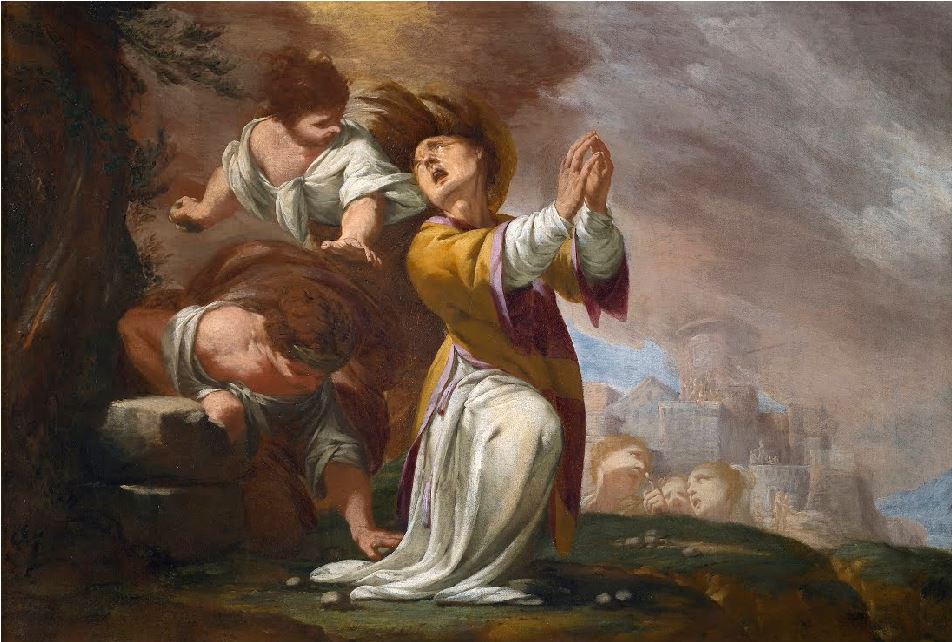
Here is what we are called to: a firm stand in favor the True, the Good, and the Beautiful, in favor of the Love that is God. And this kind of love can never be domineering or coercive, because it a love that is eternally giving and serving, and love centered on meekness, peaceableness, and kenosis – a radical emptying of self in favor of the Other. Tolerance, almost paradoxically, works against this kind of love, because tolerance in its purest form, doesn’t ask anything of us, or of anyone else. But we must ask something: we must ask ourselves if we are willing to stand so firmly on the side of love, on the side of the poor and the needy, if we are willing to stand in favor of what we know be True, to the point of enduring death. Tolerance tells us we don’t need to die for anything, because nothing is ultimately so important that it is worth dying for. But, as Christians, we know better, because we know our Savior died for us, and if we were worth dying for, imagine how much more the Good and the Beautiful are worth dying for. We are intolerant to to a world that refuses to ask of us more than we should be rationally willing to give, and we cannot be both intolerant and tolerant. But our intolerance is never directed at other people, even those who are the most abhorrent foes of what we know to be true. Our intolerance is always directed against the structures – the Powers and Principalities – that would call us to be so tolerant that we eschew all conflict and embrace, forever, pure ease and comfort. Are we really created for so little as tolerance?

don’t be significant or effective

Some of my critics were happy to say that my refusal to use a computer would not do any good. I have argued, and am convinced, that it will at least do me some good, and that it may involve me in the preservation of some cultural goods. But what they meant was real, practical, public good. They meant that the materials and energy I save by not buying a computer will not be “significant.” They meant that no individual’s restraint in the use of technology or energy will be “significant.” That is true

But each one of us, by “insignificant” individual abuse of the world, contributes to a general abuse that is devastating. And if I were one of thousands or millions of people who could afford a piece of equipment, even one for which they had a conceivable “need,” and yet did not buy it, that would be “significant.” Why, then, should I hesitate for even one moment to be one, even the first one, of that “significant” number? Thoreau gave the definitive reply to the folly of “significant numbers” a long time ago: Why should anybody wait to do what is right until everybody does it? It is not “significant” to love your own children or to eat your own dinner, either. But normal humans will not wait to love or eat until it is mandated by an act of Congress.

Wendell Berry, “Feminism, the Body, and the Machine” in What Are People For?

One of my favorite lines of thought within good Christian theology is a critique of the desire for efficiency and significance in modern culture. I based the entire first series of my essay project at The Radical Ordinary on this critique. For Wendell Berry, it is an on-going critique as well, and he states it so well in this essay. The world conforms itself to the demands of economics, of numbers and dollars and cents: everything must be efficient, streamlines, frictionless.

But, as Berry reminds us here, love is not efficient. Love is not significant, at least not in the way the world would view significance. It does not contort itself meet the needs the invisible hand of the market, but instead, moves things out of its reach. As Christians, and as the Church, questions of efficiency must always be pretty far down the list of priorities in making decisions about the use of our time, resources, and love. Other things must come first.

In the newest issue of Plough Quarterly, there is a story about the Palazzo Migliori, a mansion just off Saint Peter’s Square in the Vatican, that Pope Francis had turned into a home for people with no where else to go. The story contemplates the divine wastefulness of turning such a beautiful and historic building into a shelter for just a few people. In this section of the piece, I am reminded of these conversations I keep having here about effectiveness, and the words of Stanley Hauerwas and Wendell Berry:

Pope Francis dining at the Palazzo Migliori

This place gives Anna a story that bends toward peace and rests there. Something about its over-the-top-ness: the carefully painted crests on the ceiling, the terrace overlooking Saint Peter’s Square, the unnecessarily good food. The visitors who know your name and your favorites and your good and bad habits, who know you need to put that cream on your foot and will banter with you until you do it. Above all it is knowing: that this place could have been a posh hotel; that some might call its current incarnation a waste; that you are not being given the bare minimum.

When we love someone, we are not thinking of how to do so efficiently; we are thinking how to do it well. Think of new parents preparing a beautiful nursery: they may buy things the child never uses, and perhaps some of that money and effort might be better used elsewhere. But we are not surprised when loving parents put more thought and work into preparing a place than is strictly necessary.

There are certain things that we know make a good place for anyone – shelter from the cold, a quiet place to sleep, a warm stew, a clean place to wash up, art, song, softness – and we can prepare these things even before we meet the recipients. Once we meet, there begins the work of making it a good place for them in particular – for Astriche, who loves chamomile; for Lioso, who is so much more tired than hungry and just wants to sleep; for Ajim and his appetite; for Anna the teller of tales.

https://www.plough.com/en/topics/justice/social-justice/princess-of-the-vatican

The mindless drive for efficiency and significance is a depersonalizing drive. Love is not depersonalized. It requires intimacy, connection, and a knowing of the other we are called to love. You can build a generic homeless shelter, sure. But you can’t build a home, or a relationship that way. And only those relationships of love are what save lives and make the world a better place. And remember, you don’t need permission to act this way, or to develop a strategic 12-point plan to figure out how. Just ask, how can I show love today, or in this situation, or in this specific encounter, and then do those things. Don’t worry if it is the most effective use of your time. Don’t worry about whether it will undermine some bigger Plan. Don’t run a cost-benefit analysis. Just love, and be loved, as God wants us to be.

The Challenge of Christian Diversity

 Welcome those who are weak in faith,[a] but not for the purpose of quarreling over opinions. Some believe in eating anything, while the weak eat only vegetables. Those who eat must not despise those who abstain, and those who abstain must not pass judgment on those who eat; for God has welcomed them. Who are you to pass judgment on servants of another? It is before their own lord that they stand or fall. And they will be upheld, for the Lord[b] is able to make them stand.

Some judge one day to be better than another, while others judge all days to be alike. Let all be fully convinced in their own minds. Those who observe the day, observe it in honor of the Lord. Also those who eat, eat in honor of the Lord, since they give thanks to God; while those who abstain, abstain in honor of the Lord and give thanks to God.

We do not live to ourselves, and we do not die to ourselves. If we live, we live to the Lord, and if we die, we die to the Lord; so then, whether we live or whether we die, we are the Lord’s. For to this end Christ died and lived again, so that he might be Lord of both the dead and the living.

10 Why do you pass judgment on your brother or sister?[c] Or you, why do you despise your brother or sister?[d] For we will all stand before the judgment seat of God.[e] 11 For it is written,

“As I live, says the Lord, every knee shall bow to me,
    and every tongue shall give praise to[f] God.”

12 So then, each of us will be accountable to God

Romans 14:1-12, NRSV

This passage from Paul’s letter to the Romans was part of my morning Scripture reading for Saturday, and it really struck me, as it always does.

Far too often, many Christians, of all denominations and backgrounds and persuasions, believe one of our tasks as disciples is to beat others over the heads with our own interpretations and readings of the faith, in order to win some argument and prove who is “right.” Yours truly is certainly guilty of that quite often.

Paul was, as well. Go read Galatians. Go read 1st Corinthians. Paul had a certain view of the Christian faith, one that he dedicated his life to traveling and preaching around the Mediterranean world. And, quite often, his views came into conflict with the views of other traveling preachers and disciples. Read what he writes in the first chapter of Galatians:

I am astonished that you are so quickly deserting the one who called you in the grace of Christ and are turning to a different gospel— not that there is another gospel, but there are some who are confusing you and want to pervert the gospel of Christ. But even if we or an angel[b] from heaven should proclaim to you a gospel contrary to what we proclaimed to you, let that one be accursed! As we have said before, so now I repeat, if anyone proclaims to you a gospel contrary to what you received, let that one be accursed!

Galatians 1:6-9, NRSV

Paul certainly isn’t following his own, later words here. He had preached the Gospel to the churches in Galatia. After he left, their heads became turned by other voices, news of which gets back to Paul, who dispatches this angry and scathing letter. Paul definitely isn’t scared to quarrel over the Gospel, to use his own choice of accusatory verb.

Over at his blog, Alan Jacobs has been recording how he and several of his fellow Baylor faculty members are reading chronologically through the letters of Paul (something I tackled on this blog a few years ago. In his first post, Jacobs writes:

Here we discern a note of high anxiety creeping into Paul’s letters: he can visit and teach the members of a particular church, but once he has departed to teach elsewhere, he has no idea how faithful a given community will be to his instruction. He spends a lot of time reminding the Galatians of his God-given authority, of how he was converted not by human persuasion but by the direct intervention of Christ himself. (“Saul, Saul, why do you persecute me?”) Nevertheless, he notes, the other apostles, the ones who knew Jesus in the flesh, have heard from him and have accepted his apostolic authority. Why do “you foolish Galatians” fail to do so? The self-commendation here is relentless and, to some of us, rather off-putting.

How fascinating is the evolution of Paul we can watch through his letters? From the worried, anxious church-planting Paul of Galatians, to the calm, authoritative theologian Paul in Romans, we can track the evolution of this singular person as he read tiny glimpses into his correspondence.

I love, and am deeply challenged by, the book of Romans. As a theologian myself, I love that it is perhaps the most systematic work in all Scripture, as Paul attempts to tell a coherent story about the redemption found in Christ. But, as a deeply flawed person who often fails to live the ideals I aspire to as a Christian, it challenges me on every page. Paul’s theology in Romans isn’t a detached, academic theology; it is the first practical theology, the first praxis of faith produced for a public.

And so, as I said, Paul’s words in Romans 14 challenge me. They challenge me to remember that I do not have the market cornered on Christian interpretation. Nor do the people I read and respect. Nor do those who I deeply disagree with, but my own shortcomings remind me, they aren’t completely bereft of truth either. We all, to paraphrase Paul again, see in a mirror dimly, and are all grasping after the truth.

Paul’s words are a reminder that we each approach the faith from different starting points. Thus, we each are going to see things differently. So to expect each and every Christian to believe and act in exactly the same way is almost the definition of unrealistic. We must make ourselves open to difference, of opinion, of practice, of belief, of emphasis. And we must realize that this diversity, rather than detracting from the message of God, instead enhances it, as it reflects the multitude of ways we see God portrayed and modeled in Scripture. We are diverse because God is diverse.

Now, as someone who writes a blog that at times emphasizes calling out damaging and destructive forms of Christian faith in the world, far be it from me to discourage all forms of disagreement, and even quarreling, among Christians. I strongly believe the faith we practice is a human product, and thus to fires of struggle and debate are more often than not refining fires. Debate can be a powerful and wonderful force.

And beyond that, while there are a diversity of ways to be a Christian, there are unequivocally wrong ways to be a Christian. There are certainly practices and beliefs -particularly, those that dehumanize and exclude others – that it is wrong to apply the label of Christ to, and these must be confronted and exposed.

But, as Paul reminds us, we all stand before the judgement, ultimately, of God. To exclude others from the Table of Christ is to commit a deep wrong against God’s church. We must always recognize that others will live their faith differently than ours, and we must realize that in doing so, they too are seeking the Way of Christ.

To quote a favorite saying of Christian peacemakers, “In essentials. unity; in non-essentials, liberty; in all things, charity.”