The shaping of history (The Politics of Charity, Part Three)

In opening his essay with a critique of liberation theology, Hauerwas was underscoring his main point: that Christian political engagement – and the theology under-girding it – is not judged on its effectiveness in the realm of worldly politics, but instead is to be judged on how Christians engage. In other words, the point for politically-conscious Christians should not be the end result, but instead should be the tactics and strategies we take to achieve things. Hauerwas describes his own purpose in writing as trying “to suggest how Christians should care for the poor, that is what form our charity should take, and in what sense such a charity is politics.” This here is the thesis statement of the entire essay. In future posts, I will get further into what Hauerwas means when he means “charity” but, following the track of the essay, first we must talk about the Gospel of Luke, because for Hauerwas, there is no good political theology if it is not grounded in the life and words of Christ as found in Scripture.
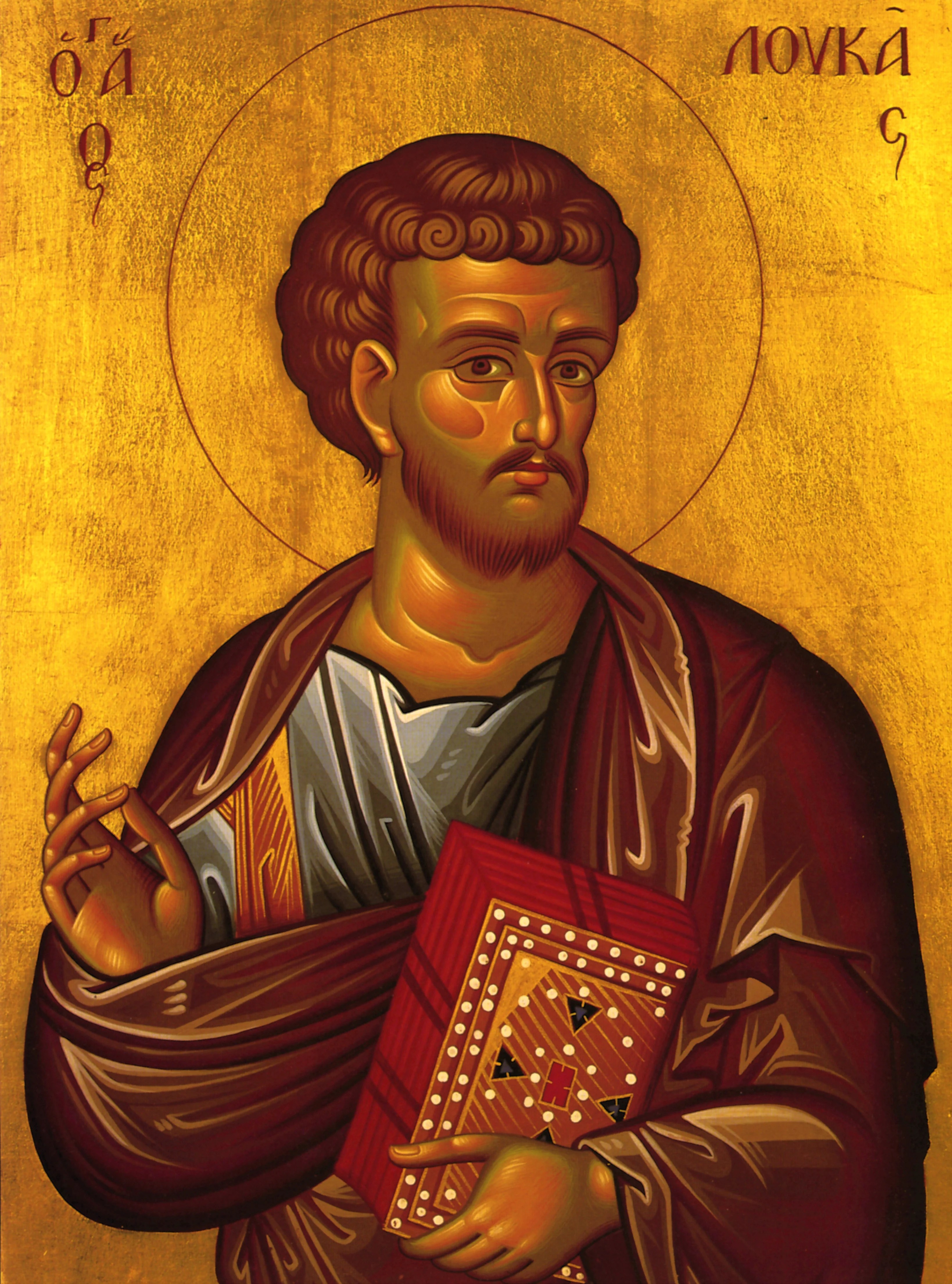
St. Luke

“In Luke,” Hauerwas writes, “we find the historical significance of Christianity, or as Luke prefers, the Way, most dramatically represented.” The Gospel of Luke is the most Gentile-centric of the four gospels we find in Scripture. Luke, most likely a Gentile himself, was writing his account of Christ and the early church to a Gentile audience, trying to bridge the Jewishness of Jesus to the Gentile culture of Greece and Rome. Luke was likely a disciple of Paul, himself someone famous for his commitment to bringing together Jews and Gentiles in one body. So, as he writing his account, Luke is looking to connect what could seemingly be sectarian or provincial tale of a far-flung religious disturbance to the wider happenings of the world, to make his readers understand how Christ is not merely another story on the world’s stage, but is instead the story from which the rest of history obtains its meaning. To quote Karl Barth:

For Jesus Christ is the fulfillment of the covenant concluded by God with Abraham, Isaac and Jacob; and it is the reality of this covenant -not the idea of any covenant – which is the basis, the meaning and the goal of creation, that is, of everything that is real in distinction from God.

Understanding Luke’s Gentile audience is crucial to Hauerwas’ essay because Luke was perhaps the first Christian thinker (or perhaps the second, after Paul) to communicate the world-encompassing importance of the Christ event, and by extension, to make the claim that Christ is the key component of God’s salvation of the entire world, and not just the Jewish people. God fulfills the covenant of Abraham, Isaac, and Jacob in the work of Christ on Cross, and that work extends to all people, everywhere.

This concept is called a “theology of history”; that is, it is the work of examining the arc of history and the meaning of the human story through a theological lens. In Luke, Hauerwas perceives a very specific theology of history. He writes, “the fact that dominates Luke’s Gospel and Acts is that the Gentiles have been grafted onto the promise to Abraham.” This is Luke’s theology of history, and by extension, also Paul’s: through Christ’s work on the Cross, the Way is made open to all people to accept God’s promise of building a nation of people, as innumerable as the stars, and under the everlasting promise of God’s good grace first made to Abraham and the people of Israel in their covenants.

So, what does this have to do with charity and effectiveness? Hauerwas correctly sees that this promise of God, and its subsequent transformation into a understanding of God’s work in history, takes on radically different valences in the context of a regional subpower’s relationship with a deity than it does in the context of a globes-spanning religion backed by the military and economic power of nation-states. To put it more simply, Luke’s theology of history means something radically different in America in 2020 than it did in Palestine in 70 CE.

Hauerwas explains the reason this is true by identifying the implications of Luke’s theology of history: “This view of history would seem to mean that in a fashion Christians have the key to history – that is, we know its meaning and we know where it is going.” If, as Luke claims, the history of all the peoples of the world is tied up in the salvation offered by Christ, then surely those of us who call ourselves Christians have some kind of stake in how the world turns out, right? If Christ extended the Abrahamic covenant to all of the world, then we seemingly have a covenantal duty to make sure that all the nations of the world become part of God’s nation. “For the Christ we Christians serve seems to commit us to having a stake in how history comes out.”

This creates a problem. If we Christians have a stake in the course of history, what happens when that history goes badly? If we, through the promise of the universal Christ, are responsible for the shape of world events, what does, for instance, the Holocaust mean for how well we are doing our jobs? The only logical answer, of course, is that we must fix it, and more importantly (in this understanding of history), we have a Christian responsibility to do so! And a necessary corollary of that responsibility becomes that we must change the world no matter what it takes to do so. The goal of God’s kingdom, brought about by our actions, is so important that we must get there, that we must not let the fallen nature of humanity and our misguided will be impediments to the goal. Take action, history seems to tell us, and let the future judge the results and not the actions. 

Are you starting to see how this kind of thinking – this misinterpretation of Luke’s theology of history – has led to so much evil and wrong in the world, done in the name of Christ? If we are responsible for the world – if our telos, our end goal, as Christians is the salvation of this world with a remit to fix things now – then we feel empowered to pursue almost any means to achieve that ends, as long as we are sure to state clearly throughout that we are Christians. Thus, God’s name can be invoked, for instance, in justifying war, as long as that war’s stated goal is the betterment of the world in accordance with the covenantal heritage extended to us through Christ.

At this point, it becomes rather simple for actors with bad or impure intentions to invoke the imprimatur of Christ to justify a whole host of actions contrary to the life of Christ. In short, in order to combat injustice done not in Christ’s name, this model lets us commit injustices to defeat those other injustices, as long as we confidently declare God to be on our side. You can see in this kind of reasoning, for example, the route some Christians take to justify the death penalty; we must stop murder by committing murder, because somehow our own murder is more just. Further, when paired with certain takes on atonement and missiology, more harm can be done, through justifications tied to a wrathful, retributive God, and a divine mandate to convert the world to our religion or else.

It’s not just bad or disingenuous actors who use this justification, either. Our rightful shock and disgust with the path human history has taken – and our own implication in the guilt of that history – seemingly requires even those of us justice minded folks to feel we need to “fix” history in order to do the work of God’s kingdom. Hauerwas is worth quoting at length here:

Thus our history gives us an even more powerful reason to combine charity with power and the effectiveness it brings. For we think the way to learn to live with a wrong is to make it a right. Indeed our history has been flawed, but we can rectify our past by changing our history to make it come out right. In other words, our very guilt makes us require a God not just of charity but also who gives us the power to do good. We want him to be a God of love, but a love that is coupled with the power to make that love effective.

This brings us back, then, to effectiveness and charity. Luke’s theology of history is important to our study because how we read it profoundly influences how we believe Christians are meant to act in the world. In the reading we have been examining so far, Luke’s theology of history seemingly hinges on what it is we are after – that is, the focus is on what we – emphasis on the “we” here; we are the primary actors in this telling of the story – imagine a just world ruled by God’s covenant must look like in the end. From here, acting in charity – that is, acting with that which Thomas Aquinas called “the most excellent of the virtues” – is not the primary focus of Christian social engagement, but rather, effectiveness is: how much can you get done, and what is the quickest way you can do it?

But, as Hauerwas has started to open our eyes to, this is a “profound misreading of Luke.” Please forgive me, but I must quote him at length one more time in order to unpack this point more effectively (emphasis is all mine):

For what Luke suggests is not that Christians are called to determine the meaning of history, that we have a responsibility to make history come out right, but rather that that is God’s task. What God has done in Israel and Christ is the meaning of history, but that does not mean it is the Christian’s task to make subsequent events conform to God’s kingdom. Rather the Christian’s task is nothing other than to make the story that we find in Israel and Christ our story. We do not know how God intends to use such obedience, we simply have the confidence he will use it even if it does not appear effective in the world itself…For in the form of the life of Christ is the form of how God chooses to deal with the world and how he chooses for us to deal with the world.

Phew. That’s some good theology right there.

Alright, let’s unpack that a little bit. In this passage, Hauerwas is posing the first look at the alternative he is presenting to the “politics of effectiveness” that comes out of that other reading of Luke. Rather than counting how close we come to abstract vision of how we think God would want the world to look (a exercise of monumental hubris if you really think about it for a second), the proper reading of Luke’s theology of history is one that understands the making of God’s kingdom as God’s own work. God is the builder, not us; rather, we are called to carry out our task, which is the task of grafting ourselves onto the story of Christ and his Church, as seen in the Gospels. In faith, we perform the tasks of charity, knowing God will shape such acts for the good.

And what form does that task take? Why, it is the form of Christ himself: a servant, humble, compassionate, merciful, abounding in grace, reveling in truth, rejoicing in the kinship of all of humanity. The work we are called to, in the greater task of God’s building of a nation, is to “love as God loves.” That’s it. It may not always be effective in the way the world counts effectiveness. But that was never really our goal, was it?

One final note: it can be easy to read this as an endorsement of political quietism, of a rapid withdrawal and disengagement in the world, and thus a kind of chosen ignorance about the injustices of this world as it is now. Simply claiming that it is God’s job to fix the world is the kind of political abdication practiced by so many toxic forms of mainstream, therapeutic pseudo-Christianity, right?

To understand the politics of charity in this way is to discount the potential embedded in the example of Christ to change the world. The example of Christ – the example of the peacemaker, of He who was willing to turn the other cheek and give of himself wastefully and to even die rather than wield power – is sufficient for the making of the world. It is the lie of the world to try to make us believe otherwise. We aren’t to become meek, humble, compassionate, loving and peaceful as a way of therapeutically avoiding the world’s suffering, as this lie would have us think. No, we are called to this imitation of Christ precisely so that we may more clearly see the suffering and injustice in the world around us, and then respond to it in a way that is truly effective, in the way effectiveness is counted by God. Will this always lead to a political, legislative, or activist victory? Not at all. But for Christians, our understanding of victory is counted on a different scale.

That brings us to the question of my next essay: what is the locus of our charitable politics in this world? Where and with whom do we practice putting on the story of Christ? The answer looks very shocking to a world dependent on – addicted to – the illusion of effective action and the wielding of power.
No Right to Forgive, Part Three: The Unmoved Mover

One of the most common stories you will hear in progressive church settings, places where people are deconstructing and reconstructing their faith, is that of empty comfort. A person endures something more difficult than they could imagine – the death of a parent, a child, or a spouse; physical, mental, or sexual abuse; prolonged unemployment, financial instability, or homelessness – and when they turn to their church or their Christian friends and family, all they get are empty platitudes and harmful theologies. 

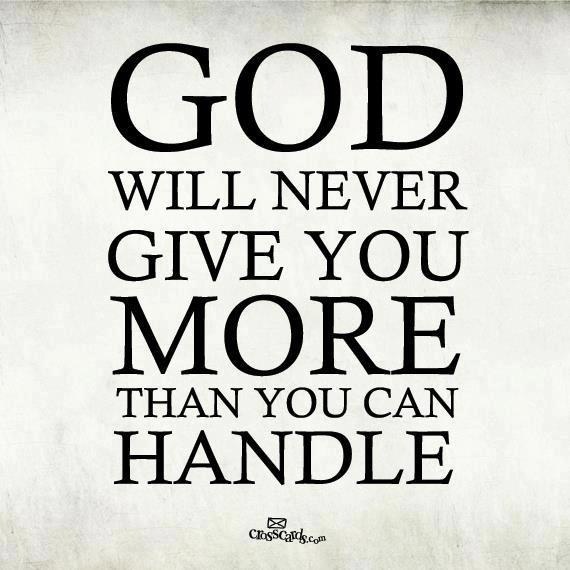
“God wouldn’t give you more than you can handle.”

“Its all part of a bigger plan.”

“They are in a better place now.”

“Heaven needed another angel.”

“God must be testing you.”

“Are you sure you didn’t do something that angered God?”

Its really not hard to hear these kinds of stories, read the data about church attendance we thought about last time, and start to understand why people are leaving the church. These kinds of phrases – while often uttered with good, loving intent, by people who want to help, but who may not know a better way to do so – drive people far from God and the church. Who wants to worship a God that they are told is responsible for the death of a child, or the loss of a job? Who wants to be part of a community that turns a blind eye to abuse, or justifies it as punishment for sin, or part of God’s plan for you? 

A visual representation of really bad theology

We’ve been thinking about God and the presence of suffering in the first two parts of this series. How are we to reconcile the existence of God with the reality of hurt and death in the world? What does it say about God? Why would we invest our times and our souls with a church that not only can’t give us good answers to these questions, but so often contributes even further to that hurt? These are questions all Christians should be grappling with, and not dismissing with snide comments about sin and a lack of faith.

The reason so many Christians and their churches respond in that way, however, is because their vision of God allows for no other response. Further, their distorted vision of God is the one that is too often presented as the “correct” vision, and thus when someone experiences moments of suffering, this false God is what they are confronted with, and which they rightly reject. The reason the conversation around suffering and God is so fraught is because, too often, the concept of God being debated is so toxic.

This isn’t to say that a better understanding of God will resolve all the issues of theodicy, if only we better understand the true God intellectually. This is the heresy of Gnosticism at its worst. A better idea of God – that which we are grasping towards in this series of essays – is one that we still must confront with the same cry uttered by Jesus on the Cross: “Why have you forsaken us?” As we will see in the next essay, this cry must always be on our lips as long as sin and death exist in the world. Remember, we aren’t looking to “solve” anything this week. We are resting in the darkness of the Saturday before Easter, sitting with the suffering of the world. 

But, one thing we can do in that darkness is demolish the false God that we are told is both responsible for causing and overcoming human suffering.


In Chapter 6 of The Crucified God, Jurgen Moltmann asks the question, “Is Christian faith applicable to the theistic concept of God?” I want to use this essay to understand just what he means by the “theistic concept of God”, because in doing so, we will start to understand why the kinds of answers the church tries to give to the suffering and the hurt so often cause more harm, and drive people away. By taking apart the traditional theism espoused by the church, we can then begin to see a different way to conceive of God.

Moltmann calls this section of the chapter “Theism and the Theology of the Cross”; by theism, he simply means the belief in the existence of god, and especially in a single god who created and controls all of the universe. This is the common definition of theism, one that is intertwined with what we mean we say “Christianity.” The important move Moltmann makes here is to decouple theism from Christianity, and to replace the idea of a theistic God with a Crucified God. We’ll get to that move in the next couple of essays, but for now let’s focus on what Moltmann understands “theism” to mean. He clearly views the common understanding of God as theistic. But what does that entail?

Moltmann writes, “the nature of divine being is determined by its unity and indivisibility, its lack of beginning and end, its immovability and immutability.” There are three attributes given to the divine theistic being here: it is singular, it is infinite, and it is static or stable. Let’s look at each of these before getting to the question of why God is conceived of in this way.

Unity and indivisibility seems to comport very well with something that is considered essential to Christianity (and, by extension, the Judaism that it evolved out of): monotheism. What set Israel apart from the other nations was its belief that only one God exists; this is enshrined in the First Commandment, and is a common theme in Israel’s dealings with God throughout the Hebrew Scriptures. God is One, and other gods are false pretenders: dumb wooden or metal totems at best, demons and other fallen spiritual beings at worst. 

Christianity obviously embraced this monotheism, but with the Trinitarian twist that has confounded believers and critics for so long. God is one, but God is also three, according to the Trinity. For some, rejecting the Trinity outright was the way past this dilemma; unitarianism has a long and rich history stretching back to the earliest church, with Arian often being credited as the first official unitarian. But for most Christians, the Trinity was accepted as a necessary piece of the faith, but one that didn’t make much sense in their everyday experience of faith. Theistic Christianity is functionally unitarian, even if it pays lip service to the Trinity. This is so because of the adherence to the other two legs Moltmann attributes to theism: that of the infinity, and  the immovability and immutability, of God. God must be outside of creation and unable to be changed, and if God is somehow three in one (one of which is a human) then the idea of singular divine being starts to crumble.

To say God has no beginning and no end would not seem problematic to any Christian understanding of God; it is easily accepted that God existed before the creation of the universe (which includes time). Without a Creator, after all, there is no Creation. But I think Moltmann is pointing to the lack of a beginning and end in a different way. Despite God’s preexistence outside of our concept of time, God is not separate from creation. To assert a God completely removed from any concept of time is to assert a deistic and distant God. As we will explore in further essays, in Christ, God stepped into time, and thus, into a real and active relationship with Creation. The theistic God, on the other hand, holds itself completely aloof from creation, for fear of experiencing the decay and change associated with time.

That decay and chance obviously leads us to the third aspect of the theistic God: immutability and immovability. This is probably the most important leg for theism to stand on, and the one people most often associate with a theistic God. God is supposed to be in control over all aspects of creation, but in order to put trust in an all-controlling God, that God must be free of the possibility of the unexpected or the contingent. Thus, a theistic God cannot change or be changed; it is always solid, stable, and static, and cannot be swayed by creation or anything inside of it.

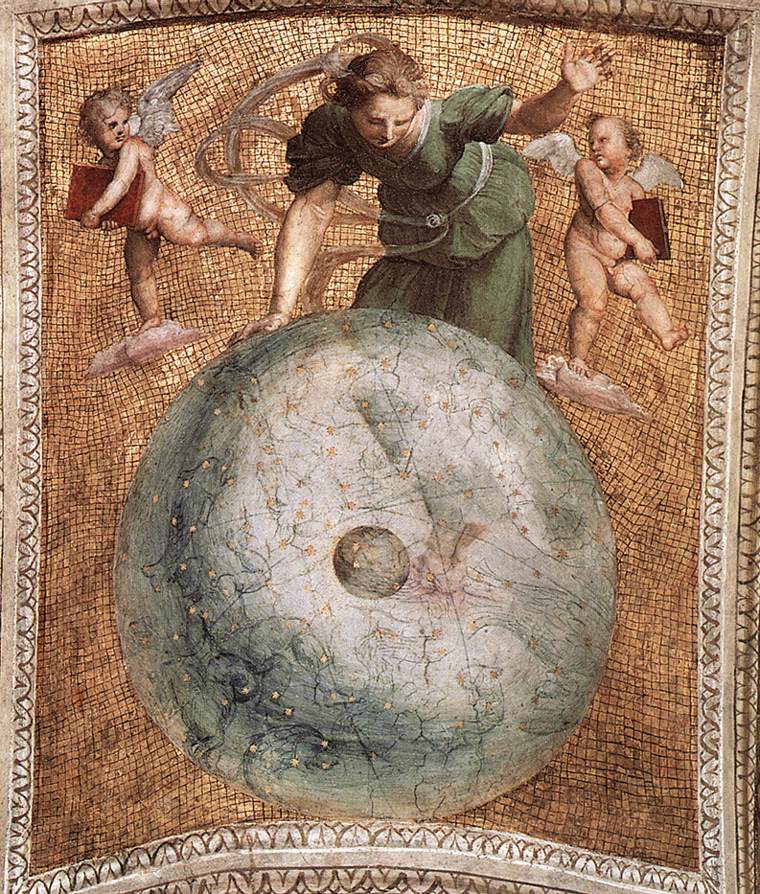
Raphael’s depiction of the unmoved mover from the Stanza della Segnatura

All of these things come together to create what Aristotle posited as the “Unmoved Mover”, a conception of God that Christianity very readily adopted as its own. For Aristotle, this divine being set in motion all of creation, but what not itself set in motion in any way. The Unmoved Mover cannot be affected by Creation, but is sufficient in itself and always and forever the same; to be otherwise would be to concede less than total perfection and complete omnipotence.

As Moltmann points out, humans crave this Unmoved Mover because of the anxiety of mortality we face as created beings. In order to not devolve into existential terrorist, we require assurance that “death, suffering and mortality…be excluded from the divine being.” In a traditional theistic worldview, the only way to overcome our lack of control is to put all our assurance in a controlling being. This is a completely understandable instinct. But it is also one that carries with it great danger for our relationship with God, especially in light of our inherent dignity as beings. Furthermore, this theistic concept of God very quickly clashes with the God we see in Scripture and in the life of Jesus. By posing such a theistic God, we do that which we are claiming cannot be done: we are limiting God, striking from the Divine all love and feeling and passion.


What does the Unmoved Mover have to do with the problem of suffering, and the weak answers the church gives to the hurt of the world? This is the central question we are driving towards, and which we will unpack in detail in our next essay. The Unmoved Mover is inevitably a false God that cannot stand up in the face of genuine human experience of a limited world and mortality, because it is a God that cannot conceive of suffering and hurt. In order to get a better idea of how this is so, we must take seriously the critiques of God that atheism raises. Only then can we start to look for a God that evokes better responses to suffering than “this must be part of God’s plan for you.”

Before we do that, however, one last note on the role of the Unmoved Mover plays in driving forward churches that do harm in the world. It is easy to see how some churches are so committed to the classic theistic view of God. This is the case in almost all evangelical and fundamentalist churches; the omniscient, omnipotent, immutable God is crucial to versions of Christianity that survive on exercising control. The theistic God is an authoritarian God, and this justifies authoritarian models of leadership. It becomes easy to declare who is in and who is out, who can fill a pulpit and who can’t, who is deserving of God’s love and forgiveness and who isn’t, when your view of God is that of a Divine Being who is only and always one way, and can never be changed or affected by human experience and dignity.

But it isn’t just evangelicals and fundamentalists who make their living on the back of the theistic God. Many progressives and critics of Christianity also rely on the existence of this kind of God to sustain their critique and rejection of the church. It becomes harder to hang on to that identity as an opponent of all religion when the church not only agrees with your critique of theism, but also takes concrete steps towards reimagining what God is like. I point this out because I want our grappling in this series to not be cheap and easy, like the easy and (false) answers we started this essay with, but to have some meat behind it: when we demand of God why suffering exists, we are going to get a response, like Job. We aren’t doing this to score points or get clicks. We expect a God who is in relationship with us, and thus who is going to have a conversation. We expect – we demand – more than the silence of a nonexistent God or the wrath of an authoritarian God. That conversation is where we begin to turn next.

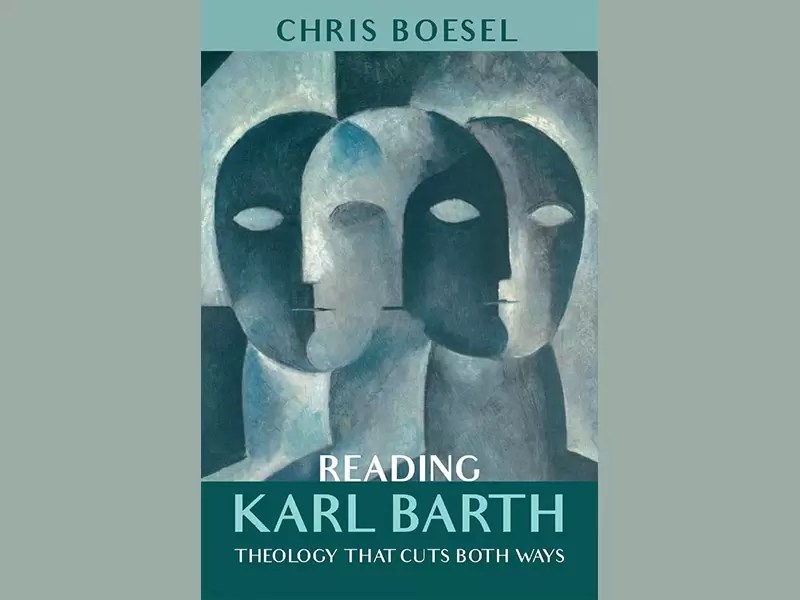
Reclaiming the Red Pastor: A Review of Chris Boesel’s Reading Karl Barth

When, in my mid-twenties, I first had my religious reawakening, and started developing an interest in Christian theology and the church, I remember being presented with an “either-or” choice. Now, this choice may not have been stated explicitly in this way, but I know it was shown to me at least implicitly by those who I was first learning from. This was the choice: if I wanted to get into academic theology, as someone who was (and is) more progressive, then I should lean towards studying Paul Tillich and the theology that came after him in the 20th century, and should avoid Karl Barth and those that came after him. This was presented as a choice between progressive theology and conservative theology; between a non-ideological or pluralistic school of thought and hard-core TULIP Calvinism; between an emphasis on love and acceptance on one hand, and exclusion and fundamentalism on the other.

And so, for a long time, I stuck to this understanding. I read a lot of Tillich, and a lot of theologians who could be said to descend from him, if not literally then at least spiritually. And I avoided anything associated with Barth and Reformed theology. I became especially enamored with Jugen Moltmann and his liberal theology; I am in fact still quite indebted to him, and find his work quite useful and beautiful.

But, as I’ve documented before in my writing, in seminary I was introduced to the work of Stanley Hauerwas, and through him, John Howard Yoder, and their brand of non-apologetic, highly critical post-liberal Anabaptist theology. From there, I have dipped my toes into George Lindbeck’s post-liberalism, Wittgenstenian language games, and Alasdair MacIntyre’s virtue ethics. I still consider Hauerwas the number one influence on my theological life, and Yoder is in the top five as well. But, through them, I started to become acquainted with that name I was warned against, and who influenced almost all of these thinkers and schools: Karl Barth. It was hard not to: Yoder studied directly under Barth at the University of Basel in the forties and fifties. Although Yoder was not a pure proponent of Barth’s thought, and had quite a bit of criticism of Barth in his own work, he was also clearly in Barth’s school of thought, and especially in the work of Hauerwas on Yoder, it becomes clear how much Barth influenced Yoder.

And so, over the last couple of years, my interest in Barth has grown and grown. However, a little of that old aversion is hardwired into me, despite the fact that I now largely reject a lot of the theology of Tillich, and so I have never quite dove into reading Barth for myself (other than a quick read of his Church Dogmatics in Outline as part of an online reading group Hauerwas and Will Willimon lead during the summer of 2020.) But, that has changed this year, and one of the leading motivators of it was receiving Chris Boesel’s new work, Reading Karl Barth: Theology That Cuts Both Ways to review. Boesel, an associate professor of Christian Theology at Drew Theological School, is a progressive thinker, aims to make Barth accessible for those he identifies as “socio-politically progressive” but who still want “a life of faith that is theologically traditional.” Consider my box checked. This book was really written for me.

For that reason, I want to do more than just write a simple book review. I will do that, here in this essay, but I want to expand this a bit. And the reason I want to do this is because I, like Boesel, have found that Barth has a lot to offer progressive Christians, those of us who consider ourselves left politically but want to reclaim the idea that Christianity is only for conservative evangelicals and fundamentalists. Barth offers a powerful traditional Christian theology; one that preserves the orthodox beliefs important to the life and tradition of the church throughout history and doesn’t jettison them in order to conform to the idea that progressives can’t believe those kinds of things. Boesel shows that Barth can be an important voice for those who believe the words found in the Bible and the Creeds – and who think those words call us to care for the poor, preserve the environment, fight injustice, and preserve pluralism and liberalism.

So, over the course of a few essays, I want to offer a review of Boesel’s book (which I will do in this first essay), and then, I want to use his work to break down, in a few digestible pieces, how Karl Barth can speak to progressive Christians today. I’m doing this because I have found, contrary to what I was originally warned about, I have found Barth’s theology to be, in large part, an amazing resource for thinking about the role of the church in the world, without that church being stripped of its moral authority or folded anonymously into leftist or progressive social justice movements. In line with Boesel, I want to “reclaim Barth” from the most conservative theological voices, because I don’t think his theology, when followed through all its richness, upholds a faith that justifies insularity, exclusion, and exclusivity, nor does it lend itself to a theology that advocates for socially conservative policies (there is a reason Barth was nicknamed “The Red Pastor from Safenwil” after all.)

Establishing an ideological distinction between the Church and the world of American politics has been a consistent point of priority for me as well as a driving motivation for what makes me want to embark on this project. As I’ve written before, 2016 played a big role in shaking a lot of assumptions I carried about the viability of politics as a way of really advancing a vision of justice or a better world, and I have especially become convinced that the progressive church in America should not aim to become a “Christian Left” a la the Christian Right – identified with and subservient to the needs of a secular political movement and providing ideological and metaphysical cover to the needs of those seeking power. Instead, progressive churches should aim to just be the Church – feeding the hungry, loving our neighbor, welcoming the stranger and comforting the oppressed – regardless of whether or not that serves the interests of the American political left perfectly or not. We as the Church have a commission, and an allegiance, and those should not be subsumed under the banner of the Democratic Party or the DSA or any other secular political organization. This doesn’t mean we don’t care about injustice, or public policy, or elections; it means we don’t confuse effectiveness in getting the right person elected with what it means to be a Christian.

For anyone who shares these kinds of priorities, Karl Barth becomes a powerful ally. As Boesel lays out in his brief biographical sketch, Barth too confronted a church that had become an apologist for state power and national ambitions. In his case, this was pre-WWI Germany, and then later, pre-WWII Nazi Germany as well. He first came to prominence when he pushed backed hard against liberal theology1 – the 19th century movement pioneered by such thinkers as Schleimacher and Von Harnack, and taken up in the 20th century by the aforementioned Paul Tillich, that embraced enlightenment values and methods emphasizing reason and experience over tradition, and which introduced historical criticism and other modes of skepticism to Scripture, tradition, and the long-held orthodoxies of Protestantism. Barth was trained in liberal theology under Von Harnack and Hermann, and while he strove to take the good of liberal theology with him, his experiences around World War I drove him to largely reject the movement.

The impetus of this rejection for Barth was, as Boesel describes, “the endorsement of the Kaiser’s war declaration by virtually the entire theology establishment in Germany,” which Barth understood as a theological failure by the church. Continuing on, Boesel describes this theological failure:

“There was no distance between the Christian faith and theology of the liberal church and the spirit of the people, the nation, the Volk, as expressed in cultural institutions and traditions and the various national and cultural corridors of power. Perhaps without intending to, liberal theology appeared to be uniquely suited for creating what in the narratives of the Hebrew Bible are called “court prophets” – “yes men”… to the principalities and powers, to the prevailing winds, be they the whims of the crown or the spirit of the age and its cultural achievements.”

In his commentary on the book of Romans, Karl Barth established himself as the leading voice standing against this dominant liberal tradition at the heart of Protestant Christianity, and in the process, became a well-known figure. His turn was a major inflection point in 20th century Christian thought, and defined the arguments theologians would have for at least the next half century. Contributing to this growing fame was his role as an outspoken German national and intellectual against the war, in a milieu where very few were taking such a position.

Barth did not rest on this notoriety, however. Following on the defeat of Germany in the war, and the subsequent rise of Hitler’s National Socialism in the following decades, Barth once again staked out a theologically-principled position against his homeland and fellow Germans. As the German church came increasingly under the sway of Nazism, Barth spearheaded the writing of the Barmen Declaration, a remarkable and timeless statement of Christian belief in the face of nationalism and war. For the second time in the first half of the 21st century, Barth had established himself as an important prophetic voice in the face of political currents that most people found difficult to resist or step out of. 

It is this continued act of standing against the sublimation of the Church under the desires of national power that makes Barth such a powerful voice for Christians today who too want to stand against the desire by some to appropriate the Christian witness in justification of decidedly non-Christian ends. But, his power as a theologian shouldn’t end there; there are plenty of good theological voices, but today and throughout history, who can be said to play a similar role. The strength of Barth’s theology runs deeper than as a consequentialist appropriation for a positive end, but instead is found in Barth’s ability to make such a principled argument against nationalism in a way that does not sideline or make excuses for the orthodox declarations of the faith. How he does so is what I want to spend this series exploring. 

Before we get to that, however, let me spare a few more words for Chris Boesel’s book. Boesel manages to take a notoriously difficult theologian to read and understand, and makes his thought digestible for the general reader. As noted earlier, Boesel wants to not just explain the theology of Karl Barth, but also to show how it can be read as relevant for those in progressive churches today, and he largely succeeds in this task. He does this by following the priorities and emphases in Barth’s own work, rather than re-classifying what we should think important in Barth. Boesel begins with a discussion of Barth’s purposes and theological method, before digging into the content of Barth’s theology, making the same move that Barth spent his whole life extolling: from God first, through Jesus, to us, and finally through our action in response to God. In doing so, Boesel does a masterful job of explaining Barth’s theology, and in the end, shows how it can speak to the priorities of progressive Christians in today’s world. This work is one that any seminary professor today can turn to for a course on Barth; it serves both a general and academic audience in its clarity and its fidelity to its subject.

And so, because of this clarity and fidelity, I want to spend the next five essays going through the high points of Barth’s theology as Boesel describes them, in order to present him to my progressive readers as someone they should know and be familiar with, if we want our faith to do more than justify our politics or serve as a form of Moral Therapeutic Deism. Barth is hailed as the greatest theologian of the 20th century for a reason, and it would be a shame if we forgot him today, or even worse, ceded the power of his work to those who would twist it to justify the very kind of theological nationalism he abhorred and worked against throughout his life.


Disclosure of Material Connection: I received this book free from the author and/or publisher through the Speakeasy blogging book review network. I was not required to write a positive review. The opinions I have expressed are my own. I am disclosing this in accordance with the Federal Trade Commission’s 16 CFR, Part 255


1  I want to be clear here: the “liberal theology” I am describing and that prevailed in Western Christianity in the 19th and 20th centuries should not be somehow confused with liberal politics in America in the late 20th and 21st century. Lest any of my more conservative readers want to make such a connection, be assured, liberal theology does not refer to American political liberalism, but instead to the liberal tradition arising from the enlightenment, of which we all partake today, which centers individuality and human rights alongside empiricism and self-determination. We are all, in many ways, liberals in this sense, and the American dichotomy of liberal-conservative does not apply here and would be unknown to Barth.