
I think about the concept of tolerance a lot. Tolerance is a live issue in American politics. The battle to incorporate more people into the American civic community is often framed in terms of tolerance; those fighting for greater inclusion often use the idea as a marker of what is the base minimum required to widen the circle. Tolerance doesn’t require acceptance, it doesn’t require approval, it doesn’t require friendship; thus, tolerance is often the most politically palatable way for some to come to terms with a more inclusive, more open society.
I think tolerance is a really useful concept for liberal democracy. You are simply never going to get everyone to embrace everyone else. There will always be conflict between various groups of people. However, I don’t think tolerance is very good for the Church. I don’t think Christians are called to mere “tolerance” of the other, nor are we called to tolerance of every worldview and individual choice. Tolerance is a double-edged sword, one that can tear through the fabric of the moral community that the church is called to be.
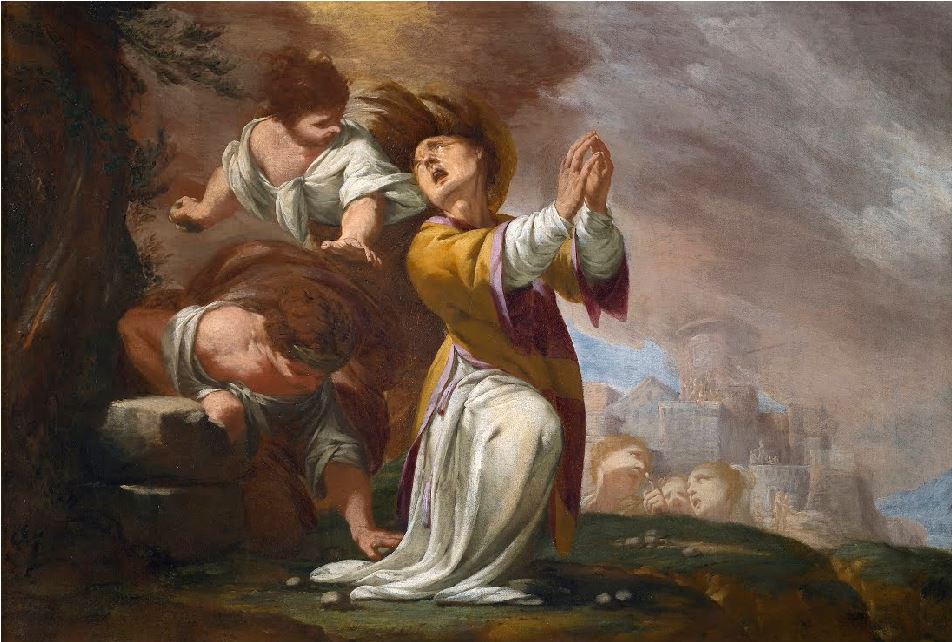
– https://artsandculture.google.com/asset/martyrdom-of-st-stephen/twGNCf3waLKDvA, Public Domain, https://commons.wikimedia.org/w/index.php?curid=68961694
This is important because a lot of liberal churches today use the word “tolerance” quite freely in their attempt to gain more members and showcase their own openness and acceptance. While I think acceptance and openness are important traits for a church, I think those things can be had without the false allure of tolerance.
I want to take some space here to think through tolerance, and how it has defanged the moral witness of the church in a world where the church is sorely needed today. As I mentioned in a recent post, I have recently done a comprehensive read-through of most of the works of theologian Stanley Hauerwas, and so I want to explore tolerance through the frame of a passage from his book Performing the Faith. Here is the passage in full:
Christians came to America having fought hard to renounce confessional struggles. Subsequent generations born free of the battles for which their forebears fought no longer think it necessary to fight about anything. The struggle over the creed which occasioned the flight of their fathers and mothers becomes – for their sons and daughters – something that is itself unchristen. “Thus for American Christianity the concept of tolerance becomes the basic principle of everything Christian. Any intolerance is in itself unchristian.” Because Christians in America have no place for the conflict truthfulness requires, they contribute to the secularization of society; a society, moreover, which finds itself unable to subject politics to truth and the conflict truthfulness requires. Tolerance becomes indifference and indifference leads to cynicism.
Stanley Hauerwas, Performing the Faith: Bonhoeffer and the Practice of Nonviolence, page 59.
This paragraph does a really good job of summing up the trajectory of tolerance in American religion well. It starts where the Christian experience in America started: the flight from the wars of religion that wracked Europe for half a millennia. Groups like the Puritans, looking to escape the persecutions and wars of the Protestants and Catholics, found a place to put down roots free from the debates about creeds and sacraments and hierarchies. Eventually, this new home evolved into a place almost complete religious freedom – the ability to define for one’s self what is worth believing, what is worth fighting and even dying for.
But, as Hauerwas notes here, that freedom from religious conflict- freedom from the communal conversations about what a people are going to call true – congealed into a worldview where strongly-held metaphysical convictions are shunned, or at least held as much less important than materialist ones. One can have beliefs about God and truth and goodness, but in America, it came to be understood that those beliefs would by and large not have much consequence for the body politic.
This attitude seeped so much into American Christianity that to become exercised over your religious beliefs became something that was viewed as antithetical to what it means to be a religious person. Certainly, people still held to strong religious views, and often those views have had influences on the American way of life – one only has to look at the influence of Christian thinking on slavery and abolitionism. But those beliefs were never allowed to question or critique core American precepts, at least not if one wanted to be taken seriously as a member of the American project. Religious freedom became less about allowing people to believe what they want to, and more about ensuring no particular claim to truth could challenge the assumptions of the liberal nation-state.
And so the advent of tolerance, replacing the quest for truth in religious life. Truth claims inevitably led to the kind of religious intolerance and conflict that was so feared in continental Europe. To say that this or that belief is the Truth is to inevitably to say that other, conflicting beliefs are false. In the conversation of religious beliefs, this becomes an intolerable charge, one that must be defended against. Thus, in order to maintain peace between these factions competing for supremacy when there is no empirical way to assess those truth claims, tolerance becomes necessary. I will tolerate your claim to truth, and you will tolerate mine, and as long as we don’t try to domineer one another, we can peacefully coexist.
And this is mostly ok! I don’t want to be misunderstood here; tolerance has an important role to play in a pluralistic democracy. We should strive to tolerate those we just cannot bring ourselves to fully accept or agree with. In fact, one of the major problems roiling our society right now is the inability to tolerate difference. This comes from both the right and the left; toleration of those who look, act, think, believe, or love differently is under attack, and as a result, some of our basic rights are under attack as a well. As a political people, we should be pushing back against intolerance in all its forms, and understand that liberal democracy, free speech, and religious pluralism requires us to live and let live, even those we abhor, and even those who may hate us. The ability to live with that tension is the sign of a healthy polis.
All those qualifications in place, I want to come back to my primary point: toleration may be good enough for liberalism, but it isn’t good enough for Christians, even Christians living in and having a prominent place in a liberal democracy. Christians must walk a fine line between practicing tolerance politically, and demanding more than that of our selves and our communities. The problem with tolerance in a space like the Church is that tolerance eliminates claims to the True, the Good, and the Beautiful. And those are values the Church cannot afford to give up.
This isn’t a call to theological domineering. That is an ever present danger for the church, one that has caused a lot of damage throughout the years. And even in individual churches, that kind of domineering can quickly harden into cults of personality or exclusionary practices. The Christian way is one that always rejects putting ourselves over anyone else, even those who we feel are wrong and misguided. We cannot force the faith on anyone, nor should we want to. At the heart of Christian thought is the abhorrence of any form of coercion; just God is non-coercive, so should we be.
Here is what we are called to: a firm stand in favor the True, the Good, and the Beautiful, in favor of the Love that is God. And this kind of love can never be domineering or coercive, because it a love that is eternally giving and serving, and love centered on meekness, peaceableness, and kenosis – a radical emptying of self in favor of the Other. Tolerance, almost paradoxically, works against this kind of love, because tolerance in its purest form, doesn’t ask anything of us, or of anyone else. But we must ask something: we must ask ourselves if we are willing to stand so firmly on the side of love, on the side of the poor and the needy, if we are willing to stand in favor of what we know be True, to the point of enduring death. Tolerance tells us we don’t need to die for anything, because nothing is ultimately so important that it is worth dying for. But, as Christians, we know better, because we know our Savior died for us, and if we were worth dying for, imagine how much more the Good and the Beautiful are worth dying for. We are intolerant to to a world that refuses to ask of us more than we should be rationally willing to give, and we cannot be both intolerant and tolerant. But our intolerance is never directed at other people, even those who are the most abhorrent foes of what we know to be true. Our intolerance is always directed against the structures – the Powers and Principalities – that would call us to be so tolerant that we eschew all conflict and embrace, forever, pure ease and comfort. Are we really created for so little as tolerance?
 Justin DaMetz