Experiencing Rob Bell

This weekend, for Father’s Day, my wife got me and her tickets to Rob Bell’s tour stop in Tulsa on his How To Be Here Experience. Not even knowing that Bell was making a stop in Tulsa, I was so excited to get the tickets and experience this. (She’s great, isn’t she?!)
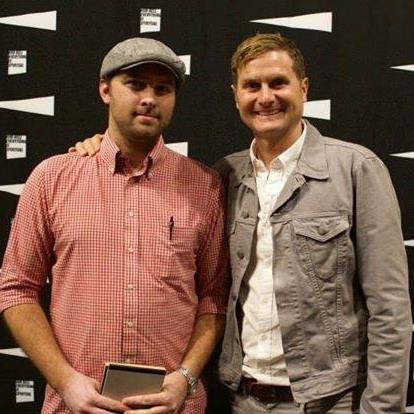
fc5df-robbellI saw Rob in person last year, when he was here in Tulsa on his Everything is Spiritual Tour. The show was amazing and inspiring and thought-provoking and a thousand other things. I wrote about it here.

I’m a huge fan of this guy. At first, when my then-girlfriend (now wife) Arianna showed me a Nooma video, I had never heard of Rob Bell, and I was suspicious and unimpressed. It seemed like the same, hipster-youth director, evangelical thing I had tried to hard to get away from. No thanks.

But he grew on me. This is mostly thanks to Ari, who loves Rob as much as I do. For her, Rob had opened up new vistas of possibility and questioning with her faith. She talks about the Nooma video entitled Lump, in which the phrase “There’s nothing you could ever do to make me love you less” features prominently. For a young woman whose lived experience of Christianity was the all-too-typical story of trying (and feeling like failing) at pleasing a angry, distant deity poised to banish her for all eternity, the idea of an uncompromising, never-ending, all enveloping love was a revelation as profound as any thing one can imagine. To be able to be in relation with God not in order to initiate the proper bribe to stay in God’s good graces, but instead to be in a relationship of unconditional love, was a life-shifting moment for Ari.

All that to say, Rob Bell was kind of a big deal to Arianna. And so, as a result of her evident passion and his effect on her, Rob grew on me.
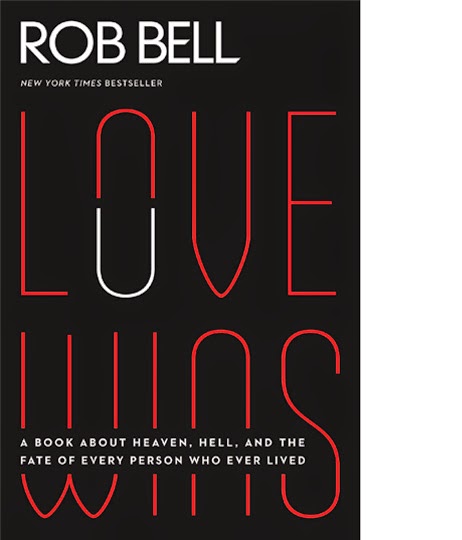
9a001-love-winsWhat flipped me, as it did to so many, in both directions, was Love Wins. The idea of a major evangelical leader through off the shackles of hell and substitutionary atonement and a negative Christology was huge, obviously. We bought Love Wins not long after it came out, and on a two-day road trip to Vegas to help my parents move into their new home, Ari read the book aloud in the car.

What a book. If you haven’t read it yet, well, do so.

For me, it was a life-altering kind of read. I credit it now with launching me into a trajectory towards a life of ministry. Although not necessarily imparting any new ideas or theology on me (I had already embraced universalism at this point), to hear it coming from such an inspiring and articulate person, not to mention in the context of him exploding this book onto the evangelical scene, was just really meaningful for me. And, at this point, Rob had my full attention.13434832_10209479319880481_7519660248721995900_n

I watched more Nooma. I listened to his talks and sermons and interviews, and added his Tumblr blog to my regular reading list. And in doing so, I found a person and an intellect and a personality so compelling and inspiring to me. That is really what Rob Bell represents to me. Whenever I watch him or read him or listen to him, I feel filled up creatively. I feel he is someone similar to me in background and worldview, and his enthusiasm and passion for living and creating and being just really inspires. I always go away from his output ready to contribute my own art to the world.
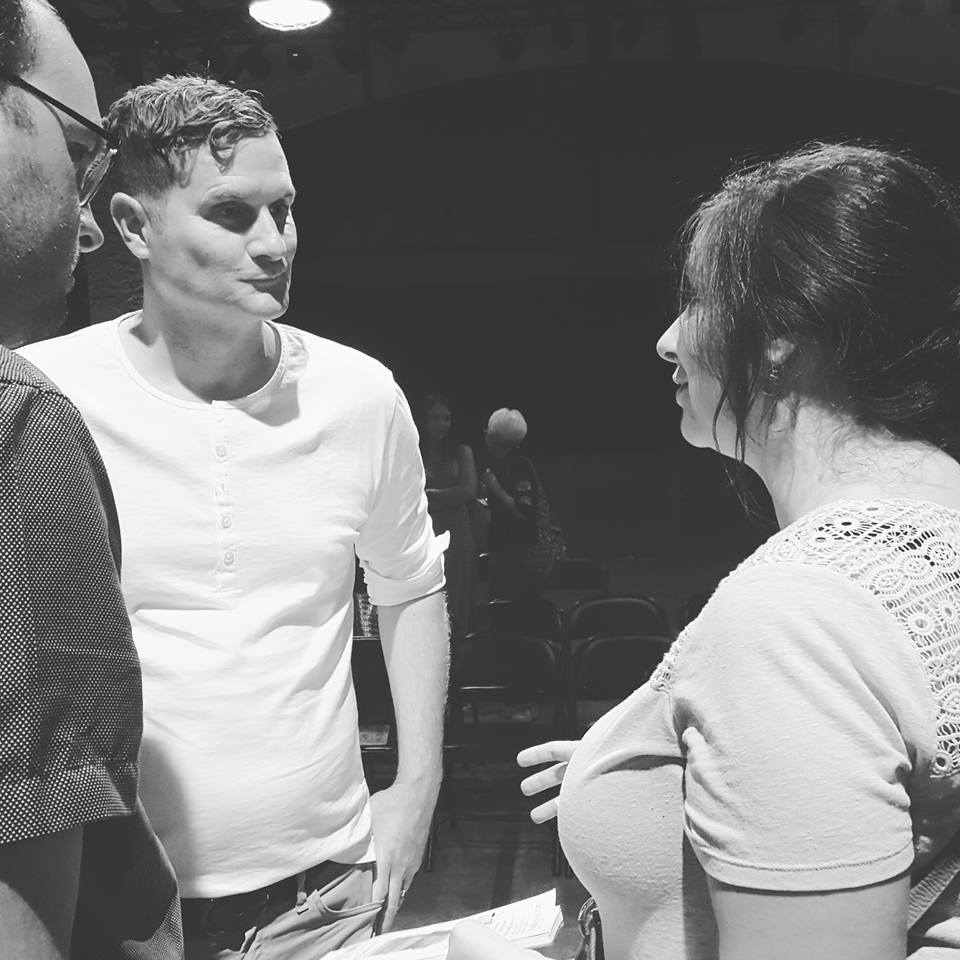
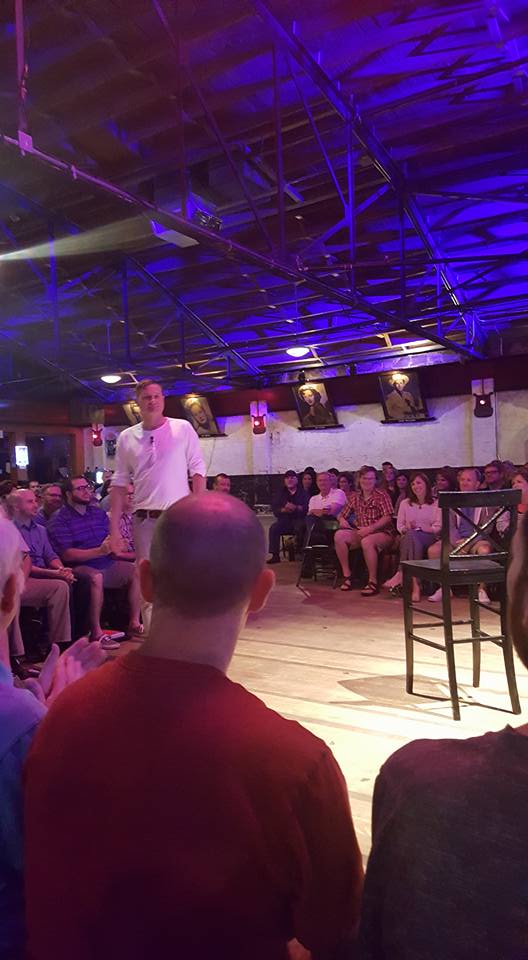
13501615_10209479318920457_6188870997027672000_nThat is what I am left with after Saturday. This experience was a whole new animal in terms of style and presentation. Whereas last year’s event was held at the Brady Theater here, a traditional auditorium with rows of seats and a stage, this year’s tour is much more intimate. Held at the historic Cain’s Ballroom, the set up was about 150-200 chairs set up in rows around a central bar chair. The total diameter of this square of performance space was no more than 30 feet. Rob held forth from the middle, walking circles, engaging all four sides, interacting with the people around him.

And it wasn’t just the set up. The show was scheduled to run from 10am until 6pm. I know, right?

13427760_10209479320400494_3436725249951786974_nThere are few people I could listen to for that long. Rob Bell is one of those people. Rob mostly held to the structure of his newest book (also titled How to Be Here), but this wasn’t just a speech or talk. It was a wide-ranging, free-flowing conversation. Rob would expound on a topic from the book, and then ask us in the room “what do you think?” And we were free to share anything: observations, questions, criticisms, ideas. Any topic was open. We could respond to each other. This was honestly a conversation, facilitated by Rob Bell himself.

(And no, it wasn’t eight hours straight. We took three breaks, including 90 minutes for lunch.)

13434925_10209479319160463_4704836330606620227_nI left feeling filled up, light, inspired, ready to create and love and learn and be here. In short, I felt like I always feel about experiencing Rob Bell, but instead of a 45 minute pod cast or 20 minute sermon or short blog, I got a whole days worth of fuel and energy.

If Rob brings his show near you, go. Don’t hesitate. Just go experience it. In the meantime, listen to his RobCast. Read his books, especially Love Wins and How To Be Here. Watch the Nooma videos. All of it is good stuff.13450872_10209479321440520_6868528861590669312_n
I have a lot more to say. Tomorrow, I’m gonna do a mini-review of How To Be Here, focusing mainly on the best part of the book to me: Finding your 1. I’ll explain tomorrow.

10 Books That Have Shaped My Thinking

I was challenged this last fall by a cherished mentor of mine on Facebook to list ten books that have had an exceptional impact on me and my thinking. I posted the list on Facebook, but I figured I should share it here as well. The idea here is identifying ten books that have really impacted me and brought me to where I am today intellectually. Being the intense book nut that I am, I jumped at the chance to go through my bookshelf and think about what I’ve been reading over the last few years.

These ten books are in no particular order, and are subject to change as soon as I finish future books. Here we go.

1. “Truman” by David McCullough: I’m nuts for presidential biographies, and this is the one that cemented Harry Truman as my favorite president. McCullough really highlights the Midwest attitude and personality of Truman and how that shaped his exceptionally virtuous and public life, including the many difficult decisions he had to make in office. Truman is undoubtedly the most “regular guy” and relatable president we had in the 20th century, and it shines forth in this great book. A must read for Presidential history buffs like myself.

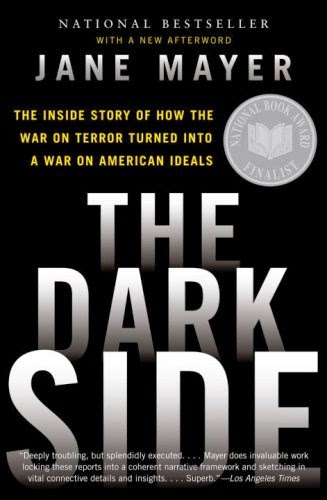
2. “The Dark Side” by Jane Mayer: I read this book right after I started the political science program at OCU and began becoming more politically aware. It is a detailed and engrossing account of the Bush Administration’s war on terror, and specifically how they decided to pursue and treat those they identified as terrorists. The passages describing torture and those within the administration who pushed back against the immoral actions are particularly harrowing. This book really is the one that woke me up to the real-world consequences and nature of politics.

3. “Jesus for President” by Shane Claiborne: This book totally blew my mind. I read it about three years ago, as I slowly began my journey into a more theologically-tinged political awareness. Shane asks the really hard questions, and makes really tough points about patriotism, American exceptionalism and Christianity, points that would never be tolerated from a political candidate, or a preacher in many churches, but which are nevertheless true. In the end, the book explores how to really, really follow Jesus while being politically aware and involved.

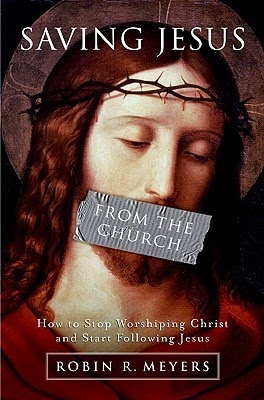
4. “Saving Jesus from the Church” by Dr. Robin Rex Meyers: another book that blew my mind as I matured theologically. The way I approach my relationship to Jesus and what I expect the church to be is deeply indebted to this book. I learned a lot, and also developed a lot of questions that caused me dig even deeper, as a result of reading this book.

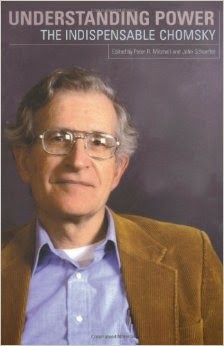
5. “Understanding Power: The Indispensable Chomsky” by Noam Chomsky:  Along with “The Dark Side”, this is a book that really woke me up to the real world consequences and effects of American foreign policy. Chomsky still has, and always will have, a strong effect on my thinking. Passages of this book were required reading for a Political Philosophy course I took at OCU.

6. “Love Wins” by Rob Bell: My wife Arianna read this book aloud to me as we drove to Las Vegas last summer. I was at a point in my faith where I was really struggling with the idea of a loving, merciful God who would send people to Hell to suffer eternally. Rob lays out a great argument in this book about why this idea of a “punishing hell” is in no way Biblical and how we should view our faith in a way that keeps us accountable to God without eternal punishment. For further reading on this subject, Benjamin L. Corey has been much help on his blog.

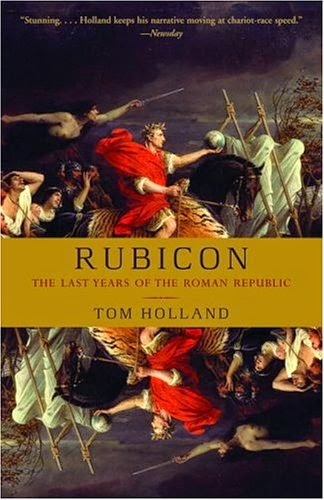
7. “Rubicon” by Tom Holland: I’m slightly obsessed with Roman history, and especially the era around Marius, Sulla, Caesar, Pompey, and Augustus. I love learning about the fall of the Republic, the rise of the Empire and most of all, the fascinating personalities who powered the biggest political shake-up in classical history. Tom’s book is a great place to start that learning. Colleen McCullough’s “Masters of Rome” series (which I’m currently re-reading) is another great source.

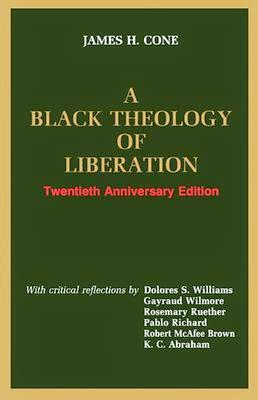
8. “A Black Theology of Liberation” by Dr. James Cone: I actually just finished this book recently. If there is any one book that has both challenged me and infuriated me and educated me all at the same time, this is the one. (Arianna can confirm that series of reactions.) I certainly don’t agree with everything Dr. Cone says, but I definitely sympathize with his arguments, and I found my own thinking continually challenged and changed as a result of reading this, especially in light of current events around race and authority in the United States. I love anything Liberation Theology, and along with Gustavo Gutierrez and Oscar Romero and Howard Thurman, James Cone will always been prominently placed on my bookshelf as a minister.

9. “Social Principles of the United Methodist Church” No, I’m serious. Don’t laugh, this counts as a book. At a time when I was feeling that there was no church that addressed the issues important to me in a way that embodied justice and mercy, the Social Principles knocked me onto a collision course with ministry. I was so relieved to find a church that not only held these things important, but also took the time every four years to think about and discuss and debate and pray and write them down. As long as we have our Social Principles, and we work hard to live them, I will always be a United Methodist.

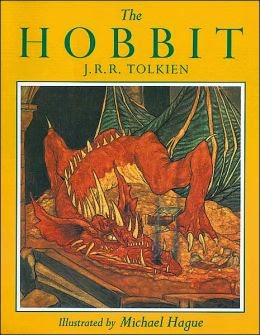
10. “The Hobbit” by J.R.R. Tolkien: The only piece of fiction on my list. I first read it in the 5th grade. Our library at Benton Grade School had a large, hard-bound copy with big, painted illustrations by Michael Hague that I must have checked out most of the year and read over and over. From hence came my love of Lord of the Rings, Harry Potter, Game of Thrones, and all the other fantasy books I reread over and over and over again.

That’s my list. Share yours below!

1 Corinthians 11-12: This Table is Open to All #30daysofPaul

Rob Bell and your humble blogger

I had the incredible opportunity to attend Rob Bell’s “Everything is Spiritual” show when it was here in Tulsa last week. I’ve been a Rob Bell for a while, ever since I read his paradigm-shifting book “Love Wins,” and his stage show is absolutely mind-blowing. If you get a chance, go. Cancel everything and go and take a notepad and just listen to him talk. It’s really mind-blowing.

The stuff he talked about fits right in with what we are experiencing here in Paul’s first letter to the Corinthians. Today’s chapters move us back into Paul’s overarching theme in this letter of Christian unity.

In the talk, Rob described the fundamental progress of the universe towards greater complexity, depth and unity. He spoke of how evolutionary processes have caused all living things, including humans, to defy all expectations by becoming more complex by coming together to create something bigger. Particles combine to become atoms, atoms combine to become molecules, molecules combine to become cells, cells combine to become planets and rocks and plants and animals and us.

He asked, near the end, “what is the thing we are being invited to create together?” What is that thing in the future that humans are to come together and make, that thing that may be inconceivable and unimaginable to us now, but is nevertheless real and desirable and damn near inevitable?

One of the most moving statements he made was about racism and the way it works against the progress of nature. “Racism,” he said, “defies the essential unity of the universe.” Things like racism and bigotry and hate tear us apart, instead of building community. 13.8 billion years of history show an undeniable story of progress, one that some humans work so hard to push back against.

We Christians have a long, rich history of unity, interwoven with a tendency to build walls and tear apart communities and segregate ourselves. Paul, in chapters 11 and 12, ties the essential unity of Christianity, how it is like a body made up of many parts working towards a common goal, to the practice of communion, that brings all Christians together around one table, equally valued and equally important.

Communion is at the center of the Christian tradition. The earliest Christian believers gathered not for worship services and praise bands and prayers of the people, but to share meals, to be a community gathered around the most universal of human needs, the need to be nourished and fed. Communion is at  it’s best when all are welcome, when it reflects the example of the Jesus who ate with everyone – tax collectors, prostitutes, thieves, everyone.

Too many denominations and Christians place conditions around the common table. They have requirements to join in communion, to be a part of the community gathering together. I’ve long rejected these traditions and found my home in the denominations that practice an open, inclusive table. My church homes- the United Methodist Church and the Disciples of Christ-place no restrictions to who can join our communion tradition. This creates a beautiful practice whenever communion is had, as all identifiers and categories are left behind like one’s coat and hat as all are given the bread and the cup. No matter the struggles and sins and suffering in one’s life, everyone is welcomed in and loved in this most basic of Christian traditions.

Through the Lord’s Table, we are able to serve one another every time we are together, making a habit of the art of service. Rob described serving as “when you intentionally decide to align yourself beyond yourself.” What a beautiful way of reminding ourselves why we live with ultimate regard for the Other. he also said, “suffering is not an intellectual exercise,” meaning that suffering is one of the most intense of human experiences and only by identifying and unifying ourselves with others can we join in their suffering, understand, and then work to liberate them from it.

The last Rob Bell quote I want to share: “Line yourself up with the fundamental direction of the universe.” He repeated this mantra over and over. The universe for 13.8 billion years has been moving inevitably towards complexity, depth, and unity. In a word, it has been making constant progress. As Christians, may we always line our selves up with that progress, by practicing the unity of One Church, One Body, One faith.

Next: 1 Corinthians 13-14

For a PDF of the 30 Days of Paul reading plan, click here.