
21st century racial politics always takes place in the shadow of our inability to do anything about our racial problems. We are forever creating weird rituals to center and honor and elevate Black people, in lieu of feeding poor Black children or freeing Black prisoners. The deal we’ve made, essentially, is to say “Sorry about all the oppression, Black people. Can’t do anything about it! But tell you what, white liberals will be very weird around you for the rest of your lives, out of a very sincere desire not to offend or oppress you. We can’t do anything about Black poverty or violence against Black people, but we’ll act like racial injustice is, like, double plus bad in polite society. Also Wells Fargo will send out a very respectful Kwanzaa email every holiday season. So that’s nice.”
Freddie DeBoer, “I’m Somehow Less Concerned with Whether the Holocaust was ‘About Race’ Than I Am with the Six Million Murders”
Tag: racial justice
Nobody Knows Anything About CRT: Some Thoughts on CRT, Teachers, and Cameras in Classrooms
Here is the thing about the debate over Critical Race Theory in our schools: almost nobody on either side of the debate has any idea what they are actually talking about.
Critical Race Theory is not, as many conservatives would have you believe, any and all talk about race as a social construct or systematic oppression. Critical Race Theory is also not, as many liberals would have you believe, simply the teaching of the “real” history of race relations in America. These people bloviating on tv and social media about CRT and how it does this or that: they just simply don’t know what they are talking about. So my first piece of advice when thinking about this is, ignore almost everyone who makes declarative statements about what CRT does or is.
I don’t say this as the CRT expert you should be listening to. I also don’t have a lot of clarity on what it is. And I actually studied the subject! In my Masters studies, I took an entire course on Race in America that drew heavily on CRT; I also took a course on critical theory more broadly, which pulled on aspects of CRT while also focusing on the roots of critical theory in the Frankfurt School and especially the liberatory pedagogies of Paulo Friere. So, sitting here writing this, while I am certainly no expert – far from it, in fact – I can say confidently that I do know more about the subject than 99% of those who are spending all their time on your television or social media feed insisting they know what’s happening.
Here’s a hint: they don’t. This especially goes for those on cable news and those holding elected office. Their goal is not to inform or protect you. It’s to draw your attention, and they do that best by trying to scare you.
So, here are a few things that I believe are and are not true about CRT in American schools.
First, when most people on both sides of this debate say “Critical Race Theory”, they almost certainly don’t mean the school of legal and social theory that aims to critique the American legal system, as developed by folks such as Derrick Bell, Kimberle Crenshaw, and Richard Delgado. So, right off the bat, the term CRT is simply a convenient shorthand for whatever other political hobbyhorse the person has.
Second, liberals are wrong to dismiss the concerns of parents about what their kids are and aren’t being taught about race relations. It is right that we are beginning to explore a fuller, more honest history of race in America (more on this in a moment.) But, bringing narratives and practices around declaring and critiquing privilege, or forcing students to declare racial guilt, or encouraging race essentialism: none of these things has a role in K-12 classrooms. This is what many parents are concerned about, even if that concern may be baseless. We should be doing our best to reassure parents, by being open and honest about our curriculums, instead of being dismissive and sarcastic. As a public school teacher, I want buy in from parents, not anger and suspicion. Thus, I have no problem answering questions about curriculum and sharing information, and I don’t know many teachers who feel differently. So, liberals, let’s be a little less dismissive about the concerns of real parents.
Third, contrary to the narrative of conservative nationalists, we have actually done a really bad job for a long time of teaching the real, sordid history of American racial relations, and history and civics curriculums need to by and large be rethought. Many schools gloss over Reconstruction, over Jim Crow, over the role slavery and its legacy played in our nations founding and the lives of those we often hold up for unqualified praise. We have ignored the role of racism in the New Deal, the racial backlash of the 70s and 80s; we have glorified many historical figures who should be understood more critically. These are important conversations to be having in classrooms, and the only way to do that is to develop honest and rigorous curriculums, and by supporting and protecting teachers who are the ones bringing this knowledge to our kids. The idea that American history is nothing but glory and patriots and freedom is propaganda, and it does nothing but hurts the cause of healthy patriotism many conservatives claim to value. Teaching honest history is the only way to build a better future together.
Finally, and most importantly in my eyes: teachers and schools are not the enemy. CRT has become a weapon that anti-public school voices have found in their long running attempt to kill public schools in favor of private ones. Teachers are not evil state actors out to indoctrinate your children. Teachers are your neighbors, your friends, and your family. Teachers want your children to succeed, and they want to teach them the truth while helping them grow.
Here in Oklahoma, and elsewhere, there is a new line of attack from anti-public school conservatives: the idea that we must now put cameras either in classrooms or on teachers, in order to “monitor” what they are teaching our kids. In short, this is a really, really terrible idea. (Not to mention, probably illegal, unconstitutional, and unworkable.) The idea comes with the rhetoric that teachers are merely “government employees” who “work for me” and that “I have the right to supervise my employees.” Often, this language comes from the same people who spend a lot of time exercised about government overreach and privacy invasions.
Cameras in classrooms is not only a gross invasion of privacy for teachers and for students. It also won’t work to make schools better. Oh, it may work to scare teachers away from difficult (but necessary) discussions. And that is probably the goal of many of the advocates of cameras in classrooms. But it will make schools worse, and damage the education students receive.
Here are some hard truths to know about schools:
Sometimes, your kid will succeed. Sometimes, they will fail. They will experience both.
Sometimes, your kid’s teacher will succeed. Sometimes, they too will fail. Teachers, like you, are human and fallible. And teaching, for those who have never done it and thus don’t know, is really, really hard.
Your kid will learn about lots of things you like and agree with. Your kid will also learn about lots of things you don’t like or agree with. Such is life.
You do not have to market cornered on what is true or good. If you are trying to stamp out every piece of contrary or conflicting information out of your kid’s life or classroom, you are going to be both grossly unsuccessfull, and also damaging to your kid’s future well-being. By removing the presence of hard debates and alternate ideas, you are setting them up for failure in life, as they become unable to critically and honestly grapple with hard things.
Finally, again, teachers are not your enemy. In addition, teachers aren’t unaccountable in the classroom. Teachers are constantly observed; we have other adults in and out of our classrooms all day. We must turn in lesson plans. We cannot just ignore the curriculum. We cannot push politics or religion or personal opinions on our students. Putting cameras in our room won’t stop your kid from learning things you don’t like or agree with. But it will prevent us from having that one-on-one conversation with the kid being abused by their mom at home. It will prevent us from having that five minute conversation about last night’s game to connect with that one kid we are struggling to connect with. It will prevent us from being everything we need to be for our students.
Teachers are not indoctrinating your kids. But teachers are also not shielding them. Trust our schools to do their job, and if you don’t, then get involved in a constructive, useful way to make them better. And, for God’s sake, please stop listening to all those out there who want to scare you with stories of indoctrination in the service of their political power games. They don’t know what they are talking about. Perhaps they should spend a little more time in school.
#JacobBlake
Jacob Blake should not have been shot.
Jacob Blake should not be laying in a hospital bed in Kenosha, with the prospect that he may never walk again.
Revelation 6:10
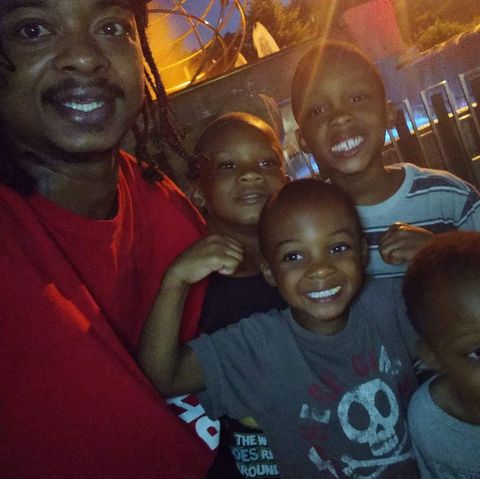
Jacob was not presenting an active threat to police officer or the public. He had his three small children in his car. He was on the scene to break up a fight, not start one. If police officers really needed to detain him that badly, they should have instead deescalated, and if necessary, let him drive off. He was not a threat. He was not hurting people. His license plate could have been taken. He could have been brought in later, once tempers were cooled. Again, just like George Floyd and Breonna Taylor and Ahmaud Arbery and so, so, so many others, this did not need to happen.
Jacob Blake should not have been shot. Period.
Have police officers and public safety officials learned nothing in 2020? Have the protests that have been rolling across our nation against police brutality and the unnecessary deaths of so many really fallen on ears this deaf?
We have to demand better of those we entrust our public safety too. Our public is not more safe if our cops are so willing to pull guns and fire them at people not presenting an active threat to a situation.
If you watched the video of Jacob Blake, or read the story, or saw the outcry, and your first thoughts weren’t centered around sadness and horror and disgust and anger, but instead were centered around thoughts like, “He got what he had coming to him,” or “He should have complied with police,” then I think you need to do some deep introspection. Your soul is sick in some way, if you can’t see a father get shot by agents of the state and not feel something other than blind affinity for the power structures that let this keep happening. Please, spend some time reflecting, and praying, and thinking deeply about what kind of world you want to live in.
From a Christian perspective, as I’ve said time and time and time again here, our allegiance and sympathy should not be with those wielding the power of the nation over others. Our sympathy, in the words of Christ, should always be with the least, with the oppressed, with the wronged, with those outside of power. We should see incidents like this with a great sense of sadness for our world, and an attendant moral outrage over the use of violence over and over against our fellow human beings. If you claim the title of Christian but you feel people like Jacob Blake somehow got what they had coming to them, then you are doing this whole Christian thing wrong. Go gaze on our Crucified Lord, who was a victim of overwhelming and unjust state police power.
Jacob Blake should not have been shot. #BlackLivesMatter
 Justin DaMetz