Romans 1-3: The Big One #30daysofPaul

We made it.

The Big One.

Paul’s Epistle to the Romans.
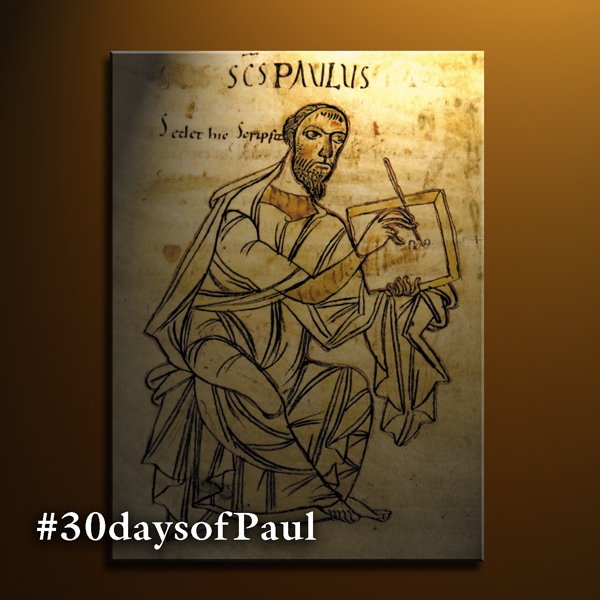
Of all the letters in the New Testament, none has quite the stature of Romans. This is 16 gnarly chapters of pure Pauline theology, laid out for us in full. A large majority of what we consider Christian orthodoxy today, the theological concepts and ideas we take for granted, come from this magisterial work. The culmination of more than twenty years of thinking and writing and traveling and working, this is truly Paul’s magnum opus.

But yet, we hardly seem to understand it.

Several times over the last few years, I’ve tried to plow into Romans and understand what this thing is all about. And each time, I’ve come crashing down, rarely making it past 8 or 9 chapters.

No doubt about it: Romans is dense.

It’s hard to follow.

It has lots of big “church” words repeated over and over and over.

It’s much easier to just dip in and grab what you need from here and there, rather than trying to comprehend the whole.

But that’s what we are going to try to do.

Let’s start by understanding why Paul wrote this letter.

We are nearing the end of Paul’s ministry. At this point, he is in Corinth, visiting them in the aftermath of his letters of Tears and Reconciliation. His work in the Aegean peninsula is done for the most part; the churches there are well-established and thriving.

So now, he is about to set off for Jerusalem, to make good on his promise from a decade earlier, to deliver the tithes and offerings for the Jerusalem church from the communities he planted.

Remember his promise to Peter to “remember this poor”? This is that.

Before he sets off, he writes this letter to a church he has never visited, and who apparently has made it known that they are confused as to why he never has come to them. Since Paul plans to set sail for Spain after he finishes in Jerusalem for some more good church planting, he knows he needs to establish a rapport and relationship with Christians in Rome. This serves two purposes:

1) He’s gonna need to stop there on the way, because Jerusalem-to-Spain is a long journey,

and

2) He knows he is gonna need financial support from Rome for his work in Spain.

So he figures he better lay that ground work now.

Now, the church at Rome is an interesting community. Rome is the center of universe, as far as first century humanity is concerned.

Imagine:

Washington DC.

New York City.

Paris.

Tokyo.

All rolled into one super-metropolis. That’s kind of the role Rome played in the ancient world.

The church there had been through some turmoil. Made up of a combination of Jews and Gentiles, they had been expelled from the city around 50 CE due to some conflict with the rest of the Roman Jewish community. Let back in after the death of the Emperor Claudius in 54, they were now experiencing some conflict between the Jewish and Gentile elements in the church.

Keep that mind. That serves as the backdrop of Paul’s writing here.

So, that density I mentioned earlier. It’s very much evident in these first three chapters.

These chapters make up one sustained theological argument. Let’s try to take it point by point here.

Verses 16 and 17 of chapter 1 are commonly held to be a summary of the ensuing argument Paul will make over the rest of the letter. Here it is:

“For I am not ashamed of the gospel; it is the power of God for salvation to everyone who has faith, to the Jew first and also to the Greek. For in it the righteousness of God is revealed through faith for faith; as it is written, “The one who is righteous will live by faith.”

Dense as a rock, I know.

Paul begins his argument by giving us a short, “cliff notes” version of human history. Basically, he says, God made humans, and gave us the earth and everything in it, and asked us to be faithful to God, and then we decided to worship other things instead. We became idolaters.

This is so key. If we are thinking about the big picture of Romans, we need to keep “idolatry” in mind. That’s the key behind everything for Paul. Paul has synthesized and centralized his view on sin to a central focus on idolatry.

In his view, all the subsequent sins of humanity –

“Wickedness,

evil,

covetousness,

malice,

envy,

murder,

strife,

deceit,

craftiness,

gossips,

slanderers,

God-haters,

insolent,

haughty,

boastful,

inventors of evil,

rebellious towards parents,

foolish,

faithless,

heartless,

ruthless”

– all is a result of idolatry.

Side bar: This section of Romans is one commonly used to condemn homosexuality. To do so is to miss the point Paul is making here, not to mention to disregard two thousand years of subsequent human development, scientific understanding, and psychological study. Paul is speaking of idolatry as the prime sin of humanity; it’s clear he views homosexuality in the first century context as a product of excessive lust, and thus on the idolatry of human sexuality. His views on homosexuality were a product of his times, and aren’t consistent with our modern understanding of homosexuality and committed, monogamous relationships.

And it certainly isn’t a commentary on gay marriage.

So, idolatry.

We all are guilty of the sin of idolatry in some way or form. And yet, Paul says, we are so quick to cast judgment elsewhere. We ignore our own sins, our own shortcomings, and focus on others, pointing fingers at the deficiencies all around us, like we know so well right and wrong.

This is undermining God, and is another form of idolatry, Paul writes. So now, not only have we rejected God, embraced idolatry, spawned numerous other sins as a result, but then we turn around and want to blame everyone else.

Yikes. We kind of suck.

So God acted. He gave us The Law.

Specifically, he gave the Jews the law.

This is where Paul starts trying to bridging some of the gaps in the Roman church. Remember I said there was a split forming between the Jews and the Gentiles in Rome? Well, this was mostly centered around opposite interpretations of the Gospel message.

Jewish Christians argued that, as Jews, they had received God’s revelation first, that they were first and foremost God’s people, that Jesus had taught and lived among them, and thus this privileged them within the early church.

Gentile Christians argued that the coming of Jesus heralded in a new covenant, that all old distinctions and barriers were no more, and thus being a Jewish Christian afforded no more privilege than anyone else got.

Paul is seeing a dangerous divide upon up in the universal church he loves, and he writing here to desperately try to bring everyone together under the banner of One God, One Church.

First, he reminds them that the chief focus isn’t on the Law anymore, but on acting in a way consistent with the Kingdom. He tells them circumcision (that is, Jewishness) is of no use to anyone, if they don’t live right.

“Rather, a person is a Jew who is one inwardly, and real circumcision is a matter of the heart – it is spiritual and not literal.”

But, he says at the beginning of chapter 3, there is some specialness in being a Jew. Jews received the Law first. They were “entrusted with the oracles of God.” It was Jews who were first made aware of the righteousness of God. There is a cultural memory and heritage there, and that is definitely something to always be proud of. But, it doesn’t make them “better” than anyone else.

This brings us to the final part of Paul’s initial argument. We know God is righteous because of our own inadequacies, made know through the Law. Some would argue then that our shortfallings actually work to the glory of God, and thus we should fall short more often, in order to raise God up some more!

It seems some enterprising folk have found a loophole in Paul’s teachings, and Paul is fully ready to address that.

By no means, he says. God’s righteousness is attested to through our own need for a Law, yes, but it is also attested to by the life of Christ. In fact, because Christ lived and we have faith, the need for a Law has been nullified. Instead of the old Law, Paul writes, now we live by the “Law of Faith.”

This is an evolution of Paul’s thought from Galatians. People have exploited loopholes and weaknesses in his teachings, and Paul has worked to shore up the message he is preaching. He no longer completely rejects the role of the Law, but instead, as he says in the last verse of chapter 3, “Do we then overthrow the law by this faith? By no mean! On the contrary, we uphold the law.”


There we go. We made it through three chapters of Romans. Let’s recap.

God created us.

We sinned.

God made the law.

We failed under the law.

Jesus came and lived a righteous life.

We have faith.

By our faith, we uphold the law.

Finally, we have found righteousness.

In writing to the church at Rome, and addressing their growing schism, Paul is making the argument that although, yes, once God was made known exclusively to the Jews through the Law, now all people are reconciled to God through faith, because we have seen a new way of living in Christ. As he writes,

For there is no distinction, since all have sinned and fall short of the glory of God; they are now justified by his grace as a gift, through the redemption that is in Christ Jesus.”

See! Not so hard.

Three down, thirteen to go. You can do this. We can do this together. We are going to understand and appreciate Romans in an all new way. Let’s just keep building from here.

Next: Romans 4-6

For a PDF of the 30 Days of Paul reading plan, click here.

Philippians 3:1b-4:3: Christology and Kyrios #30daysofPaul

Let’s talk about Christology.


I love Christology. This is the kind of thing I nerd out about.

Christology is the theological study of the nature of Christ.


It’s a sub genre of systematic theology. It’s the process of exploring what one means when one refers to Jesus as “Christ.” It’s studying the role that Jesus Christ specifically plays in our faith.

Exciting stuff, right?

It concerns such things as:

the divinity of Christ,

the eternal nature of Christ,

the miracles and teachings of Christ,

Christ’s birth,

Christ’s death,

Christ’s resurrections,

what it means to call Christ “Lord”,

what it means to call Christ “Son of Man,” or “Son of God,”

the role of Christ in the Trinity.

It is the theological, academic, focused study of all things “Jesus.”

We are talking about Christology today because some scholars consider Paul’s letter to the Philippians, and specifically chapter 3, to be one of the earliest examples of Christology.

Now, let me clarify a bit. Each of the Four canonical Gospels are advancing a specific Christology, ones that advance the arguments they are making in their accounts of the life of Jesus.

Additionally, Paul has reflected on the nature of Christ in earlier letters. But Philippians is the first time there seems to be a specific emphasis on such.

It begins in chapter 2, with the hymn Paul quotes in verses 5-11:

5 Let the same mind be in you that was in Christ Jesus,

6 who, though he was in the form of God,

did not regard equality with God

as something to be exploited,

7 but emptied himself,

taking the form of a slave,

being born in human likeness.

And being found in human form,

8 he humbled himself

and became obedient to the point of death—

even death on a cross.

9 Therefore God also highly exalted him

and gave him the name

that is above every name,

10 so that at the name of Jesus

every knee should bend,

in heaven and on earth and under the earth,

11 and every tongue should confess

that Jesus Christ is Lord,

to the glory of God the Father.

Clearly and obviously, the early churches were playing with who and what Christ was, and what his life and death meant.

This beautiful early hymn says things we take for granted today, but at one point in the young church, these things weren’t so well-known. At some point, somebody wrote these things down, as a way of laying down a marker for what Jesus meant to the church.

That process is Christology.


So, back to chapter 3.

Paul, throughout his letters, likes to use the Greek words “Kyrios” to describe Jesus. Kyrios means “Lord.” Kyrios is central to the development of early Christology.

The common use of kyrios by Paul established it as the go-to title for Jesus. The early ideas about who Jesus was and what he did were all colored by the use of the word. It is impossible to understand the development of the meaning of Jesus to those who lived when he did without understanding the importance of this word.


Early in chapter 3, Paul recounts the confidence he could have in who he was, due to the great names and titles and associations he had:

If anyone else has reason to be confident in the flesh, I have more: circumcised on the eighth day, a member of the people of Israel, of the tribe of Benjamin, a Hebrew born of Hebrews; as to the law, a Pharisee; as to zeal, a persecutor of the church; as to righteousness under the law, blameless.

But he switches gears, and makes one of his most famous statement through all of his letters, one of the most quoted verses in the New Testament:

Yet whatever gains I had, these I have come to regard as loss because of Christ.

This right here. This is so, so important to our understanding of the nature of Christ, to our common Christology.

To associate one’s self with a kyrios, with a Lord, was to associate one’s self with success, with power and prestige and honor. All the great things you had done, all the titles you won and the powerful relations you had, would raise you in the eyes of your kyrios, would be immensely important to your standing in the world.

And Paul is saying Jesus turned that all on it’s head.


By associating with our kyrios, Jesus, we don’t count those earthly accolades in the credit column. Instead, they are counted against us. They are debits to our accounts.

Because in Kingdom of this kyrios, the least are counted as the first.


Our standing with God does not come from the honors we have achieved. It comes from our willingness to lower ourselves, to become meek and lowly, to live in service to others, instead of served by others.

And it’s that way because that is the example we saw from the life of the one who showed us God.

Jesus humbled himself.

He ate with the sinners.

He hung out with the outcasts.

He touched the sick.

He mourned with the small.

His success came through failure; the symbol of his victory, of the victory of God’s Kingdom, was not a crown,

or a scepter,

or a throne.

It was a cross.

It was the place of the most humiliating execution possible. It was the tree of dishonor and shame and public ridicule. It was the final resting place of traitors and slaves and the scum of the earth.

He was tortured and killed. His followers were scattered, his name forgotten.

And yet, here we are, twenty years after his ignominious death, and Paul has branded him kyrios, and announced the way in which we properly honor our Lord.


That’s Christology right there.

That’s working through what and who Jesus was, what his life meant.

Isn’t that exciting stuff?

Next: Romans 1-3

For a PDF of the 30 Days of Paul reading plan, click here.

Philippians 2:19-3:1a, 4:4-9, 4:21-23: The Big Picture #30daysofPaul

I’ve almost been defeated. 

I’ve been plugging away over the last ten days or so at this #30daysofPaul reading challenge, writing about these little note-like missives from Paul. Sections of 2 Corinthians, the letter to Philemon, the Epistle to the Philippians: all these have been light on the theology, and heavy on  personal notes and minutiae and specific instructions and answers to questions.

There is only so much one person can say about this stuff.

And today was almost the day it got me.

I’ve been thinking and thinking on this passage since yesterday afternoon, and after 18 hours of fruitless reflection, I was ready move on to Romans.

And then I pulled out my handy, dandy Interpreters Bible set.

Thank goodness for fifty year-old scholarship.

So, let’s think about the big picture here.

Paul’s seven+ authentic epistles weren’t written in a vacuum. They did not spring forth fully formed, free of any context and or personality traits. Paul wrote these in a specific time, to a specific audience, with a specific purpose in mind. His writings have very little to do with guiding the faith of American Christians in the 21st century, and very much to do with addressing the needs of his congregations and friends.

I know, you’re saying “duh, we’ve already been over this.” But I think it’s important to point out again. We get into the weeds of these Epistles sometimes, and we lose sight of the purpose Paul was writing with. We start pulling out individual phrases and verses to back up an argument or make a point, and we lose sight of the big picture.

So Philippians: what was Paul’s purpose in writing this letter?

According to my Interpreters Bible, it is widely held that Paul was writing a letter of thanks in response to a large monetary gift from the church at Philippi, as referenced near the end of the letter. It seems the church raised a large sum of money, something that took a lot of work, to send to support Paul.

Now, we have seen elsewhere that Paul wasn’t much of one for accepting money for churches. It appears he made an exception for Philippi, at least in this case, perhaps because he saw how much work and pride they put into their fundraising. But there is still a note of embarrassment from Paul, a hint of the uncomfortable feeling he had in accepting money. This has been Paul’s consistent attitude throughout his ministry, and in fact, in previous letters, he had always had a point of pride in acknowledging his refusal of funds from the churches he supported.

(A quick side note here: I know that for the purposes of this #30daysofPaul study, Philippians has been split up, and 4:10-20 was actually the first thing we read from this letter. I don’t have a copy of The Authentic Letters of Paul, the book this study comes from, so I have no idea why this decision was made. I trust the authors and their reasonings in reconstructing the chronology of Paul’s letters, but I’m going to ask us to focus on the original composition of this letter, as handed down to us in the Bible. Maybe they got it wrong, and this is how the original letter flowed, or maybe an ancient compiler thought it would work better if that was the last bit included from Philippi: whatever the reason, for the purposes of my point, we are going to view the letter as an uninterrupted whole.)

Back to my point: this is supposedly a letter of thanks from Paul to his benefactors in Philippi. But go read the letter as a whole, or at least skim the headers. I’ll wait while you do.

We don’t see much reference to that gift, do we?

In fact, it’s not really mentioned until the end, in chapter 4. The rest of the letter is a status report on Paul’s situation, and exhortations to live humbly and be a light to the world, and some information about Timothy and Epaphroditus.

If this is a letter of thanks for a gift,

it’s kind of an odd one.

I think this emphasis is deliberate. Something we can discern about Paul is that he took the words of Jesus on money and wealth very seriously. Paul agreed that money is the “root of all evil,” and I think he always wanted churches to keep the focus off finances and on serving one another. If he asked them to send money to another church, or to support the leaders in Jerusalem, it was about spreading and nurturing the Christian faith.

Paul is shifting the emphasis of his church at Philippi with his letter. They have sent him a large sum of money, and while they probably wouldn’t come out and say they expect it, they surely believed that Paul would write a gushing thank you letter, talking about how generous they are.

But Paul doesn’t want them becoming about the money; he doesn’t want them to make their fundraising prowess their chief gift to the world. Instead, he moves the focus to the things that are important for the church.

Thinking of others, especially those in distress.

Living with the humility that Christ showed.

Becoming a light to the world.

Keeping their eyes on the cross.

In 4:8 he makes this point most explicitly,

“Finally, beloved,

whatever is true,

whatever is honorable,

whatever is just,

whatever is pure,

whatever is pleasing,

whatever is commendable,

if there is any excellence and if there is anything worthy of praise,

think about these things.”


That’s what Paul wants their focus to be.

Live in the example of Christ.

Be humble.

Love justice.

Find purity.

Serve, and be served.

Be generous, not for the praise it engenders, but because it brings the Kingdom a little

bit

closer

everytime.

Don’t lose sight of the big picture.


Paul had a purpose in writing to Philippians. But I don’t think it was the purpose they expected.

Next: Philippians 3:1b-4:3

For a PDF of the 30 Days of Paul reading plan, click here.