The effectiveness of the church, or what liberation theology gets wrong (The Politics of Charity, Part Two)

Any long time reader of mine knows I have a deep affinity for liberation theology. My earliest ventures into theology were by reading the words of James Cone and Oscar Romero and Gustavo Gutierrez. The highly political and radical nature of liberation theology strongly appealed to me, coming as I was out of my work in progressive politics and my early academic work in political science. Ideas like the “preferential option for the poor” were intoxicating to me, as much of my understanding of Christianity growing up never included such concrete and political concepts.

Stanley Hauerwas opens his essay, “The Politics of Charity”, by reflecting on liberation theology, and its approach to a world of injustice and deprivation. “Thus liberation theology,” he writes, “aims not just to aid the poor but to give the poor the means to do something structurally about their plight.” This is a succinct and accurate statement of the primary focus of the politics inspired by liberation theology. The reason liberation theology has become so popular on the religious left is exactly this emphasis on the empowerment of the poor, especially when considered in light of the politically-prominent American Christian Right’s focus on conservative, capitalist-friendly politics that alienates and disempowers those who aren’t the wielders of captial. Liberation theology has become one of the primary banners of the scores of Christians who can’t find a home in the more traditional public face of Christianity in America. Equally appealing is the permission structure it erects for doing political work under a religious banner; too many churches have long talked about the poor and the orphan, while doing little for them in a concrete, material way. Liberation theology, on the other hand, insists that actual, physical liberation is a necessary corollary to salvation, both for the oppressor and the oppressed.
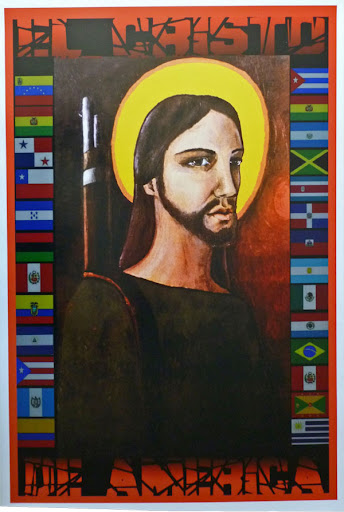
Despite this good work, liberation theology also has its own shortcomings, wrapped up in its own fealty to leftist politics and Third World class struggles. Hauerwas begins his essay highlighting this tendency. He quotes from a piece by Camillo Torres, a Colombian priest, revolutionary, and socialist, who wrote that for “love to be genuine, it must seek to be effective.” Hauerwas expands on this, writing “the logic of this position requires if revolution cannot come by peaceful means, the Christian in the name of charity must be willing to use a gun.”

The “effectiveness” of the Gospel is at the center of Hauerwas’ essay. Are Christians required, in the work we are prompted to by the love of Christ, to be effective? Should we be focusing on doing things that can ensure some sort of positive outcome, embracing a variety of means in pursuit of one salvific end? Or do we need to adhere to a different accounting of effectiveness, one more predicated on intentions and values, on actions and virtues?

Hauerwas is clear very quickly, taking the latter position. “It is just such a conclusion,” he writes in reference to his extrapolation of Torres, “that indicates that something has gone terribly wrong in the linking of charity with effectiveness.” To focus on the effectiveness of what we do is to focus on the wrong criterion of action. Instead, Hauerwas believes, “what becomes all important is how that kingdom is served…what is important is how Christ taught us to care for our neighbor.”

This here is the central point Hauerwas is making, and his large critique of much of popular Christianity – on the left and the right – in today’s world. Too often, we Christians judge the work we are doing based on the standards of what is politically or socially effective under the rules of the game as laid down by the world. But Hauerwas is reminding us here that the standard we should be basing ourselves on is not the world’s, but the standard of love as laid out by Christ – “and by the world’s standard Christ was ineffective.” When deciding what to do to face down injustice, Christians shouldn’t be asking “what can we do to wield power for good?”, but instead “what does Christ require of us?”

Now, it is crucial to understand: this isn’t a directive to withdraw from the work of the world. Too often, ungracious readings of Hauerwas accuse him of just that sort of sectarianism, of wanting to pull back from the world and be piously righteous from the outside. But this isn’t the intention of his critique of effectiveness. Instead, he writes “a politics of charity rightly formed should help the world redefine what politics involves.” The politics of charity, which is what Hauerwas posits in place of the politics of effectiveness favored by so many socially-minded Christians, should be predicated on presenting an entirely different set of priorities, values, and emphases to the world, as it reminds Christians of the crucial and irreconcilable difference between the church and the world. “For the politics of the world is perverted because it takes power and violence to be the essence of human and institutional relations.”

The job of the Church is to present a new way of doing politics, one predicated on a different understanding of what is and isn’t effective. “In a world where the value of every action is judged by its effectiveness, it becomes an effective action to do what the world understands as useless.” This is necessary for Christians because we have a different understanding of purpose and meaning for humanity than the world does. The priority of the world is under-girded by a drive for mere survival. But Hauerwas calls this desire to survive an “illusion” for disciples of the Crucified One. “The very heart of the Gospel,” he writes, is “that what we have to fear is not death, but dying for the wrong thing.” When this shift happens, priorities and values shift radically. When the situation the world is in is no longer viewed through the lenses of effectiveness and survival and scarcity, things take on a whole new color.

Before moving along with his argument, Hauerwas ends with one final critique of liberation theology. Within this branch of thought, one of the driving forces is the idea of the preferential option of the poor. This means that, for Christians, all social action becomes justified if and only if it is meant to alleviate the poor and suffering of some form of oppression. As Hauerwas writes, this focus too often becomes the ultimate good of liberation theology, and thus idolatrous. As he writes, “For when the poor become the key to history it is assumed that the aim of the Christian is to identify with those causes that will make the weak the strong.”

Of course, the plight of the poor is a crucial concern for Christians, and one we are all called to address. But, being poor does not make one a Christian automatically, and working to ease oppression or poverty is not automatically Christian work no matter what form it takes. This is related back to the first point above: when any form of revolution is given the sheen of truth, then the use of non-Christ-like means of action becomes easy to baptize. “I am sure that the poor have a special place in God’s kingdom, but I am equally sure that the Christian life involves more than being oppressed or identifying with the oppressed.” This isn’t to say that Christians should only be serving the Christian poor; we have a duty to all peoples, wherever they are, especially if they are oppressed. But it does mean that the means envisioned by some groups of the poor may be incompatible with what it means to be a Christian, and ways in which a Christian should and should not act. 

The work of the Christian in the face of overwhelming oppression and poverty is not to provide freedom or power at any cost. Instead, it is to ask how we can do this work in a way that puts us in sync with the story of Christ, and then to only accept the forms that are Christian in nature, whether or not they are deemed effective by the world or not. The point, in short, is not the end result; we are not utilitarians, after all. The point is, what should Christians do in light of the life, death and resurrection of Christ? This is the driving question behind Hauerwas’ politics of charity, which we will begin to unpack in my next essay.

Archbishop Oscar Romero

One late note before we move on, in defense of liberation theology. As I stated at the opening, I have long loved liberation theology. My earliest days as an aspiring theologian were steeped in liberation thought, nurtured by the words of James Cone and Oscar Romero. I am still deeply indebted to them; in fact, I have an icon of Bishop Romero hanging over my desk, as a visual reminder of what theology is all about, in the end. I still believe liberation theology is an important strain of theological thought with much to teach the church. In a world of increasing inequality, and growing political and social oppression, it is as important as it ever was for the church to speak clearly and forcefully against injustice and for those who are oppressed and hurting in the world, whoever and wherever those people may be. Liberation theology is a fully formed tradition that can provide powerful words and ideas to help the church carry out this task. There is much to be learned and taken from this tradition. 

And there is perhaps no better place to look than at the words and life of Bishop Oscar Romero. Castigated in his lifetime by more extreme adherents to liberationist thought for being too conservative or too timid, Romero never lost sight of the Cross as the generating image behind liberation theology. Romero, in his fight to prevent the Church from being co-opted by conservative, reactionary forces driven by power and wealth in El Salvador, was equally unwilling to let the Church be co-opted by Marxist and radical liberation fighters among the people. Instead, the church stood as a third way between these two warring factions, both of which claimed the mantle of popular assent, but neither of which in reality held it. Romero understood that the hope of the people of El Salvador – and of oppressed people everywhere – lay not in economic growth or socialist ideology, but in the Cross of Christ and the community of faith that is Christ’s body. Romero expressed it perfectly, when he preached:

The political circumstances of peoples change, and the church cannot be a toy of varying conditions. The church must always be the horizon of God’s love, which I have tried to explain this morning. Christian love surpasses the categories of all regimes and systems. If today it is democracy and tomorrow socialism and later something else, that is not the church’s concern. It is your concern, you who are the people, you who have the right to organize with the freedom that is every people’s. Organize your social system. The church will always stay outside, autonomous, in order to be, in whatever system, the conscience and judge of the attitudes of those who manage or live in those systems or regimes.

The church is not capitalist. The church is not socialist. The church is the Church, and its work is Christ’s work, which may be of no concern to the way of the world – which may not be terribly “effective” – but which are of ultimate concern to God.
The Black God

As things have been happening across our country in response to the murder of George Floyd at the hands of the police in Minneapolis last week, I have been sharing my thoughts on Facebook. I have decided to share them here, as well, going back a few days. Here is what I posted Wednesday:

As I think today about George Floyd in Minnesota, and Christian Cooper in the Bramble, and Ahmaud Arbery a few weeks ago in Georgia, I think this becomes an important time to cede my voice to that of Dr. James Cone and his idea of our Black God:

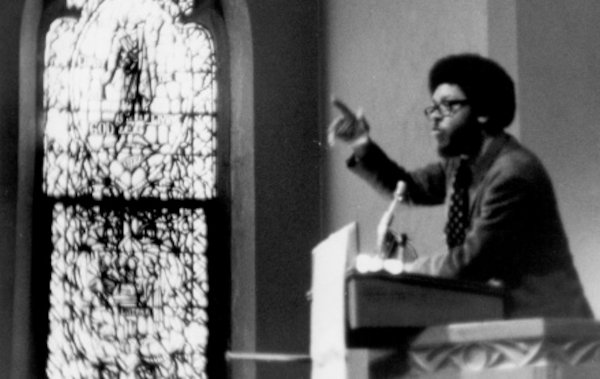
Dr. Cone preaching during his time as a student Garrett-Evangelical Theological Seminary

“The blackness of God means that God has made the oppressed condition God’s own condition. This is the essence of the biblical revelation. By electing Israelite slaves as the people of God and by becoming the Oppressed One in Jesus Christ, the human race is made to understand that God is know where human beings experience humiliation and suffering. It is not that God feels sorry and takes pity on them (the condescending attitude of those racists who need their guilt assuaged for getting fat on the starvation of others); quite the contrary, God’s election of Israel and incarnation in Christ reveal that the liberation of the oppressed is a part of the innermost nature of God. Liberation is not an afterthought, but the essence of divine activity.

The blackness of God means that the essence of the nature of God is to be found in the concept of liberation. Taking seriously the Trinitarian view of the Godhead, black theology says that as Creator, God identified with oppressed Israel, participating in the bringing into being of this people; as Redeemer, God became the Oppressed One in order that all may be free from oppression; as Holy Spirit, God continues the work of liberation. The Holy Spirit is the Spirit of the Creator and the Redeemer at work in the forces of human liberation in our society today. In America, the Holy Spirit is black persons making decisions about their togetherness, which means making preparation for an encounter with whites.

It is the black theology emphasis on the blackness of God that distinguishes it sharply from contemporary white views of God. White religionists are not capable of perceiving the blackness of God, because their satanic whiteness is a denial of the very essence of divinity. That is why whites are finding and will continue to find the black experience a disturbing reality. (…)

Those who want to know who God is and what God is doing must know who black persons are and what they are doing. This does not mean lending a helping hand to the poor and unfortunate blacks of society. It does not mean joining the war on poverty! Such acts are sin offerings that represent a white way of assuring themselves that they are basically ‘good’ persons. Knowing God means being on the side of the oppressed, becoming one with them, and participating in the goal of liberation. We must become black with God!”

A Black Theology of Liberation, Dr James Cone, pgs 63-65

As Dr. Cone goes on to say, this “becoming black with God” is not the work of our hands, but the work of God and God’s grace, righteousness and justice for God’s people. To be a part of God’s work in this world – God’s work for, with, and as an oppressed person – means we must see the culture of racism at work when people like Ahmaud and George lose their lives, or people like Christian have their lives threatened, all because of the color of their skin.

Lord, give all of us who are white and who are taking a part in the privilege that comes with that the humility to see the system we are part of, to repent of our sins, and to become able to be a part of your work of liberation and life for all your people, but especially for those who are oppressed and unable to breathe. We don’t deserve forgiveness for Ahmaud, for George, for Christian, and for all the other uncountable names whose blood and lives are on our hands, but we come on hands and knees asking for it nevertheless. May your mercy and your grace be wide enough.

My Thesis Proposal

Here it is: my completed thesis proposal, which I presented to the MTS colloquium here at Garrett a little over a week ago. This is a proposal for the direction my thesis is going, but does not lock me into anything. From here, my advisor and I will work towards narrowing and tweaking my ideas some more, before I start writing in earnest in the spring. I’ve already gotten great feedback from my peers and professors. I look forward to any feedback from you as well!

Tentative Title

A God Who Can Suffer and Die: Putting Moltmann’s Crucified God to Work in Rural America

Introduction

Rural white Americans are suffering from the effects of capitalism and white supremacy, at both an individual and a communal level. Alongside that suffering, many midwestern Protestant churches fail to address congregants’ suffering, despair and spiritual malaise. Attached to a message that is individualistic, enmeshed in secular conservative politics, and overly obsessed with status, success and serving as the arbiter of social status, these churches no longer espouse a theology that can provide meaningful answers to people in need of direction.

Instead, they channel their hurt and anger inwards, via self-loathing, depression and eventually, suicide and other forms of physical self-harm, or outwards, towards their families, their co-workers, or, at the ballot box, towards any “other” onto whom they can project their hurt onto. The growth of opioid and other addictions, domestic and gun violence, and suicide among white working class Americans over the last fifty years is striking. At the same time, the increasingly partisan and grievance-based politics practiced on the right, supported by white America, is also growing alarmingly.

While social problems, and racist, nationalistic politics have always been at play in American history, the strength of the white supremacist order allowed even disenfranchised and oppressed whites to feel that it was “their” system, that benefited them culturally, if not economically. Now, as a new, more inclusive political and social consensus is growing in America, and tearing at the seams of the White Supremacist order that has been in power since the founding of the nation, these working class whites no longer have the backstop of feeling, at the very least, superior to every black body they encounter by virtue merely of their race. As a result, white working class Americans are truly, for the first time, beginning to feel the effects, socially, politically and psychologically, of the dominant capitalist, white supremacist system in their own lives.

How, then, does the church, which was charged to carry on the mission of Christ to “proclaim the good news to the poor…proclaim liberty to the captives…recovery of sight to the blind, to set at liberty those who are oppressed,” respond theologically to the cry of white working America? How does it create a space for their suffering to be heard, and for the energy generated by their pain, to be channeled in a direction that works to further the achievement of God’s kingdom for all people? What are some theological concepts that can be put to use to restore the dignity of white working class Americans, to redirect their gaze towards the real causes of systemic suffering and oppression, and to rekindle their hope of a better future for themselves and for the world?

Research Question

The tentative questions I am engaging at this point begin with “how does God relate to human suffering?” Obviously, the potential theological engagements with the topic of theodicy are almost infinite. Thus, in order to engage this question more manageably, I am asking the questions, “how does suffering manifest itself in my context of rural white working class people in the American Midwest?”, and “what theological concepts can be used to address the readily apparent suffering and hurt being felt by these people?” By focusing on my own personal context, and on the theological voice I find most compelling, I believe I can demonstrate my ability to engage theology and its application to the lived reality of people.

Literature Review

Obviously, I will engage a variety of works by Jurgen Moltmann himself. Primarily, I will rely on The Crucified God, Theology of Hope, and God in Creation. However, I will not restrict myself to these and will draw on a variety of his works from across his career.

Being one of the major theological voices of the twentieth century (and early twenty-first century), much has been written about and in response to Moltmann. I intend to draw upon the works of other theologians who have engaged his ideas. This includes works by Douglas Meeks, Ryan Neal, Nigel Goring Wright, Miroslav Volf, and Nicholas Ansell, among others. James Cone has also commented upon the works of Moltmann, especially in his Theology of Hope, and I intend to draw upon this work as well.

Moltmann has had immense influence in both the areas of liberation theology, and open and relational or process theology. I will draw upon works from both of these concentrations to round out my engagement with Moltmann himself. In discussing the concept of justice, as well, I will draw briefly on ideas from Martha Nussbaum and Amartya Sen, and their idea of a capabilities approach.

Other theological voices that are prominent in my own thinking, and who will be present in shaping my writing, include especially Stanley Hauerwas and John Howard Yoder. While much of their theology stands in contrast to Moltmann, the emphasis upon the church, and on Scripture as the normative standard for the Christian faith, deeply influence how I see Christianity working in the world.

Finally, drawing upon my previous training in political science and social science research methods, I will take a close look at the quantitative measures used to analyze poor white communities. This body of research will help me narrow my specific focus, to better define what I mean when I say rural white. As the community I grew up in, I know intuitively of whom and what I speak in my own mind, but for the purposes of academic work, in order to have some applicability and authority, I must define this group clearly.

Additionally, I will draw upon the large and growing body of social commentary written about poor rural whites, especially in the post-2016 world. This includes works by Nancy Isenberg, Carol Anderson, Francis Fukuyama, Sarah Smarsh, Sarah Kendzior, and JD Vance.

Methodology

In this thesis, I aim to make two major movements. First, I will begin by taking a close look at rural whites in the American Midwest, people who are primarily Protestant Christian, working or middle class, and who supported Donald Trump in 2016 and the subsequent politics on the right characterized by white nationalism and racial resentment, driven by the detrimental effects of late capitalism on their communities. While questions of economy and of identity are deeply intertwined, I will primarily focus on issues of identity, especially those of race, vocation, and gender roles. From this analysis, I plan to draw forth questions for theologians about how the modern application of theological concepts has left these people behind, and how their decreasing reliance on church shows the failure of the church and theology to speak meaningfully in this context.

Next, I will engage the work of Jurgen Moltmann, especially in the areas of theodicy and hope, to envision one strain of theology that could be put to work to restore dignity to rural whites and help to address the feelings of loss, dislocation, and anger they are experiencing. I hope to demonstrate that the solidaristic work of God on the Cross, through Christ, renders God relatable for a suffering humanity, replacing an immutable and distant God commonly conceived of in traditional theology. I also will show the potential for this understanding of a relatable and accessible God for churches, as it provides the theological space that allows people to feel heard, and their pain to be made known, worthy of addressing, and capable of being heeded. Finally, I will engage Moltmann’s thought on political and liberation theology to provide a vision for a communal healing in rural white communities that enables them to direct their pain and suffering in more constructive and hopeful directions, rather than destructive ways that target racial, sexual and ethnic groups. In short, in this final section, I want to engage questions of what justice realized would look like theologically for these communities.

In these two movements, I want to draw a connection between the real suffering, often ignored or discounted because of the toxic politics it leads to, of rural whites in America, and the work on theodicy and hope in Moltmann, in order to highlight the possibility of his theology being a tool that those who minister to these hurting people can use. While there are surely economic, social, and political solutions that can be brought to bear more effectively on these hurting communities, my work as a theologian is to bring my training in this field to this context which is home to me, and try to provide some answers that will “bind up the broken-hearted,” and do the work of bringing the Kingdom of God in this world.

I choose to engage Moltmann because, in my work so far as a theologian, no personality has been so formative in crafting my thinking and directing my passion for theology. Specifically, reading Moltmann’s The Crucified God spurred my deep interest in theodicy and questions of the relatability of God to the human reality of suffering. The work of Moltmann is the primary impetus that drove me to switch from pursuing parish ministry to academic theology, and I want to honor that drive in myself. Beyond my own personal affinity to Moltmann, I think his work can be an entry into liberation theologies for white working class churches, in a way that the equally important work of James Cone or Gustavo Gutierrez, for reasons of tone and intended audience.

Tentative Outline

  1. Introduction
  2. Literature Review
  3. The Suffering of Rural Whites
    1. Defining the Context
    2. Quantifying the Situation
    3. What is happening in rural America?
  4. Moltmann’s Theology
    1. The Crucified God
      1. The Appropriation of Suffering
    2. A God who can relate
    3. Liberation and Hope
  5. The Crucified God in Rural America
    1. Helping the Church be the Church to its people
    2. What justice looks like
  6. Conclusion: Towards a White Liberation Theology


Tentative Timeline

I will complete all my classwork this fall, meaning in January and Spring 2019, I can focus all my energies on researching and writing. My tentative goals are to continue reading and researching through the end of January, and then do the bulk of writing between February and April.

Working Bibliography

Alexander, John M. Capabilities and Social Justice: The Political Philosophy of Amartya Sen and Martha Nussbaum. Burlington, Vermont: Ashgate Publishing, 2008.

Ansell, Nicholas. The Annihilation of Hell: Universal Salvation and the Redemption of Time in the Eschatology of Jurgen Moltmann. Eugene, Oregon: Cascade Books, 2013.

Bauckham, Richard. The Theology of Jurgen Moltmann. Edinburgh: T&T Clark, 1995.

Cobb, John B. and David Ray Griffin. Process Theology: An Introductory Exposition. Philadelphia: Westminster Press, 1976.

Cone, James H. A Black Theology of Liberation. 20th Anniversary Edition. Maryknoll, New York: Orbis Books, 1990.

Deneen, Patrick J. Why Liberalism Failed. New Haven: Yale University Press, 2018.

Eberhart, Timothy. Rooted and Grounded in Love: Holy Communion for the Whole Creation. Eugene, Oregon: Pickwick Publications, 2017.

Fea, John. Believe Me: The Evangelical Road to Donald Trump. Grand Rapids: William B. Eerdman’s Publishing Company, 2018.

Fukuyama, Francis. Identity: The Demand for Dignity and the Politics of Resentment. New York: Farrar, Straus, and Giroux, 2018.

Gutierrez, Gustavo. A Theology of Liberation. 15th Anniversary Edition. Maryknoll, New York: Orbis Books, 1988.

Guttesen, Poul F. Leaning Into the Future: The Kingdom of God in the Theology of Jurgen Moltmann and the Book of Revelation. Eugene, Oregon: Pickwick Publications, 2009.

Hauerwas, Stanley. The Work of Theology. Grand Rapids: William B. Eerdman’s Publishing Company, 2015.

Hauerwas, Stanley and William H. Willimon. Resident Aliens. Nashville: Abingdon Press, 1989.

Isenberg, Nancy. White Trash: The 400-Year Untold History of Class in America. New York: Penguin Books, 2016.

Jones, Robert P. The End of White Christian America. New York: Simon and Schuster, 2016.

McDougall, Joy Ann. Pilgrimage of Love: Moltmann on the Trinity and Christian Life. Oxford: Oxford University Press, 2005.

Meeks, M. Douglas. Origins of the Theology of Hope. Philadelphia: Fortress Press, 1974

Moltmann, Jurgen. The Crucified God. 40th Anniversary Edition. Minneapolis: Fortress Press, 2015.

Moltmann, Jurgen. God for a Secular Society: The Public Relevance of Theology. Minneapolis: Fortress Press, 1999.

Moltmann, Jurgen. Creating a Just Future: The Politics of Peace and the Ethics of Creation in a Threatened World. London: SCM Press, 1989.

Moltmann, Jurgen. God in Creation: A New Theology of Creation and the Spirit of God. San Francisco: Harper and Row, 1985.

Moltmann, Jurgen. Theology of Hope: On the Ground and the Implications of a Christian Eschatology. Minneapolis: Fortress Press, 1993.

Moltmann, Jurgen. On Human Dignity: Political Theology and Ethics. Philadelphia: Fortress Press, 1984.

Muller-Fahrenholz, Geiko. The Kingdom and the Power: The Theology of Jurgen Moltmann. Minneapolis: Fortress Press, 2001.

Neal, Ryan A. Theology as Hope: On the Ground and Implications of Jurgen Moltmann’s Doctrine of Hope. Eugene, Oregon: Pickwick Publications, 2008.

Oden, Patrick. The Transformative Church: New Ecclesial Models and the Theology of Jurgen Moltmann. Minneapolis: Fortress Press, 2015.

Perkinson, James W. White Theology: Outing Supremacy in Modernity. New York: Palgrave Macmillan, 2004.

Reimer, A. James. Toward an Anabaptist Political Theology: Law, Order and Civil Society. Eugene, Oregon: Cascade Books, 2014.

Ruether, Rosemary Radford. Sexism and God-Talk: Toward a Feminist Theology. Boston: Beacon Press, 1983.

Ruether, Rosemary Radford. America, Amerikkka: Elect Nation and Imperial Violence. London: Equinox, 2007.

Sample, Tex. Earthy Mysticism: Spirituality for Unspiritual People. Nashville: Abingdon Press, 2008.

Sample, Tex. White Soul: Country Music, the Church, and Working Americans. Nashville: Abingdon Press, 1996.

Sample, Tex. Blue Collar Resistance and the Politics of Jesus: Doing Ministry with Working Class Whites. Nashville: Abingdon Press, 2006.

Sample, Tex. Blue Collar Ministry: Facing Economic and Social Realities of Working People. Valley Forge: Judson Press, 1984.

Smarsh, Sarah. Heartland: A Memoir of Working Hard and Being Broke. New York: Scribner, 2018.

Vance, J.D. Hillbilly Elegy: A Memoir of a Family and Culture in Crisis. New York: Harper, 2016.

Wakefield, James L. Jurgen Moltmann: A Research Bibliography. Lanham, Maryland: The Scarecrow Press, 2002.

Wright, Nigel Goring. Disavowing Constantine: Mission, Church and the Social Order in the Theologies of John Howard Yoder and Jurgen Moltmann. Carlisle: Paternoster Press, 2000.

Yoder, John Howard. The Politics of Jesus. 2nd Edition. Grand Rapids: William B. Eerdman’s Publishing Company, 1994.

Zoran Grozdanov, Ed. Theology – Descent into the Vicious Circles of Hell: On the Fortieth Anniversary of Jurgen Moltmann’s The Crucified God. Eugene, Oregon: Cascade Books, 2016.