The Black God

As things have been happening across our country in response to the murder of George Floyd at the hands of the police in Minneapolis last week, I have been sharing my thoughts on Facebook. I have decided to share them here, as well, going back a few days. Here is what I posted Wednesday:

As I think today about George Floyd in Minnesota, and Christian Cooper in the Bramble, and Ahmaud Arbery a few weeks ago in Georgia, I think this becomes an important time to cede my voice to that of Dr. James Cone and his idea of our Black God:
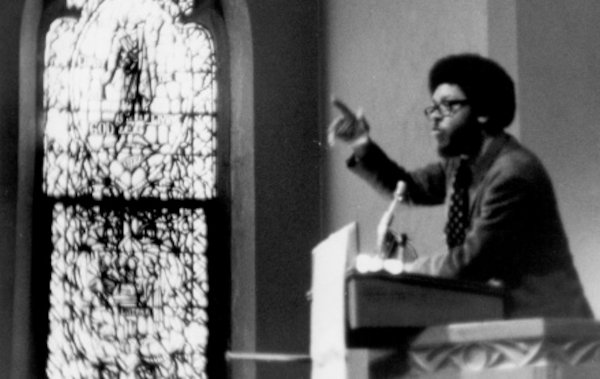
Dr. Cone preaching during his time as a student Garrett-Evangelical Theological Seminary

“The blackness of God means that God has made the oppressed condition God’s own condition. This is the essence of the biblical revelation. By electing Israelite slaves as the people of God and by becoming the Oppressed One in Jesus Christ, the human race is made to understand that God is know where human beings experience humiliation and suffering. It is not that God feels sorry and takes pity on them (the condescending attitude of those racists who need their guilt assuaged for getting fat on the starvation of others); quite the contrary, God’s election of Israel and incarnation in Christ reveal that the liberation of the oppressed is a part of the innermost nature of God. Liberation is not an afterthought, but the essence of divine activity.

The blackness of God means that the essence of the nature of God is to be found in the concept of liberation. Taking seriously the Trinitarian view of the Godhead, black theology says that as Creator, God identified with oppressed Israel, participating in the bringing into being of this people; as Redeemer, God became the Oppressed One in order that all may be free from oppression; as Holy Spirit, God continues the work of liberation. The Holy Spirit is the Spirit of the Creator and the Redeemer at work in the forces of human liberation in our society today. In America, the Holy Spirit is black persons making decisions about their togetherness, which means making preparation for an encounter with whites.

It is the black theology emphasis on the blackness of God that distinguishes it sharply from contemporary white views of God. White religionists are not capable of perceiving the blackness of God, because their satanic whiteness is a denial of the very essence of divinity. That is why whites are finding and will continue to find the black experience a disturbing reality. (…)

Those who want to know who God is and what God is doing must know who black persons are and what they are doing. This does not mean lending a helping hand to the poor and unfortunate blacks of society. It does not mean joining the war on poverty! Such acts are sin offerings that represent a white way of assuring themselves that they are basically ‘good’ persons. Knowing God means being on the side of the oppressed, becoming one with them, and participating in the goal of liberation. We must become black with God!”

A Black Theology of Liberation, Dr James Cone, pgs 63-65

As Dr. Cone goes on to say, this “becoming black with God” is not the work of our hands, but the work of God and God’s grace, righteousness and justice for God’s people. To be a part of God’s work in this world – God’s work for, with, and as an oppressed person – means we must see the culture of racism at work when people like Ahmaud and George lose their lives, or people like Christian have their lives threatened, all because of the color of their skin.

Lord, give all of us who are white and who are taking a part in the privilege that comes with that the humility to see the system we are part of, to repent of our sins, and to become able to be a part of your work of liberation and life for all your people, but especially for those who are oppressed and unable to breathe. We don’t deserve forgiveness for Ahmaud, for George, for Christian, and for all the other uncountable names whose blood and lives are on our hands, but we come on hands and knees asking for it nevertheless. May your mercy and your grace be wide enough.


Playing Revolutionary

Of course, we may “play” revolutionary and delude ourselves that we can do battle against the atomic bomb. Usually when the reality of the political situation dawns upon the oppressed, those who have no vision from another world tend to give up in despair. But those who have heard about the coming of the Lord Jesus and have a vision of crossing on the other side of Jordan are not terribly disturbed about what happens in Washington D.C., at least not to the extent that their true humanity is dependent on the political perspective of government officials. To be sure, they know that they must struggle to realize justice in this world. But their struggle for justice is directly related to the coming judgment of Jesus. His coming presence requires that we not make any historical struggle an end in itself. We struggle because it is a sign of Jesus’ presence with us and of his coming presence to redeem all humanity. His future coming therefore is the key to the power of our struggle.

-Dr. James Cone, God of the Oppressed, pg. 132

These words of Dr. Cone really showcase where my head is at recently politically and theologically. Things seem really, really bad, because they are. We are in a political moment unlike any other in our history, one that is dangerous and destabilizing. The future feels immensely less certain than it did two years ago.

But despair is not the attitude of the Church and those of us in it, those of us defined as Christians. The vagaries of politics and world affairs do not define our hope, nor do they determine the future we know is guaranteed. And, crucially, they do not set the terms of engagement. Christ does. As Dr. Cone says, we struggle because we know God, not because of anything less.

Things are bad. God is bigger than it anyways. Keep up the fight, but remember, the end is already written in our favor, in humanity’s favor, despite our best attempts to fuck it up (and we are certainly doing our best at that recently.)

And remember: we aren’t called to play revolutionary. We are called to be disciples. In all your work in the world, don’t forget that, and don’t forget the potential of the Church to craft disciples.

10 Books That Have Shaped My Thinking

I was challenged this last fall by a cherished mentor of mine on Facebook to list ten books that have had an exceptional impact on me and my thinking. I posted the list on Facebook, but I figured I should share it here as well. The idea here is identifying ten books that have really impacted me and brought me to where I am today intellectually. Being the intense book nut that I am, I jumped at the chance to go through my bookshelf and think about what I’ve been reading over the last few years.

These ten books are in no particular order, and are subject to change as soon as I finish future books. Here we go.

1. “Truman” by David McCullough: I’m nuts for presidential biographies, and this is the one that cemented Harry Truman as my favorite president. McCullough really highlights the Midwest attitude and personality of Truman and how that shaped his exceptionally virtuous and public life, including the many difficult decisions he had to make in office. Truman is undoubtedly the most “regular guy” and relatable president we had in the 20th century, and it shines forth in this great book. A must read for Presidential history buffs like myself.

2. “The Dark Side” by Jane Mayer: I read this book right after I started the political science program at OCU and began becoming more politically aware. It is a detailed and engrossing account of the Bush Administration’s war on terror, and specifically how they decided to pursue and treat those they identified as terrorists. The passages describing torture and those within the administration who pushed back against the immoral actions are particularly harrowing. This book really is the one that woke me up to the real-world consequences and nature of politics.

3. “Jesus for President” by Shane Claiborne: This book totally blew my mind. I read it about three years ago, as I slowly began my journey into a more theologically-tinged political awareness. Shane asks the really hard questions, and makes really tough points about patriotism, American exceptionalism and Christianity, points that would never be tolerated from a political candidate, or a preacher in many churches, but which are nevertheless true. In the end, the book explores how to really, really follow Jesus while being politically aware and involved.

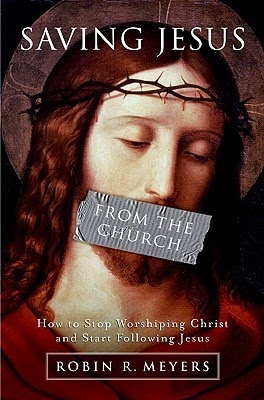
4. “Saving Jesus from the Church” by Dr. Robin Rex Meyers: another book that blew my mind as I matured theologically. The way I approach my relationship to Jesus and what I expect the church to be is deeply indebted to this book. I learned a lot, and also developed a lot of questions that caused me dig even deeper, as a result of reading this book.

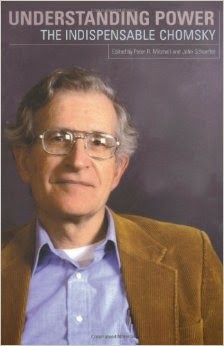
5. “Understanding Power: The Indispensable Chomsky” by Noam Chomsky:  Along with “The Dark Side”, this is a book that really woke me up to the real world consequences and effects of American foreign policy. Chomsky still has, and always will have, a strong effect on my thinking. Passages of this book were required reading for a Political Philosophy course I took at OCU.

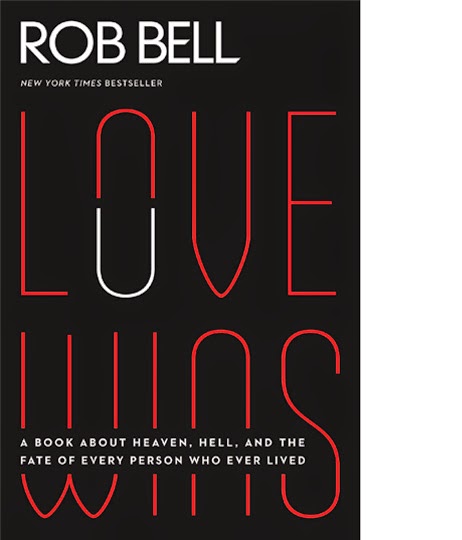
6. “Love Wins” by Rob Bell: My wife Arianna read this book aloud to me as we drove to Las Vegas last summer. I was at a point in my faith where I was really struggling with the idea of a loving, merciful God who would send people to Hell to suffer eternally. Rob lays out a great argument in this book about why this idea of a “punishing hell” is in no way Biblical and how we should view our faith in a way that keeps us accountable to God without eternal punishment. For further reading on this subject, Benjamin L. Corey has been much help on his blog.

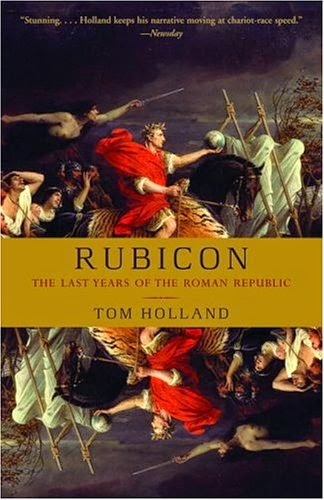
7. “Rubicon” by Tom Holland: I’m slightly obsessed with Roman history, and especially the era around Marius, Sulla, Caesar, Pompey, and Augustus. I love learning about the fall of the Republic, the rise of the Empire and most of all, the fascinating personalities who powered the biggest political shake-up in classical history. Tom’s book is a great place to start that learning. Colleen McCullough’s “Masters of Rome” series (which I’m currently re-reading) is another great source.

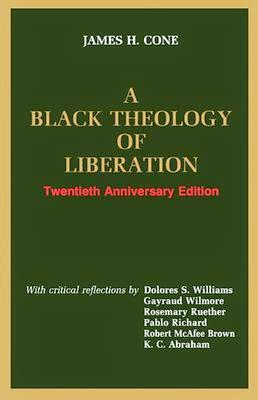
8. “A Black Theology of Liberation” by Dr. James Cone: I actually just finished this book recently. If there is any one book that has both challenged me and infuriated me and educated me all at the same time, this is the one. (Arianna can confirm that series of reactions.) I certainly don’t agree with everything Dr. Cone says, but I definitely sympathize with his arguments, and I found my own thinking continually challenged and changed as a result of reading this, especially in light of current events around race and authority in the United States. I love anything Liberation Theology, and along with Gustavo Gutierrez and Oscar Romero and Howard Thurman, James Cone will always been prominently placed on my bookshelf as a minister.

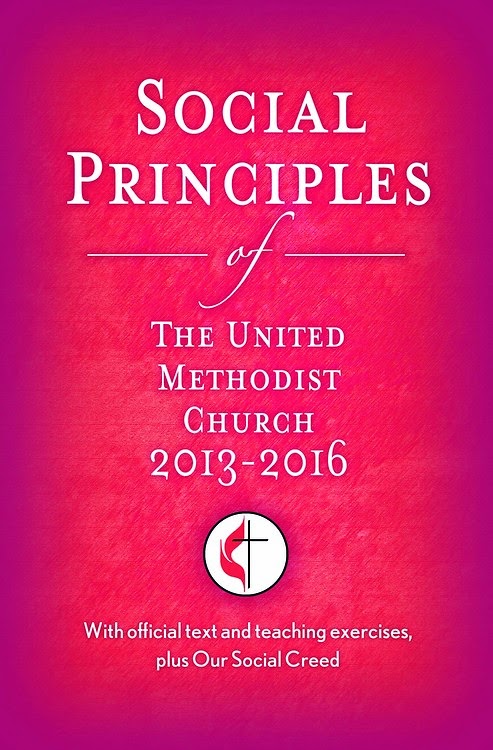
9. “Social Principles of the United Methodist Church” No, I’m serious. Don’t laugh, this counts as a book. At a time when I was feeling that there was no church that addressed the issues important to me in a way that embodied justice and mercy, the Social Principles knocked me onto a collision course with ministry. I was so relieved to find a church that not only held these things important, but also took the time every four years to think about and discuss and debate and pray and write them down. As long as we have our Social Principles, and we work hard to live them, I will always be a United Methodist.

10. “The Hobbit” by J.R.R. Tolkien: The only piece of fiction on my list. I first read it in the 5th grade. Our library at Benton Grade School had a large, hard-bound copy with big, painted illustrations by Michael Hague that I must have checked out most of the year and read over and over. From hence came my love of Lord of the Rings, Harry Potter, Game of Thrones, and all the other fantasy books I reread over and over and over again.

That’s my list. Share yours below!