We all Worship One God/YHWH/Allah: In Solidarity with Dr. Larycia Hawkins

There is no doubt in my mind that Christians and Muslim worship the same God.
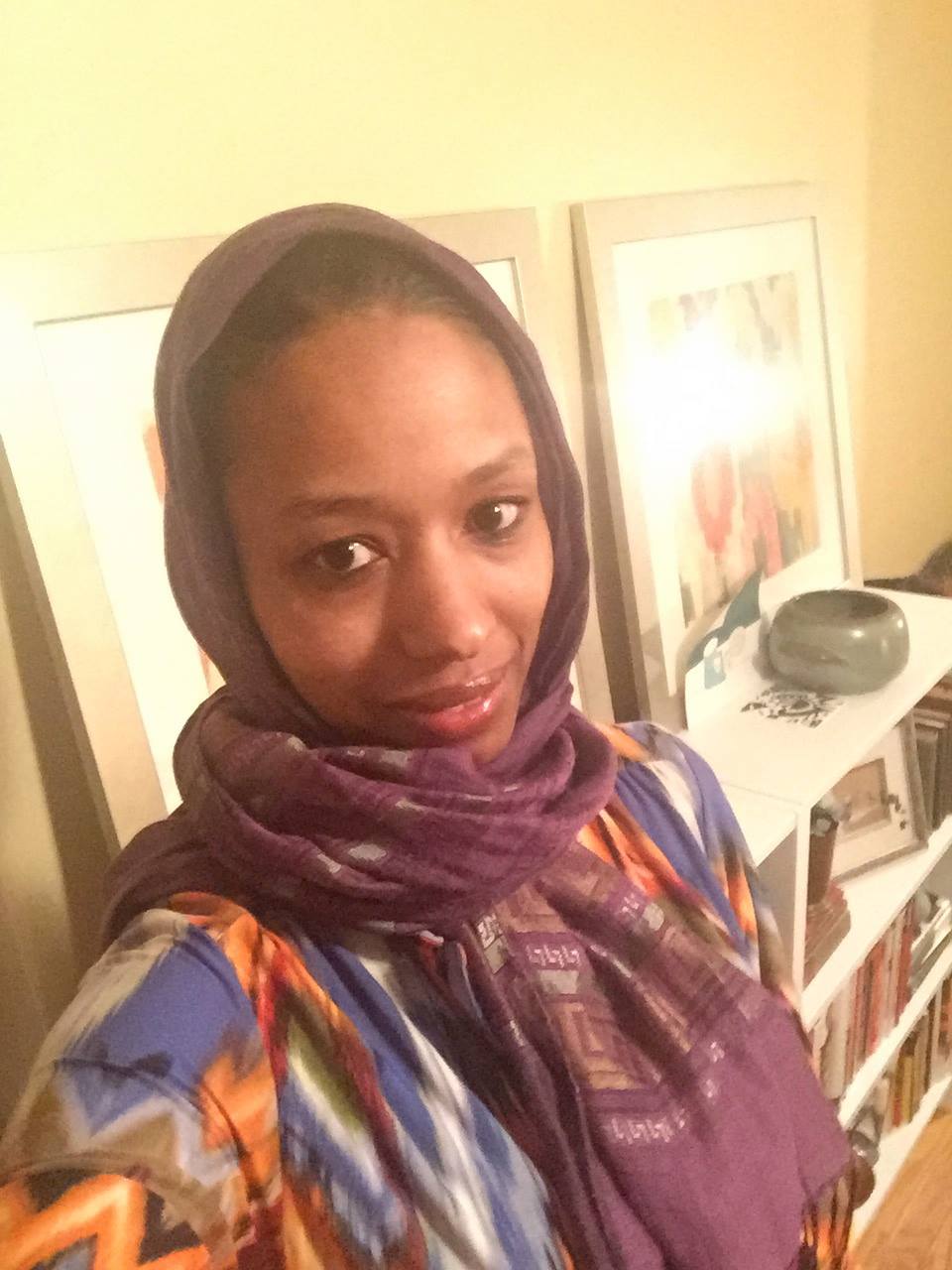
larycia-hawkinsI say this in light of the suspension of Dr. Larycia Hawkins, the first African America professor to receive tenure at Wheaton College, and who is now sitting at home because she dared challenge the evangelical status quo by making the (fairly orthodox, historically speaking) claim that I just made above. And, to further the thought, she committed to the wearing of the hijab during the season of Advent, to stand in solidarity with Muslim women in this country who are singled out because of this worn symbol of humility.

Wheaton’s stance on this aside, it is no big leap of theology or orthodoxy to say that Muslims, Jews and Christians all share the same God, whom we each refer to and experience in different ways. This isn’t to claim the superiority of any of these three experiences; they hold value and power for those who ascribe to each. All three faiths find their origins in the Abrahamic tradition of monotheism, and each share broadly similar theological claims about God.

It’s entirely self-centered and prideful to attempt to eliminate any of the three traditions from the Abrahamic family. Evangelicals who try to close the path to God in favor of protecting their own perceived place of power and privilege with relation to God are doing a great disservice to the goal of welcoming all peoples into relationship with God, whatever that relationship may look like.

Wheaton College is free to act as it pleases, and enforce whatever rules they wish upon their faculty, staff and students. But they are not free to place restrictions on access to God, or define the historical relation of the West’s three dominant religions to each other and to God. To do so is to take the role of Pharisees, of those religious leaders who wished to control and portion out access in service of their own positions of power.

I pray that Wheaton finds a measure of humility and reinstates Dr. Hawkins, so that she may continue to teach her students such basic ideas as the interconnectedness of the great Abrahamic faiths.

UCC/DOC Statement on Violence and Hate Towards the Muslim Community

UCC-DOC_LogosYesterday, the United Church of Christ and the Christian Church (Disciples of Christ) issued a statement condemning the recent hateful and intolerant rhetoric aimed at the Muslim community in America. As a candidate in the DOC/UCC ordination process¹,  I am so proud of the leadership of my church, and I wholly support their words. The original text can be found here.

A joint statement of the leadership of the United Church of Christ and the Christian Church (Disciples of Christ)

As people of faith, we are called to “love the Lord our God with all our heart, with all our soul, with all our mind, and with all our strength.”  Jesus charges us to “love our neighbor as yourself,” telling us that “there is no other commandment greater than these” (Mark 12:29-31).  We are called to be peacemakers (Matthew 5:9), and to “pursue peace with everyone” (Hebrews 12:14).

Recognizing that all people are created in the image of God, and heeding the words of our sacred scripture, we are disturbed and concerned as we witness the divisive discourse in our country concerning our Muslim neighbors.  The rhetoric of exclusion and vilification runs absolutely counter to our understanding of God’s oikos, which is an inclusive fellowship of God’s children and creation.

As leaders of the United Church of Christ and the Christian Church (Disciples of Christ), we offer our ongoing solidarity with and support for all those who are increasingly fearful for their safety and well-being as a result of the heightened vitriol. And we commit to continuing to pursue peace, to promote better understanding among our communities, and to pursue justice in all that we do.

We are witnessing the convergence of a massive global refugee crisis, not limited to the displacement of over half the Syrian population due to the tragic war there; a sentiment of fear resulting from heinous attacks in many places in the US and globally; and the relentless nature of a US presidential campaign in which candidates exploit circumstances and fears to put forward ever more restrictive and exclusivist programs to address perceived threats.  In this combination of circumstances, Islam and Muslims as a whole community experience an escalation in violent rhetoric and action that is misplaced and unjustified—and that does not represent the ethos of nurturing stronger and deeper intercommunal ties in our society that we seek to promote.

Our two churches are vocal and consistent in our condemnation of all forms of violence, including terrorism; in our hope for a peaceful and swift end to the war in Syria; in our unwavering advocacy for humane and welcoming attitudes and policies towards refugees; and in our clear denunciation of language and actions that insult and harm people of any identity, including religious, and specifically Muslims.

Daily we see the destruction of human life caused by people who employ ideologies, policies, systems, and sometimes, religion.  There are forces in the world that would choose death and destruction to life with abundance; and we stand in clear opposition to those forces.  Many victims of injustice go unreported, hidden, or denied.  God knows their pain; they do not go unnoticed.  We are called to work for God’s kindom in this world.

In this moment, we own our Christian responsibility to lift up our voice once again to express our love and concern for our Muslim sisters and brothers.  We stand in solidarity with communities of faith in our abhorrence of the xenophobic and racist attitudes that motivate such hate speech and actions.  We live with the hope that peace and justice will prevail for all of God’s children. 

The Rev. John Dorhauer
General Minister and President

The Rev. J. Bennett Guess
Executive Minister, Local Church Ministries

The Rev. James Moos
Executive Minister, Wider Church Ministries

The Rev. Bentley DeBardelaben
Manager, Justice and Witness Ministries

The Rev. Sharon Watkins
General Minister and President

The Rev. Ron Degges
President, Disciples Home Missions

The Rev. Julia Brown Karimu
President, Division of Overseas Ministries

  1. UCC and DOC share a ministry track, with graduates able to serve churches in either denomination

Scapegoating our Muslim Brothers and Sisters: An Example from Girardian Theology

Since his death a few weeks ago, I have found myself drawn to the theology and writings of Rene Girard. If you are unfamiliar with his ideas, I highly, highly recommend Richard Beck’s recent 7-part series at his excellent Experimental Theology blog that explains very well Girard’s mimetic theory and scapegoating. This is a series I wish I had written.rene-girard-scapegoat

I just want to use this as a prompt for a quick social commentary piece. The plight of Syrian refugees and Muslims in general has dominated much of the recent news, and much of my thought. I find it very interesting, in light of reading Girard, that 2015 America is reverting to a scapegoat mentality towards the minority among us.

In short, Girard’s theory says that for many thousands of years, human civilization used collective violence aimed at a minority or marginalized group, in the form of a sacrifice, to act almost as a “pressure-release valve” for human society. Beck summarizes Girard in this way:

1. Sacrifice was a real solution to communal violence.

2. But for that “solution” to work the truth about the sacrifical mechanics have to be systematically obscured.

3. Religion, via its mythical structure, provided this obfuscation.

4. The obfuscation was this: The voice of the scapegoat, the very personal cries of the one being murdered, had to be silenced. Thus, scapegoats were chosen (and are still chosen) from marginalized groups, powerless people. Further, the murder of the scapegoat must not be seen for what it is (i.e., a murder). It must be a divinely sanctioned “sacrifice.”

5. This scapegoating mechanism–rationalized, sanctioned, “religious” violence–still defines the human condition. Our collective Sin is this machinery of violence.

6. Thus, in order to save us, the scapegoating mechanism must be exposed.

The progression of Judaistic monotheism slowly unveiled this hidden mechanism by initiating a move towards identification with the scapegoat. The death of Jesus was the final act in the revealing, showing the ultimate futility of the sacrificial mechanism by disclosing the inherent innocence of our scapegoats.

We seem to have lost this conclusion. In a rush to assuage the primal fear we feel in the world, a fear of the different and of death, we have seized upon a voiceless and minor victim, that of the small Muslim community in America, and the innocent refugees fleeing violence elsewhere, and made them our scapegoat. And as the rage and anger and hate builds to a breaking point, we get closer and closer to that moment of collective violence that relieves the great societal tension that has been building for years and years.

The death of Jesus, of the innocent scapegoat, reveals the futility of such violence. It shows that safety and security, the future of society, our own personal well being, is not achieved by violence. Violence only begets more violence, until we have all operated as the scapegoat. Instead, by identifying with those we oppress, we can begin to feel compassion, and we begin to heal our world by striving for the betterment of all peoples.

We are at a crucial juncture in history. The revelation of violent futility in Jesus’ death did not end the scapegoating mechanism by any means. Many times in the subsequent 2000 years has collective violence been used to pacify the anxiety of society for a short time. We are dangerously close to living through another one of those moments, if we have not already crossed that event horizon.

May we find the clarity and sanity to recognize our trajectory towards death. May we find it soon.