
The following is an essay I wrote last semester, for my Introduction to Theology class.
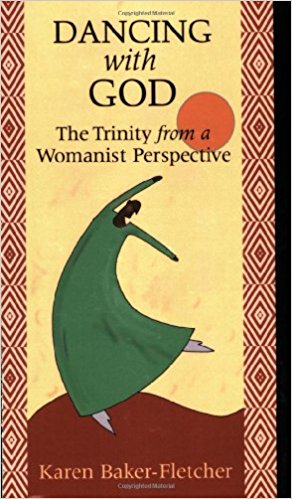
The Christian faith has a role to play as more than a personal salvation machine. Too often, especially in the American context, Christianity operates as little more than fire insurance for fearful souls, an incantation of proper belief that assures one of heaven and requires little else than allegiance and a tithe. To approach the Christian faith this way is to ignore the rich tradition of prophetic social critique it arose from and has engaged in for two millennia, and its ability to address the social injustices present in the world today. In particular, I believe Karen Baker-Fletcher’s Dancing with God brings powerful theological tools to bear on what is the pressing theological question of our times: how does God relate to a world that is seeing patterns of authoritarianism, war, and suffering play out again and again?
 The present historical moment is one of great instability and upheaval. The rise of far right elements in the West, religious extremism in the Middle East and Africa, and authoritarian nationalism around the world has put any talk of an “end to history” to rest. The rising tide of extremism mirrors the interwar years, when fascism rose amidst economic struggles and cultural upheaval. To compound our present crisis, the fading impact of religious belief and growing distrust of institutions puts the church in a crisis of necessity. Due to the fact that Christian evangelicalism has played such a large role in getting the world to this point (through its political fealty to right wing movements), the church at large is facing the question of what good it can do, or whether it is even necessary anymore.
This question pulls out further for many outside of the faith, to ask “what good is God?” If we are seeing a pattern of historical repetition, where this kind of crisis happens again and again, and if in fact Christianity has helped usher it in multiple times, why should anyone trust God or those who claim to represent the divine? Amidst so much human suffering, where is God? What does God have to offer?
Karen Baker-Fletcher engages strands of open and process theologies in Dancing With God that work towards an understanding of God that can have meaning in today’s world. For Baker-Fletcher, “God is a divine community, consisting of three distinctive, interrelated agents or actions.” (Baker-Fletcher, 54) These three agents are in relationship with one another, taking part in a divine dance. This relational, creative nature is reflected in God’s plan for Creation: a loving community of being. (Baker-Fletcher, 64)
She then moves to answer the question, “why evil and suffering?” (Baker-Fletcher, 75) In her view, God created the world, but preserves the free will of beings in the world. This free will, combined with a limited view of creation, comes up against the laws of creation. “When violated, these laws result in negative consequences, namely experiences of suffering, pain, and death.” (Baker-Fletcher, 76) God is not responsible for the suffering and death in the world; rather, we are. Sin is a consequence of mortality. To eliminate our ability to sin would be to eliminate our freedom to be.
What, then, is God’s role, if not as a fixer? Is God any good if God cannot or will not stop us from hurting ourselves? Baker-Fletcher answers in the affirmative. Through the Incarnation, God came to know what it is to suffer. God experienced this human reality, and thus, gained understanding of it. Because of this, God can now be an authentically “healing and resurrecting” (Baker-Fletcher, 153) presence in the world. God can speak with authority to our situations because God knows what it is to suffer. And consequently, the justice of God’s kingdom can be understood as the good news it is, because we know it comes from a place of experience and not abstraction. Humanity can draw on God in order to create a better world. By ourselves, we only eventually destroy and hurt; but by being in relationship with a healing God who knows our struggles, we can envision, and create, a better future. (Baker-Fletcher, 163)
This vision of God – source of creation and beauty and community and life – that Baker-Fletcher sketches answers the question of what good is God in the midst of our historical moment. God is the hopeful center towards which we orient ourselves, knowing that evil and death don’t get the last word. The Spirit that created the entire universe is a Spirit of love and live, and we only have to trust that Spirit and draw on it to begin the work of healing and reconciliation. Without it, we are adrift, answering to the law of power. God is the universal truth that can guide us into a better future.
Christianity has a duty to reclaim the notion of God as good, as having a role to play. But this means rejecting the lure of worldly power and might for the better way of humility and love. Working with God in a co-creating relationship, Christianity can be a force for a better world.
 Justin DaMetz