
The following is an essay I wrote last semester, for my Introduction to Theology class.
Understanding the difference between dogma and doctrine can more easily be done through the use of examples. Reflecting on two well-known parts of Christianity, and how each operate within the concepts of dogma and doctrine, serves this purpose well. This paper will explore Christology and Creation in order to delineate the difference between doctrine and dogma.
Christ is understood commonly as the center of the Christian faith. As Tyron Inbody writes, “For Christians faith in God is christomorphic (Christ-shaped.) Faith is Christian when Jesus Christ is decisive for faith in God.” (Inbody, 189) As such, there are certain beliefs about Christ that are normative for Christianity. The Apostle Paul provides a strong set of dogmatic statements about Christ in 1 Corinthians 15. He writes, “For I handed on to you as of first importance what I in turn had received: that Christ died for our sins in accordance with the Scriptures, and that he was buried, and that he was raised on the third day in accordance with the Scriptures and that he appeared to Cephas, and then to the twelve.” (1 Corinthians 15: 3-5 NRSV). Within just these few statements one finds the centrality of belief about Christ: he died, was buried, was resurrected, and experienced again by those close to him. These, at a minimum, constitute dogma about Jesus Christ. Very few would debate the inclusion of any of these points as Christian dogma.
Many Christians would, however, debate the line being drawn at those four things only. For instance, some groups would see as necessary the inclusion of his birth to a virgin, or his miracles, or the manner of his death, or a physical, bodily resurrection. The presence of a debate about the subjects, however, shows the presence of doctrine within Christology. The reality of the Resurrection is surely a dogmatic point. What form that resurrection takes is the stuff doctrine. Was is a physical body reanimated? Was it mystical visions? Was a new body constituting the essence of Christ experienced? Christians can debate these issues, and form traditions around them. They are doctrines. The resurrection is not.
The belief in resurrection serves a salvific purpose in Christianity. No matter the way it occurred, something about the resurrection stands as a saving moment for Christians. This is what is important ultimately about the event, and what makes it dogma. The specific salvific mechanism present is never explained in scripture, and thus is of secondary (doctrinal) importance. One need only affirm the reality of a resurrected Christ to be a Christian; to draw the line of inclusion in the faith at atonement instead is to distort the boundaries of the Christian faith.
 Beliefs about the creation of the world by God can also showcase the difference between doctrine and dogma. A pillar of Judeo-Christian thought is that God created the world, and everything in it. Few Christians would debate this notion. But how did that creation take place? When did it happen? Is it still happening, or is creation finished? These questions and more all shape doctrinal statements about creation.
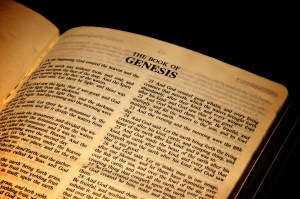
Genesis provides two conflicting accounts of the creation narrative, the first appearing 1:1-2: 3, and the second in 2:4-3:23. The presence of two stories already opens up opportunities for doctrinal disagreements. Additionally, the growing knowledge in science about geology and cosmology and the beginning of the universe calls into question the story recounted in Genesis, and instead reveals it as meaning-making myth. Consequently, the only sure statement about creation that can be proclaimed in that “God created.” This statement reveals crucial knowledge about the nature of God. Beyond this, all understanding is left up to interpretation.
Did God create the world six thousand years ago? Or did God use the Big Bang and evolution? Are we all descended from Adam and Eve, or primate ancestors originating in Africa? The answers to these questions as they relate to a theological understanding of the creation of the world are not included in Scripture. What we can know is that God created the world. That is a statement of dogma. Any statement beyond that that purports to explain the mechanism of divine creation is doctrine.
The drawing of limited lines to determine what is dogma and what is doctrine is important to the maintenance of a Christian faith that values and nourishes freedom of conscience and individual decision of each person to become a Christian or not. Stopping at statements such as “Christ was resurrected,” or “God created” when making dogma, while leaving further speculation open, allows each and every Christian to ability to interpret and experience faith in a way that speaks authentically to them. Ultimately, the goal of Christianity is to bring human beings into communion with the divine, as revealed through the life of Jesus Christ. Setting markers that make this more and more difficult is theological malpractice.
 Dogma is defined by Merriam-Webster as “a doctrine or body of doctrines concerning faith or morals formally stated and authoritatively proclaimed by a church.”
 Justin DaMetz