the heat this summer is a different kind of heat

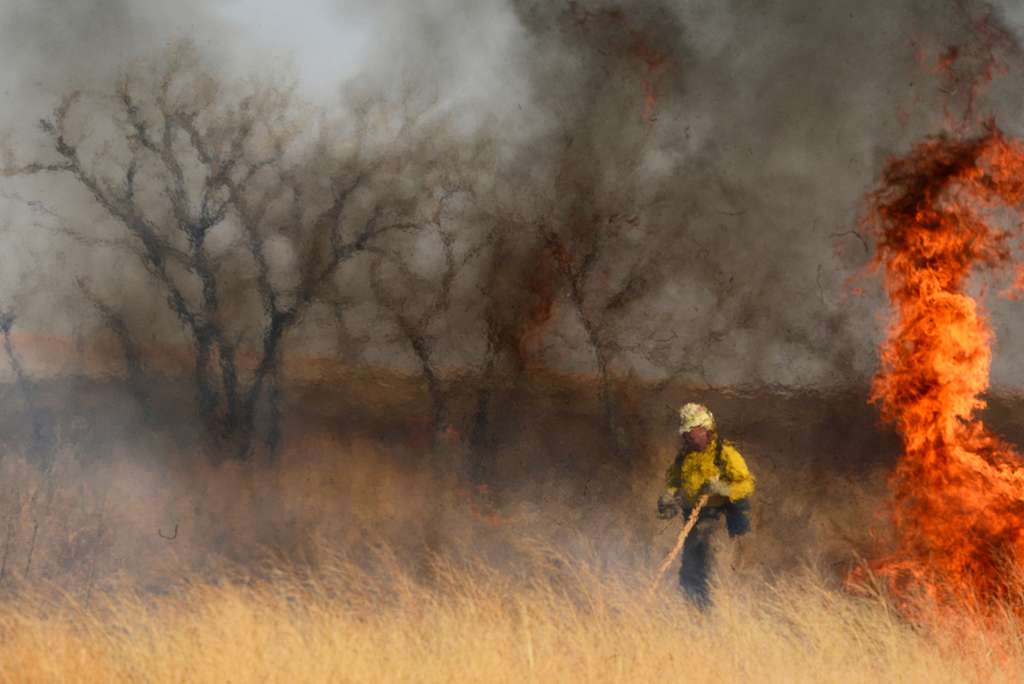
I’ve been very alarmed by weather trends this summer. It’s been really, really hot. Alarmingly so. Even here in Oklahoma, where long, hot, humid summers are the norm, the difference has been noticeable. I’ve had to limit the amount of times my kids are spending outdoors, and I worry every time they climb on or off the trampoline, that the metal frame is going to burn them. Watching the news is equally alarming, with talk of record high averages worldwide, extreme temperature streaks across the American southwest, and wildfires increasingly common. Its really hard to look at the weather and come to the conclusion that things aren’t different than they used to be. To deny this is the case is to stick ones head in the sand. Kevin Drum is consistently good on climate issues, and this is him Tuesday:

In the 1960s, we could expect maybe two heat waves of three days each in a typical year. Today we can expect six heat waves of four days each. The overall summer heat wave season has tripled from 20 days to 70 days.

If you wish, you’re welcome to pretend this is just the normal variability of climate. Sometimes it’s hot, sometimes it’s cold.

But that would make you an idiot. This is all due to global warming, and it’s an excellent example of how a smallish change in average temperature can produce massive extremes at the edges. The same phenomenon is at work with sea level changes, where a modest change of just a few inches can produce killer storm surges.

A dozen years ago I wrote:

The fact of climate change will become undeniable [by 2024]. The effects of global warming, discernible today mostly in scary charts and mathematical models, will start to become obvious enough in the real world that even the rightest of right wingers will be forced to acknowledge what’s happening.

I got the first sentence dead on. But I’m still not sure about the second. Right wingers have turned out to be far more stubborn than anyone could have imagined.

This heat is not normal, and we shouldn’t act like it is. Its scary, especially as a parent. And it comes with an added layer of fury, that so many could just continue to deny reality and not care. Their indifference is driving a new extreme reality for the rest of us, one we didn’t ask for and knew could be prevented.
From a theological perspective, this kind of indifference and intentional refusal to act is very obviously sinful, especially because those who will be most effected will be the least among us, those who cannot afford or don’t live in places with high-powered AC units or the ability to relocate. We are, once again, abandoning the vulnerable among us. And, as Rowan Williams points out, this is due to an ill-formed view of what Creation is for:

“Our present ecological crisis, the biggest single practical threat to our human existence in the middle to long term, has, religious people would say, a great deal to do with our failure to think of the world as existing in relation to the mystery of God, not just as a huge warehouse of stuff to be used for our conveinence.”

Earth is, in the common capitalist, modern worldview, a giant container of resources meant to be exploited for economic growth. But that’s not what Scripture tells us. Creation belongs to God, and we are stewards of it. And we have a really, really bad track record of stewardship.

All of this ties to much of the emphasis I gleaned from Wendell Berry, about our proper relation to nature and agriculture and how we use our natural resources. We certainly aren’t called to leave nature untouched, but neither are we too destroy and build over. There are sustainable, holy ways to make use of this wonderful planet and the life on it, to live in peace and coexistence with Creation. Berry often describes this way of living in his writings, some of which I tried to bring here in recent weeks. But, again, despite knowing what must be done, we just refuse to do so. And so, we burn this summer, and in all future summers (and winters, and springs, and autumns) in my life, at least, and probably in the lives of my kids as well. Hopefully that won’t be the case; hopefully they’ll do better than us. But we left them a hell of a house on fire to deal with.

I shouldn’t be completely doom and gloom. Kevin also points out that, on the carbon front, net-zero is now an achievable reality by 2050. But that doesn’t help us this summer, or the next, or anytime soon. Stay cool, stay hydrated, and help those who are suffering in this heat. Pray for fall to arrive soon.

The world is probably ending, but I don’t feel too bad about that

One of my pet fascinations/habits over the last year or so has been what you might call “optimistic catastrophizing.” What I mean by this oxymoron is that I have been kind of obsessed with the end of civilization1 and how that might come about and what that would mean for how people live their lives. I have a lot of thoughts around this, and I should probably write more about them.2

Anyways, I don’t necessarily view this end of things with a worried or pessimistic view, beyond my natural concern for the harm that would come to many, many people. The reason I observe things “optimistically” is because I tend to think some sort of “end” to civilization as we understand it today – and have understood it since at least the beginning of the Industrial Revolution, or perhaps even the Enlightenment – is somewhat inevitable, possibly within my lifetime, fairly probable within that of my children. Whether its environmental degradation, massive political unrest, permanent economic disruption, or hubristic and fatal technological development (or perhaps a combination of all these things), I do think big, irreversible changes are coming, after which life will look radically different for everyone. This is in terms of social interaction, economic activity, travel, consumption, entertainment: all of it will mostly go away, or at best, become extremely difficult to access and participate in.

But I stay optimistic precisely because I see it as inevitable, and thus something in need of preparation for, at least psychologically (I’m not really interested in survivalist/prepper-style hoarding and planning, mostly because I think the idea that one can plan logistically for that kind of thing is really hubristic and misguided). These shifts are coming, and we need to be ready for the day when we can’t simply hop in our car and drive to the local grocery for everything we might want to consume, or click on the television or phone for endless entertainment and distraction. Despair is not helpful, nor is it something Christians are allowed to traffic in. So, I try to stay optimistic, in the sense that tomorrow really is not promised in any way, and each day will bring us struggles and challenges and even tragedy we must confront, that giving up and curling into a ball is not really an option, especially for those of us with children and family and other human beings we love and feel a sense of responsibility for. To reference my post on friendship from yesterday, another demand of human relationship that many people shy away from is that of hope: that is, the hope that no matter how bad things may be, the love and fellowship we have with one another is not dependent on any outside product or construction or value. We can survive it all simply through our attachments to one another and our commitment to mutual care, love and interaction.

All this is a long set up for me to praise this piece by Oliver Burkeman on his fantastic newsletter “The Imperfectionist.”3 Titled “It’s worse than you think”, it is a wonderful piece of writing that successfully pulls off the trick of being terribly pessimistic and oddly uplifting all at the same time. Here is a taste:

Or maybe your issue is feeling anxious about what the future holds, in your life or the world at large. You feel as though you need to engage in constant planning, or reassurance-seeking from others, or some other form of psychological self-defence, in order to cushion yourself from the worst of the uncertainty. But it’s worse than you think! In fact, anything could happen at any moment. The future is always entirely uncertain. And while planning has its uses, it will never do the slightest thing to alter what the spiritual author Robert Saltzman calls your “total vulnerability to events.”

That’s….oddly comforting. You can try to plan for every eventuality. But honestly? Everything is going to go to shit at some point, because we are limited beings and entropy is a fact of the universe and we just can’t foresee every permutation things could take. You could try to plan for it all. But chances are, you’re gonna be wrong. And in the end, we all are fatally wrong at some point.

My optimism arises here (where I think most people would turn to nihilism) because this is a pretty freeing notion, if you think about it. Stop grasping after the future. Live today. Love today. Experience today. You can’t stop the inevitable, and the end is in fact inevitable, whether you like it or not. Yeah, things are gonna hurt at some point. Everything you built may come crashing down. You never know. You can’t predict it, and trying to it a fools errand. So just be. Here is Oliver again:

In short: we can’t ever get free from the limited and vulnerable and uncertain situation in which we find ourselves. But when you grasp that you’ll never get free from it, that’s when you’re finally free in it – free to focus on the hard things, instead of the impossible ones, and to give this somewhat preposterous business of being a human everything you’ve got.

Honestly, I think this is also a radically Christian view of things. Ever heard the phrase “let go, and let God”? Yeah, that’s some cheesy and shitty cultural Christian schlock that’s often used to justify injustice. But there is a kernel of truth in there too. Part of surrendering to Christ is just that: surrendering. Jesus told us: building up a bunch of treasure here is foolishness, because its all going away eventually.

The end is coming sooner or later. Things are falling apart. It really is all probably a lot worse than we imagine it is! But you know what? It always has been. If we all just spent a little more time caring for those around us, and a little less time trying to erect unwieldy, complicated and Babel-esque structures in some Sisyphean effort to stave off the inevitable, things would probably work out for all of us a little bit better in the end.

1 Note the word civilization here, not world. I don’t think the ending of the entire world is something worth worrying over. But the ending of western civilization as we understand it today? Completely within the realm of possibility within my lifetime, I believe.

2 I have a longer piece, centered around a review of the novel Station Eleven, that has been in the works at my newsletter for a while. Perhaps I’ll wrap that up and publish it soon. In the meantime, subscribe to my newsletter!

3 credit to Alan Jacobs for first pointing the way to this piece on his “Snakes and Ladders” newsletter.

Climate change and faith

Something that has been dominating my mind over the last year or so is the environmental disaster humanity is facing. I’m not sure what the exact moment or item was that really pushed me over the edge, but I do know that a little over a year ago, while still living in Evanston, I had an immediate awareness of just how bad our climate situation is becoming, and just how dire the future for my kids is really looking.

Since then, I’ve spent a lot of time reading and thinking and studying, and grappling with just how to do my little part, and also how to engage publicly with the issue. Environmental concerns have really become the primary political issue in my own life; they have driven my thinking about whom to support and vote for in the upcoming Democratic primary for president. But, I have struggled with how to have a public voice about what I see happening, what I think we need to do, and most importantly, the overall ethical and theological implications of both climate inaction and action.

How do I change my own living in light of our looming catastrophe? What do I say? What public role must I take? And, how, as a Christian theologian, do I think about what we are doing to ourselves?

I am actively struggling with all of these questions. And, in that struggle, I know I need to be writing about it, in order to clarify things for myself. I am in the early stages of a scholarly paper on the morality of bringing children into a world of impending ecological catastrophe, and I hope to share some of my thought process as I work my way through that. I also want to work on how to respond to the things happening in our world every day as a result of our climate inaction as a Christian writer.

I don’t know how to do these things well. However, I do know one thing, something I have been thinking about and come quite clear on: I am no longer interested in debating others about the reality of climate change and environmental disaster. I don’t argue with those who deny the reality right in front of their own faces, and I don’t argue with those who deny the established scientific consensus of the world science community. To do so is disingenous, and stupid, and is as useful as debating whether the sky is blue or not. Climate change is real, we are in deep, deep danger, and if you think this is wrong, well, I’ve got a bridge on Alaska to sell you. Climate change denial is irresponsible and not worth engaging.

So, I guess consider this a placeholder and warning for my intention to try to suss out my own thinking about this topic going forward.