1 Corinthians 1-2: The Foolishness of God #30daysofPaul

There are few things more institutionalized in America today than Christianity. It’s a practical requirement in large swathes of the country to be a loud and proud, “born again” Christian to obtain elected office. While it’s true that our nation is in no way an officially “Christian nation,” there is no doubt that Christianity has had a profound effect on America, for good, and more often, for bad. And the way so many people like to equate America and Christianity makes it clear that our faith has become a part of the “establishment”, that part of society that makes and enforces societal norms, rules and prejudices.
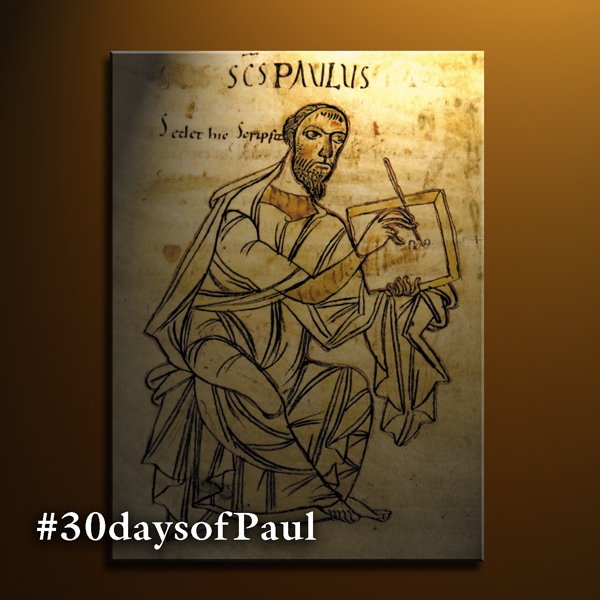
So one would be forgiven for thinking that Paul’s identification of the Christian faith as a sort of worldly “foolishness” is sort of, well, foolish. We take the cultural context of the beginning of 1 Corinthians for granted at this point, understanding that Paul was writing within and to a church that oppressed and unacceptable within the Roman world. Paul’s juxtaposition of Christianity and “wisdom” makes perfect sense in the first century world. But today, two thousand years later, Christianity has become the “Wisdom” and the allegiance of rulers and kings has turned to Jesus.

Or perhaps more accurately, the allegiance of the Jesus’ followers has been turned to the rulers and kings.

Yet, Paul’s message here is still very relevant, regardless of the “Christian” nature of the worldly powers. True Christianity is still a tradition rooted in foolishness, in opposition to the prevailing wisdom and common sense of the world and those who rule it.

Perhaps the most central idea to liberation theology is the idea of God’s “preferential option for poor.” The man who coined the name “liberation theology,” Peruvian theologian Gustavo Gutierrez, also is responsible for this term, from his seminal 1971 text “A Theology of Liberation.” Proponents of this world view are deeply indebted to the first two chapters of Paul’s first letter to the church at Corinth.

Writing to one of the most successful centers of first century Christianity in this bustling Greek metropolis, Paul is providing much needed shepherding and pastoral care to one of his most successful church plants. In light of various divisions and splits, he writes to implore them to find Christian unity, reminding them that they all follow one God.

In making this argument, he seeks to bind them together around their common shared knowledge and experience of Jesus. Hoping to make them feel like “insiders”, he reminds them that they understand something the wider world doesn’t, namely, that Jesus gave them a new way of living in and looking at the world. He reminds them that as Christians, they are viewed as foolish, but they should embrace it, and remember that Christ turned the world upside-down for all who follow him.

Paul elaborates on the upside-down nature of Christianity by ruminating on the foolishness of the Gospel in the eyes of the world. As Paul explains it, Christianity is not the way of the world, but a way opposed to how the world views success. In 1:20-25, he writes:

“Where is the one who is wise? Where is the scribe? Where is debater of this age? Has not God made foolish the wisdom of the world? For since, in the wisdom of God, the world did not know God through wisdom, God decided, through the foolishness of our proclamation, to save those who believe. For Jews demand signs and Greeks desire wisdom, but we proclaim Christ crucified, a stumbling block to Jews and foolishness to Gentiles, but to those who are called, both Jews and Greeks, Christ the power of God and the wisdom of God. For God’s foolishness is wiser than human wisdom, and God’s weakness is stronger than human strength.”

He continues the theme in 2:6-8:

“Yet among the mature we do speak wisdom, though it is not a wisdom of this age or of the rulers of this age, who are doomed to perish. But we speak God’s wisdom, secret and hidden, which God decreed before the ages of our glory. None of the rulers of this age understood that; for if they had, they would not have crucified the Lord of glory.”

In today’s world, especially here in America, we are quick to equate Christianity with our nation, and with worldly success. The popularity of prosperity gospel preachers like Joel Osteen and Creflo Dollar shows what the world thinks Christianity it all about: namely, personal success and wealth accumulation, due to the favor of God.

But Jesus truly showed a preferential option for the lowly. In 1:26-28, Paul powerfully affirms this:

“Consider your own call, brothers and sisters; no many of you were wise by human standards, not many were powerful, not many of noble birth. But God chose what is foolish in the world to shame the wise; God chose what is weak in the world to shame the strong; God chose what is low and despised of the world, things that are not, to reduce to nothing things that are.”

Our faith is one predicated on identification with the “least of these,” and success is not measured in dollars and followers. A lot of Christians mouth this as a meaningless platitude, without understanding the nature of this way of life. We are called to be in solidarity and at one with the poor and the forgotten. The only way we can serve others is through truly walking in their shoes, not just sympathizing with their struggles, but joining them in it as fully as possible. We can’t just do that by sending money overseas, or by donating food to a pantry. We must join their struggle for liberation, we must work to dismantle those institutions and structures that keep people in chains, even if that institution is the church itself, or America itself.

At it’s core, Christianity is a worldview centered on the poor, the mourning, the meek, the hungry, the thirsty, the merciful, the peacemakers, the persecuted, the least. It is a worldview with the homeless, the prisoner, the drug abuser, the prostitute as it’s cherished class. It is a religion of takers and welfare recipients and moochers and illegal immigrants and the unemployed. Everything we are called to do is to be centered on those the world rejects. We are to identify and work in harmony with the losers and rejects and outcasts, to liberate the world from social class and stigma and inequality. Such is the foolishness of the Christian faith. Such is the foolishness of God.

Next: 1 Corinthians 3-4

For a PDF of the 30 Days of Paul reading plan, click here.

Galatians 5-6: Christian Freedom and Liberation from the Law #30daysofPaul

“For freedom Christ has set us free. Stand firm, therefore, and do not submit again to the yoke of slavery.”

So Paul begins chapter 5, kicking off two chapters that are some of the most powerful examples of liberation theology in Scripture. My Harper Collins NRSV Study Bible labels this section “The Nature of Christian Freedom,” a very apt classification.

Paul has argued through the first four chapters of Galatians against the need for a return to obedience to the law in light of our justification by our faith. His argument comes to a magnificent head here in chapter 5. In short, Paul tells his readers that by accepting the need for circumcision, and thus the need to be subject to the Law, they are rejecting the freedom God has granted them through their faith. In verse 6, Paul tells them (emphasis mine), “For in Christ Jesus neither circumcision nor uncircumcision counts for anything; the only thing that counts is faith working through love.”


Because of our faith in the example of Jesus, we are liberated from the shackles that have held us all back from our relationship with God. That liberation releases us from the need to live in a state of fear, dictated by an unyielding code of right and wrong, and allows us to live in the freedom of knowing we are loved unconditionally. That knowledge of our freedom should propel us on to a life of love. It should fill us so full of unconditional love that we have no choice but to live a life that spreads that overflowing love far and wide.

Paul also reminds the Galatians here that this isn’t an unrestrained freedom to do whatever we want. In verses 13 and 14 he says,

“For you were called to freedom, brothers and sisters; only do not use your freedom as an opportunity for self-indulgence, but through love become slaves to one another. For the whole law is summed up in a single commandment, “You shall love your neighbor as yourself.”

What an paradoxical example of the love we experience by communing with God. Through overwhelming Christian freedom, we in turn become slaves; our freedom gives us the right to unconditionally serve our fellow man. Some translations and scholars have seen the need to soften the language of slavery here, replacing it with “servant” or some other variation. But I think the word “slave” is so important here, to show the intensity of the life of service we are reborn into.

Paul then moves into parallel lists, first of the things that a life lived in obedience to law puts the focus on: “fornication, impurity, licteniousness, idolatry, sorcery, enmities, strife, jealously, anger, quarrels, dissensions, factions, envy, drunkenness, carousing.” The second list is what he calls “the fruit of the Spirit,” the things that should shine forth in us if we are truly living in faith: “Love, joy, peace, patience, kindness, generosity, faithfulness, gentleness and self-control.”

Paul juxtaposes these lists to show what a life lived under the law looks like, and what a life lived in faith looks like. Under the law, the focus of life becomes the first list, and the never ending (and ultimately unsuccessful) attempt to avoid them. In essence, it is a life lived in chains, a life in which we are imprisoned by sin and the fear of violating the law.

In contrast, a life of faith is a life free to live in all those wonderful values Paul lists secondly. It is a truly liberated life, and a life in which we can’t not serve and love all we come in contact with.

What a journey Galatians has been. Starting with such evident anger, Paul builds to a crescendo that is beautiful, and so very powerful. And it is all centered around one, coherent message: through Christ, we are now set free from the shackles of the law. Our lives of faith negate any need for the law, and a return to it indicates a lack of faith and a backsliding of our relationship with God.

Remember this theme as we continue into Paul’s letters. It is foundational, and should be the lens we read him through from here. We are moving chronologically with Paul, and that gives us the benefit of watching Paul grow; it lets us wipe ourselves clean of the theology we have been taught our whole lives, and instead join Paul in redeveloping a theology of coherence and simplicity.

Tomorrow: 1 Corinthians 1-2

For a PDF of the 30 Days of Paul reading plan, click here.

Galatians 3-4: Love or Obedience? #30daysofPaul

When we left Paul in chapter 2, we had just been treated to an exceptional history lesson followed by a powerful statement of Paul’s essential theology of justification. Chapters 3 and 4 really expound upon Paul’s chief message in this letter: the juxtaposition of law and faith.

Remember how this letter started, with Paul launching right into an angry diatribe in 1:6? Well, he does the same thing in chapter 3; Verse 1 reads “You foolish Galatians!”

Paul is still angry.

There are two specific themes pervading these chapters (and Galatians over all) that I want to focus on. First, this conflict between obedience to the law and faith is a juxtaposition that is still highly relevant to how modern Christianity is practiced and lived. Second, despite his anger, Paul spreads a message of universality and inclusiveness, epitomized by the beautiful words of 3:28.

Paul’s chief argument to the Galatians is that our faith through Jesus is all that is necessary to justify our relationship with God, and that right action is a natural, irresistible outcome of that faith. This theory of justification has taken the place of obedience to the law, the idea that our relationship with God is first and foremost predicated on our ability to follow the rules and rack up more good points than bad.

Paul eloquently uses several Old Testament examples to ground this in Jewish tradition, to make this argument congruent with an ancient faith tradition his readers are committed to. Only by making justification by faith look as old as the Jewish nation itself will he be able to convince the Jewish Christians in Galatia that what they are doing is consistent with tradition.

We see this same argument so often in Christianity today. Traditional, conservative Christianity asserts that only through obedience to God’s Word (defined as inerrant Scripture) and the laws therein can one have a relationship with God, and consequently be admitted into God’s eternal presence. The most important thing a Christian can do, in this view of Christianity, is follow the rules, and only through that  will God grant salvation. Faith plays a role in that it propels one on to obedience of the Law. This model recycles that theory of agency I spoke of Paul rejecting earlier in Galatians: first we act, then God acts.

The other view of agency, God acting and then us acting, is making a comeback, however. Progressive Christianity has led a comeback in recent years of the Social Gospel, of the Christian’s duty to work for social justice. This work isn’t a burden, but is instead an irresistible call that our faith in the example of Jesus compels us onto. Faith has liberated us from the shackles of the Law, God’s grace being the key that opened that lock, and thus we are filled with the call to liberate our fellow man from the things that bind them.

This service-oriented, love filled example is such a compelling model of life, one that can appeal to all humans. And Paul writes in a way that emphasizes this universal appeal. Paul was an ardent universalist. As we saw in his explanation of his own personal history, Paul had given himself the special duty to spread the Gospel message to all people, both Jew and Gentile. Paul is inherently inclusive; he sees no reason to exclude anyone from the good news he is spreading across the Mediterranean Sea. This worldview is expressed so beautifully in chapter 3:

“There is no longer Jew or Greek, there is no longer slave or free, there is no longer male or female; for all of you are one in Christ Jesus.”

The church needs to take these words seriously again. Nothing matters but each person’s humanity, nothing but the divine spark and imago dei we all carry within us. The law becomes insignificant in light of that.

Paul’s desire to free all from the shackles of the Law stems from his desire to welcome all into fellowship as followers of Jesus, up to and including the tradition he had spent the majority of his life upholding. In Paul’s view, nothing should stand between us and God.

I believe these two ideas – radical inclusiveness and a relationship built on faith and shown through service- are key to rebuilding a crumbling modern church. Just as Paul grounded his arguments in Jewish tradition to bring along those otherwise resistant while framing it in a new way that appealed to those outside the tradition, so we can ground the values of inclusiveness and love in a two thousand year old tradition while bringing these radical ideas back to the forefront to appeal to a generation who has only seen a Christianity embodied by unthinking obedience and Divine Anger.

We are only four days in, and I’m appreciating Paul more and more. Far from the unappealing, small minded theology I expected, I’m seeing an apostle who was undoubtedly inclusive and progressive in his Christology and theology. Yes, he is angry here, and he can be a braggart and driven by personal grievances from time to time, but it’s becoming easy to see why he has played such a central role in the Christian faith. It’s time we reclaimed Paul as the radical, exciting thinker he was.