Galatians 1-2: Diving Into the Deep End #30daysofPaul

1 Thessalonians was a good place to start a study of Paul’s authentic letters, and not just because chronologically it is first. Paul is so warm and joyful in writing to the church at Thessaloniki; his happiness over their growth comes so easily through the words he wrote. The infectiousness it makes you want to read more Paul. It is also a good place to start with Paul theologically; he touches on several of his biggest preoccupations, but in a simple way, and lets you get comfortable with the way he talks about things.
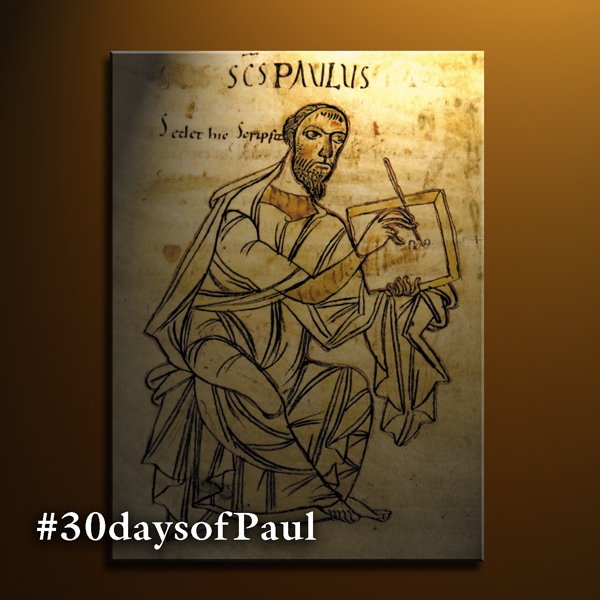
Galatians is the polar opposite of 1 Thessalonians. Paul is angry, defensive, jealous, argumentative and accusatory, all in just the first two chapters. He dives right into the meat of his theological worldview, of his take on the gospel. Despite the tone, Galatians is extremely engaging and extraordinarily interesting, especially in how well it explains the early personal politics in the church, between such giants as Paul, Peter, John and James.

I split these two chapters into three main parts:

  1. The backstory of Paul
  2. Early church politics
  3. Paul’s gospel

Overall, Paul is writing to a church in Galatia (central Anatolia, in modern day Turkey) that he planted, a church of Gentiles who have become convinced by unnamed persons that they must adhere to Judaic law if they want to be considered followers of Christ. This is in direct contradiction to what Paul has premised his entire public ministry on, and boy is he angry. Let’s hit each of these emphases one-by-one.

The Backstory of Paul


Galatians begins in a way that no other letter of Paul does. After a short formulaic introduction, Paul launches right into a condemnation of the Galatians in verse 6, exclaiming, “I am astonished that you are so quickly deserting the one who called you in the grace of Christ…” No prayer of thanksgiving, no praise for good deeds done, not even so much as a “we are thinking fondly of you” or anything.

Like I said, Paul is ANGRY.

After twice calling those who teach them anything divergent from what he taught “Accursed,” Paul launches into his own story. In doing so, he gives in to what I think is one of his biggest faults: his tendency to become overly defensive when his authority is challenged.

This defensiveness is understandable on one level. Paul is asserting his leadership in a church where all the other major figures-Peter, James, John-were men who lived and worked with Jesus during his time on earth. Paul did not, instead spending his time as a Pharisee hellbent on wiping out all followers of Christ. So in telling his own story, Paul emphasizes the personal experience of Christ he received at the instigation of God. This framing is so important to Paul in asserting his authority to lead and teach them;  it must be understood by those he is writing to that: 1) he did have a personal relationship of sorts with Jesus, equal to that of Peter and company, and 2) this personal experience wasn’t of his own initiation, but instead was the work of God, thus adding the imprimatur of the Divine to Paul’s commission.

The idea of a personal faith, characterized by personal experiences of the Divine and personal relationships with God, is central to the kind of church Paul envisions: one centered on the individual, and that individual’s ability to experience Jesus without a priestly intermediary. This was an absolutely revolutionary idea, and something the institutional church willingly ignored for centuries after Paul, in order to consolidate it’s own power and importance.

Early Church Politics


From his own story, Paul moves into the story of his own relation to other church fathers, and how that has shaped the direction of the early church and it’s theology. Paul says after three years (presumably from his conversion experience), he went to Jerusalem and met with Peter and James for fifteen days. My Interpreters Bible commentary speculates this time was spent learning the details of Jesus’ life, ministry and death, something not yet written down at this early date, and thus something Paul wouldn’t have been intimately knowledgeable about. Paul then says he spent fourteen years in Syria and Cilicia (southern Turkey) before a return to Jerusalem.

This meeting has much more meaning. Paul goes to a meeting with the leaders of the Judaic Christians to relay a “revelation” he claims to have had. Over the ensuing decade-and-a-half from his first Jerusalem trip, Paul has developed the idea of a Universal Church, one with no barriers of Jew or Gentile. He has felt called to carry the gospel beyond the Jewish diaspora to the other peoples of the Eastern Mediterranean, and he wants the official blessing of Peter and his company to do so. Despite the best efforts of those he terms “spies,” Paul manages to get assent from Peter, James and John to be the apostle to the Gentiles, while they will focus on the Jews. Paul and his associate and close friend Barnabas get “the right hand of fellowship” from these friends of Jesus, with the only condition that they “remember the poor,” presumably through tithes to the Jerusalem church, something Paul claims himself “eager” to do.

But then things go downhill. Paul says he next saw Peter at Antioch, the capital of Syria and the home of many Jews. Paul is angry with Peter for going back on the agreement to bring Gentiles in, because now Peter has been influenced by James’ conservative faction that the fact that Paul is not requiring ritual Jewish purity of Gentile converts makes those Gentiles “unclean” and thus unacceptable for Christian fellowship. Paul views this move by Peter not as the fault of Peter, but instead his own necessary acquiescence to the politics of the Jerusalem church, but he is nevertheless ruthless in his treatment of Peter. The betrayal is personal for Paul, both because of the handshake agreement the two sides had, and because it had even caused Paul’s close friend Barnabas to abandon him for the Judaic crowd. Paul calls Peter out in front of the Antiochan church for his hypocrisy, setting off the on-going theological struggle that has invaded the Galatian church by the time of Paul’s writing.

Paul’s Gospel


The last section is just six verses, but man, it packs quite the theological punch. Coming off that explanation of how the church got to this place of disunity, Paul launches into a succinct, powerful explanation of the gospel as he sees it. Paul begins by stating that persons are “justified not by the works of the law but through faith in Jesus Christ.” What he means here is, we don’t receive justification from God due to our adherence to Jewish law, but through the faith we have in Jesus.

Previously, man needed the law to receive justification; by adherence to the law, we could strive to receive the redeeming action of God by living true to God’s instructions. But Paul sees this as limiting God; laws require only obedience, but God desires more than just obedience; God desires our love. God desires obedience to God’s self not because of obligation, but because we are compelled to obedience through love expressed by our faith in Jesus. Through faith, we have no choice but to act in obedience, not because it is demanded, but because in having faith, we become one with Christ, driven by the same concern and love of others he lived with. We become compelled to work for constant liberation of our brothers and sisters, and this fulfill the purposes of the law, without being beholden to it or driven by it.

In this formulation, agency has been shifted; previously we acted in obedience, and then God bestowed justification; now, God bestows justification because of our faith, and then we are compelled on to action. The Interpreters Bible puts it this way:

“(Paul) never allows us to forget that to be crucified with Christ is to share the motives, the purposes, and the way of life that led Jesus to the Cross; to take up vicariously the burden of the sins of others, forgiving and loving instead of condemning them; to make oneself the slave of every man; to create unity and harmony by reconciling man to God and man to his fellow men; to pray without ceasing “Thy will be done”; to consign one’s life to God, walking by faith where one cannot see; and finally to leave this earth with the prayer “Father, into thy hands I commend my spirit.” “

This is powerful and consequential stuff, stuff that makes up much of Christian theology as we know it, but was very much in doubt at the time of Paul. He answers critics who might view this theory of Christian action as self-serving by explaining that Christ inhabits us upon our justification, and we can act in no way but in a way consistent with the life of Christ. He ending challenge, “if justification comes through the law, then Christ died for nothing,” is a powerful shot across the bow of Peter (Jesus’ Rock) and James (Jesus’ brother.) It’s a hard point to argue, and probably why the theology of Paul was eventually so ascendant over the Jerusalem church. By making the statement, Paul was asserting his view of the purpose of Jesus’ life, a purpose centered not on calling people to obey the law, but centered instead of love of others and concern for the liberation and welfare of one another, above and beyond what the law requires.

These two chapters are heavy. There is a lot going on here, a lot to wrap your mind around, and all of it so important as we move forward with Paul. Understanding the background material Paul presents here, and grasping his powerful explanation of justification by faith, is essential to understanding the rest of the Pauline canon. Take the time to read slowly and deeply, and then get ready to get even deeper in the weeds.

Tomorrow: Galatians 3-4

For a PDF of the 30 Days of Paul reading plan, click here.

1 Thessalonians 4-5: Examining Paul’s Preoccupations #30daysofPaul

We have a little more theological meat to work with in today’s reading, as contrasted with yesterday. Chapters 4 and 5 of 1 Thessalonians provide some really great early examples of the various preoccupations Paul will hit again and again in his later letters: sexual immorality and purity, holiness, expectation of an imminent eschatological event. It also has two passages I especially like, containing almost formulaic lists of exhortations that give some insight, I believe, into the practices and traditions of early Christianity. Let’s move through these two chapters be focusing on a few passages.

4:1-8 Holiness and Sexual Ethics in a Pagan World


Paul moves from thanksgiving and prayerful joy in chapters 1-3 to a message of exhortation in chapter 4. Specifically, for the first time, we hear a couple of Paul’s chief preoccupations: sexual immorality and holiness. Writing to a church situated in primarily pagan Greece, Paul feels the need to remind the Thessalonians of the sexual ethics he taught them. He does this even though he just spent three chapters praising them for how good they’ve been doing; this shows both how important this topic is to Paul, and how much influence pagan culture still had on the early church as it attempted to forge an identity.

Paul uses the word “control” and “abstain”, warns of the “lustful passion, like the Gentiles who do not know God.” Throughout his letters, we will see Paul preach an ethic of controlled emotion and passion, an ethic that rejects the prevailing sexual openness and licentiousness of the Roman world. Paul wanted the followers of Christ to liberate themselves from worldly passions, from the chains of their unconstrained emotions, so that they might live an orderly, controlled life in which the “small, still voice” of God would be audible to them. Amid the wild Greco-Roman culture, he wanted them to stand aware of their own beings, especially as they were in relation to one another.

4:11-12 The First Formula of Reverence


I really adore both this passage, and one we will explore later. Paul instructs the church at Thessaloniki “to aspire to live quietly, to mind your own affairs, and to work with your hands, as we directed you, so that you may behave properly toward outsiders and be dependent on no one.”

This passage doesn’t quite have the formulaic character of 5:12-22 (more on that soon), but it does have the specificity of repeated directions of how to live life as a Christian community. I like this so much because I think passages such as this from Paul give us deep insight into how the earliest Christians lived and organized their lives. I believe we can learn much from the early church about how to live a life following Christ, and these kind of specific instructions help us do just that.

Following on the exhortation of holiness and ethical living, these instructions give the Thessalonians a reminder of the way they are to live in contrast to those around them. The triple instructions of “live quietly,” “mind your own affairs,” and “work with your hands,” so that they might be “dependent on no one,” shows that the early church was well aware of it’s role as an outsider in the ancient world. Being self-sufficient allowed them to live the type of life they felt called to, without the demands of society, while still being responsive to the call to serve God’s people and bring a message of liberation and love to those classified as the “least of these” in the eyes of empire.

4:13-5:11 Paul’s Expectation of an Eschatological Event


The end of chapter 4 introduces another of Paul’s preoccupations: the imminent coming of God’s Kingdom on Earth, and exhortations to live in preparation for it.

John Dominic Crossan describes two types of eschatology common to Christianity: apocalyptic eschatology, or the belief that the coming of God’s Kingdom and the remaking of the world is God’s duty, that we must only be concerned with preparing our spiritual selves for it, and trying to discern it’s shape; and sapiential eschatology, the belief that we must work to bring God’s Kingdom here on earth, and must liberate the physical and spiritual bodies of all beings in order to experience it. As Crossan says in Who Killed Jesus?,

“Apocalyptic eschatology is world-negation stressing future and imminent divine intervention; sapiential eschatology is world-negation emphasizing present and immanent divine intervention. In apocalyptic eschatology, we are waiting for God to act. In sapiential eschatology, God is waiting for us to act.”

(I really love that term: “world-negation.” So cool.)

Crossan claims John the Baptist preached apocalyptic eschatology, and in response to his death, Jesus in contrast preached sapiential eschatology. So what about Paul’s eschatology: apocalyptic or sapiential?

I honestly don’t know Pauline theology well enough to know which camp he falls in. My preconceived biases tell me he is apocalyptic, and that the communities he left behind had to grapple with the failure of Christ to come again in their lives, leading to much of the later writings that wrongly bear Paul’s name that tries to answer this problem.

But I could be entirely wrong about that. That’s why I’m doing 30 days of Paul, so that I might learn these things. For the record, I subscribe strongly to sapiential eschatology; I think we have a duty to bring about God’s Kingdom here on earth through our imitation of Christ’s example, rather than passively waiting on God.

One final note here: in 5:3, Paul references those who say, “There is peace and security.” Peace and security were an unofficial slogan of the Roman empire, printed on much of the Roman currency of the day. By dismissing those who say this, Paul is reminding the Thessalonians to not put their hope in the empire, but to remember that it too will one day fall, but the Universal Church will endure.

5:12-22 The Second Formula of Reference


The last thing I want to touch on is the second formulaic passage in 1 Thessalonians. As I mentioned above, this on is much more formulaic than that of chapter 4, and I think reflects an early form of liturgy that leaders like Paul or Silvanus may have used to remind the church of it’s duties as followers of Christ. I just want you to read this passage, cherish it, take it to heart, and reflect on it as, again, one of the earliest examples of liturgy for the Christian church.There is much to be learned here, and much to emulate on our own journeys:

12 But we appeal to you, brothers and sisters, to respect those who labor among you, and have charge of you in the Lord and admonish you; 13 esteem them very highly in love because of their work. Be at peace among yourselves. 14 And we urge you, beloved, to admonish the idlers, encourage the fainthearted, help the weak, be patient with all of them. 15 See that none of you repays evil for evil, but always seek to do good to one another and to all. 16 Rejoice always, 17 pray without ceasing,18 give thanks in all circumstances; for this is the will of God in Christ Jesus for you. 19 Do not quench the Spirit. 20 Do not despise the words of prophets, 21 but test everything; hold fast to what is good; 22 abstain from every form of evil.

So good.

Tomorrow: Galatians 1-2

For a PDF of the 30 Days of Paul reading plan, click here.


For more info on 30 Days of Paul, click here for my intro, or here for Cassandra Farrin’s explanation.

Click Here for Cassandra Farrin’s take on today’s reading.

A Preferential Option for the Poor: Reading Paul as Liberation Theology #30daysofPaul

Before we dig into our second reading, I want to address where I’m coming from, what lenses I’m primarily reading Paul through. I do this for your benefit, so you may understand what I’m writing, and for my own benefit, so that I can hash it out a little and provide some coherence to the next 29 days.

At this infantile stage of my Christian education and development, I consider myself primarily concerned with Liberation Theology. I hesitate to label myself liberation theologian, out of either respect for all those who have written and taught so prophetically about liberation, or fear of taking on such a mantel as a young, white, privileged, middle class straight male. I am the epitome of what most liberation theology focuses on as the power from which much liberation frees the oppressed and marginalized from.

However, I think all people are in need of liberation, regardless of their age or race or nationality or gender or gender identity or social class or religion. We are all held in thrall and oppression to something, and we are all called to spread to liberation to others. I believe strongly that Jesus preached liberation, drawing on the liberation rhetoric of early Jewish prophets; that his disciples and apostles carried that banner of liberation to the poor and oppressed masses across the Roman world; that the subsequent two thousand years has seen much oppression and injustice and shameful actions by Christians against others, but has also been rife with an ever widening net of liberation for more and more people.

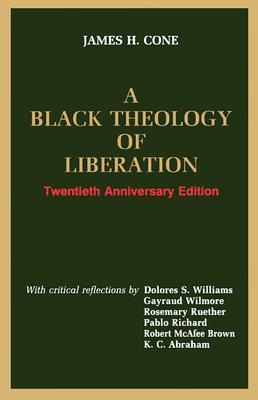
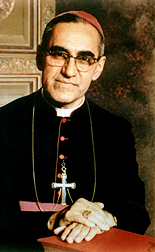
Three of the biggest influences on my particular brand of theology and Christianity are Bishop Oscar Romero, Dr. James Cone and Gustavo Gutierrez. Cone’s “A Black Theology of Liberation” changed the way I think about Christianity like few over books have. Gutierrez’s “The God of Life” had a similar effect. I believe Romero to be the ultimate martyr and example for the liberation movement, specifically in his transformation from an ultra-conservative defender of the status quo, to protector, leader and liberator of the oppressed masses of El Salvador. His death at the Lord’s Table, serving Communion while being gunned down by American-trained commandos, is a defining moment for the liberation theology, as it brought to light that any claim to Christianity by the powers-that-be is always contingent upon the subjection and subservience of Christianity, and as soon as that faith begins to assert itself, to liberate itself from the shackles of the world, the powers will inevitably use violence and force to attempt to chain it again.

I am making a conscious effort to read Paul this month from a viewpoint of liberation, through the lens of Gutierrez’s “preferential option for the poor.” I want to cultivate this line of thinking in myself, to earn the title one day of liberation theologian. I am to use the language of liberation in my exegesis of Paul, to hopefully enrich my readers here by helping you see the words of Paul and how they contribute to a faith that liberates all who are oppressed, as Jesus liberated his followers from the rat race of empire two thousand years ago. Because, as Dr. Cone writes, “Any message that is not related to the liberation of the poor in a society is not Christ’s message. Any theology that is indifferent to the theme of liberation is not Christian theology.”