Why I’m leaving social media, and why I think you should too

I’m leaving Facebook. And I think you should too.

I’ve taken two extended breaks from Facebook in the past, one while I was writing my thesis, and one early this year. Both were mainly to allow myself the time and attention to focus on other things I needed to be spending time on; but both were also largely in part to preserve my own mental health from platforms that I see as increasingly dangerous and damaging. Social media has one goal, and that goal is not to good-naturedly connect you with friends and family and create some form of “online community”, or to be a purveyor of the “truth.” This makes for a good PR narrative, but in reality, the goal of social media sites like Facebook and Twitter is to drive ad revenue for themselves and their corporate partners by engaging users, and they have found that the best way to do that is to feed you emotionally-stimulating content. They do this by learning what engages your brain most effectively, and then their algorithm feeds you similar stuff over and over. And what exactly have social media companies learned drives this best? Anger, rage, and hate. Its classic human psychology 101, and these companies know (even if they would never say this in an earnings report or shareholder update) that the best way to keep you engaged and clicking and filling their pockets with ad revenue is to enrage you. Anger is the most visceral of human reactions, and causes us to act in unconscious ways, and these companies know that in the context of a social media platform, those actions will most often be clicking, sharing, and engaging other users. Thus, they work to harness your emotions in a way that is damaging to you, but beneficial to them.

I see this dynamic at work in myself all too often on Facebook. It takes very little prodding to get me scrolling endlessly, getting angrier and angrier at what I see, and then clicking and re-sharing things that, if I took five or ten minutes to calm down and cool off and think rationally, I would never do. To step back from that and realize it is terrifying; its terrifying because it makes you think about how much control these social media corporations have over not just our cell phones and computers, but over the wiring in our brains – in short, how much control Facebook and Twitter have come to have over our humanity. I consider myself intelligent, mentally strong, and emotionally in control over myself; but when it comes to the algorithmic psychology at work in social media, I am little better than a slobbering, screen addicted pair of eyeballs with two working thumbs and an over-stimulated prefrontal cortex.

Its scary and sad for me, as well, to see what these platforms have done to many of my friends and family. Facebook has taken people dear to me, and seemingly twisted them beyond recognition, at least in the digital space. There are people who I know, in the real world, who are kind and good and smart people, but when you encounter them on Facebook (and lets be real, that’s where most of us encounter each other anymore) they are completely different: they become angry, and mean, and thin-skinned, and dumb. I see strong relationships get torn apart over stupid shit on social media, over someone’s comment on something, or their reaction to a post. Its sad, and its infuriating, and it makes me despair for the future of our nation and our humanity.

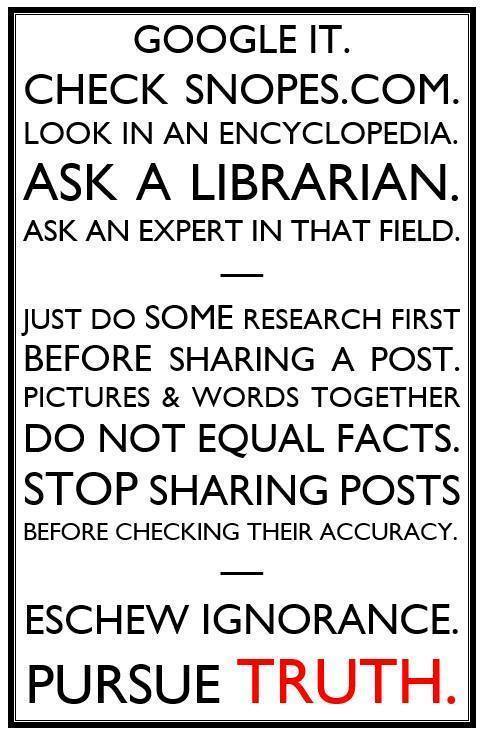
I also have become deeply grieved over what social media is doing to concepts like truth, and morality, and knowledge, and ethics. I am someone who deeply values the pursuit of what is true and good. I have spent a large number of years and an even larger number of dollars doing academic work in theology, ethics, philosophy, political science, and public policy. The discovery and transmission of what is true to so important to me. I have no issue with anyone who believes differently than me on a whole host of issues; I love good debate and argument! But I hate the turn I increasingly see across the whole spectrum of beliefs and positions away from what has commonly been understood as empirically-founded and sincerely-held values about what is true. There is no hope for us as a community if we no longer value what is true more than scoring points or owning the libs or virtue signaling. Far from being bastions for free speech and truth-seeking and good will, Facebook and Twitter have become hubs for misinformation and lies and willful ignorance. It does not matter, for instance, to a good number of my acquaintances on social media that I have sunk the better part of decade in reading, writing, debating, and learning about theology, of instance. If a political or hot button issue is at stake, then my expertise, and the expertise of thousands of others in countless other fields, is denigrated and thrown aside and disrespected. One growing feeling in my own engagement with social media over the last year or so is an intense feeling of disrespect towards the work I’ve done and the knowledge I worked so hard for. I know this sounds very hubristic, but there are a lot of us out here who put in the time and effort to know things, and know them well, and just because you have a keyboard and a social media account and a Google search bar doesn’t mean you are more of a expert on something or have more knowledge than those of us who have earned the right to be respected and heard and trusted on these topics. Experts are an important part of a democracy because none of us has the time or the ability to become experts on everything, or even one thing. Truth matters. Facts matter. Any platform that degrades and tears down truth and expertise and knowledge is not only bad for you, it is a immoral tool working against our shared humanity. I have no doubt in my mind that the state of our world – creeping fascism and nationalism, a pandemic, dangerous leaders, a deeply neurotic and toxic cultural milieu – is driven in large part by social media. I have no doubt that our struggles here in America to do the right thing and face COVID-19 in a fact-informed, well-planned way is in large part driven by social media misinformation and herd-building tendencies.

So, in a few days, I will be deactivating my Facebook and my Twitter accounts. I intend to keep my Instagram, because I have a very small list of things I follow, mostly centered around food and sports and architecture and books and other things I love. I don’t find Instagram, by and large, to be a toxic space. That could change. It is owned by Facebook. I also will be blogging here, I have a newsletter I send out occasionally (and hope to use more) and I’m on Micro.Blog and Goodreads. Hell, I’d love to start an email or snail mail correspondence with you, if you want to be in touch with me; let’s talk for real! Those tools are all more than enough for me.

But beyond me just leaving, I strongly, strongly implore you: leave Facebook and Twitter behind. Do the actual work of maintaining connections, not with as many people as possible, but with those you most love and care about. Find groups of shared interests in less toxic places. Don’t rely on Facebook for your news, or your facts, or your knowledge of what is happening in the world. Put in the effort. Do the work. Read newspapers and legitimate news sources. Find scholarly journals. Reference online encyclopedias. Preserve your mental health. Don’t be a tool and source of money for folks who don’t give a shit about you anyways. Be a free, whole, proud, and liberated human being, out in the real world. Trust me: you will feel so much better. It may be scary at first. It may be hard. You may feel that urge to pick up your phone and dive back in. Don’t do it. Show us how strong you are. You existed before social media. You can exist after it.

Love in action

What does love look like in the world?

It can’t just be declarations. You can’t keep saying that you love gay people or black people or poor people or immigrants but then do things to them and support policies towards them and vote for people who hurt them. To love someone, to practice love, requires you to be loving. Love requires more than flowery Bible verses, carefully cherry picked from 1 Corinthians or the Psalms. Love requires more than public declarations (preferably on Facebook) about how much you love people, and want what is best for people.

Love requires sacrifice. You must be willing to give up your comfort for others. If you aren’t willing to do that you aren’t willing to practice love. You simply want to be seen as a good, loving person with having nothing actually asked of you. That’s not love. That’s hypocrisy. That’s Bonhoeffer’s cheap grace.

Love in public is justice. Love put to work in the world requires the healing of wrongs, the ending of injustice, the establishment of fairness and justice. What love doesn’t look like is policies that separate families at the border, that criminalizes and punishes people for who they love, that continues to oppress and murder people of color, that make wealth inequality larger and larger, that disenfranchises people from their rights as a citizen in a democracy. Love in public means you probably shouldn’t be supporting politicians who are cruel and callous.

Love in public has to extend a lot further than just unborn babies.

Love is not safe. Love is not easy. Love is not comfortable. Love won’t preserve you in your easy life.

Love – real love – will challenge you. It will push you. It will shake up your comfortable existence. It will ask a lot of you. If it doesn’t do anything of these things –

then it’s not really love.

Christian love is wildly irresponsible and illogical and irrational and also beautiful and boundless and the cure for everything that ails us. I don’t want to hear responses to this along the lines of, “but that would require me to give something up,” or “somebody will take advantage of me.” My answer to that is,

“So?”

Sometimes, that’s what love –real, messy, consequential, Christ-like love – takes. Sometimes, it asks us to be vulnerable, to be willing to take a risk, to be willing to extend love to those we’d rather not. Sometimes love means the recipient won’t return that love, at least not right away, and we might get hurt. This happens in personal love and public love.

But, as Christians we should be willing to give up anything for the sake of love. Including our possessions. Including our safety. Including our family. That the example of Christ. Christ was willing to die for the sake of love. The least we can do is sacrifice a little bit of our creature comfort for the sake of somebody else.

What love is, is our deep, enacted concern for others. It is our willingness see the striving for humanity in others and not see it as an affront to your own humanity. Love has to be –has to be- recognizable as love for it to be, you know, love. Love that looks like hate, or anger, or dislike, is not – stick with me here- actually love. It’s just hate, or anger, or dislike.

I’ve said a lot here. Maybe Scripture can say it better: “Greater love has no one than this: to lay down one’s life for one’s friends.”

The Christian Vote

I have two degrees: one in political science, and one in theology and ethics. I think a lot – A LOT – about the intersection of these two things, both in our culture in general, and in how I approach these two interests in my own life and my own public actions and words. While I’m obviously not leery of getting political – in terms of issues and policies – on social media and in my writing, I’ve generally steered clear of making supportive statements about candidates themselves. I’ve done this because I have been working out my own thoughts about the proper way to be politically involved. I have worked – I am still working – to find the proper line to walk between my passion for political work, and the importance I see in civil engagement, and a theological bent towards an Anabaptist, nonviolent/non-coercive, anti-empire faith. It’s a very narrow line to walk, one often difficult to discern.

It’s made all the more difficult by the current occupant of the Oval Office. I don’t want this post to be about bashing Trump. That’s easy enough to do, and he’s certainly earned that bashing. But what I mean here is, discerning my public calling in this particular time takes on an added difficulty, but also an added urgency. We are living in a time unlike any other, and we have political leadership in this country that is uniquely unfit for office and dangerous to our nation and to the people I care about most in this world. For someone wanting to engage thoughtfully and carefully in the political realm, the era of Trump serves only to obscure and erase any attempts at thoughtfulness and nuance. This is one of the most dangerous things this President brings the world, among so many others: a national tone of political engagement centered on brutality, line-drawing, and being the loudest, most extreme voice. It’s devastating to democratic political culture in general, and to finding one’s own unique political voice and course of action, especially if the voice and course you are plotting is one that is trying to be free from the traditional left-right, Democrat-Republican, progressive-conservative divide of politics. This is not, in short, a time conducive to deep, long-term thinking. It’s a time where everyone seems to be merely trying to survive, day-to-day. Existing inwardly, in an attempt to be more intentional about political and public choices, comes across as selfish, privileged, and tone deaf right now.

Nevertheless, this is where I have been, and where I continue to be as this crucial election approaches. But recently, I have come to a really important conclusion, one that is starting to drive my own political engagement, and one which I hope can start to drive that of others as well. In order to communicate that idea, let me first make a very obvious, but also very uncomfortable for me, declaration of political intent: I am supporting and voting for Joe Biden this November. I strongly supported and voted for Elizabeth Warren during the primaries, and Joe was pretty far down my list of candidates if you had asked me to rank them. But, as he wrapped up the nomination, I am content to support and vote for and even get a small bit of excited about his candidacy this year.

While that, again, seems like a rather obvious statement of support for someone like me to make, it is not one I anticipated making publicly, nor I do I feel comfortable doing so publicly. This discomfort arises, again, from my deeply held theological convictions as a Christian who takes my faith very seriously. I am in a place theologically where, generally speaking, I place almost no faith or hope in the workings of political leaders or state action. My faith is in a Man who was executed by a state very similar to our own today, a Man who came declaring God’s Kingdom, a Kingdom that is in the keeping of the Church, which is an alternative polis to the one we are left with today. It is, in the words of Augustine, the City of God where I see the hope of humanity, and not the City of Man. The City of Man, exemplified in the political tumult and actions of this world, is fallen, and most crucially, it is not and cannot become the Church, or the City of God. My political engagement in this world is never with the intention that this world will perfectly mirror the Church. It will always fall short. As Christians, we are called first and foremost to building a different example of being in the world, one based on the nonviolent, love-centered, all-encompassing love of God as seen in Christ. This is where my hope, and my chief work, lies.

That said, I don’t place zero importance on the workings of this world. We do, after all, have to live here, and Christ called us to envisioning and working for a better world here and now. And, in this country, that means democratic political engagement. For all its many, many faults, our Constitutional democracy, built on liberal Enlightenment values, does a pretty good job of ordering our lives together. And so, I feel good, in the here and now, voting for Joe Biden. I do so because – and this is the big point I want to make – voting is far from – it should be far from – the only form of democratic political engagement we participate in. Voting, in a democracy, should only be one small way in which we all participate in the governing of our states and cities and nation. When voting is paired with advocacy, education, protesting, civic engagement, and other forms of democratic participation, then crucially, who we vote for stops seeming like such an all-encompassing exercise of our political voice. In other words, when our only form of political engagement is going to vote once every two or four years, then the person we mark on the ballot completely and totally co-opts our voice and our energies. But, when we get involved in a multitude of ways, then that person we vote for only gets to account for a small portion of our public witness.

This is important because, too often, we treat who we vote for as a much larger part of who we are than it should be. When I go to the poll in November and vote for Joe Biden, many people will view that as a large statement on who I am as a person, and on what my priorities are at a granular level. But, what I want you to understand is that voting for Joe Biden is only a small part of my political and public engagement in the world. As such, I don’t feel the need to endorse or stand behind everything Joe says or does. He does not speak for me. He is merely the best choice I see on the ballot. He’s not perfect; far from it. Joe Biden and I disagree on a lot of issues. But, I don’t feel like I am mortally compromising my values as a person or a Christian by voting for someone I don’t agree with all the time, because I am willing to keep working in those areas, and through my work and advocacy, I am willing to hold Joe accountable in a more concrete way than I would be doing if all I did was vote. I really believe that sometimes it is ok to say: I don’t agree with my candidate on this or that issue, when someone challenges you on it. This holds true for the other candidates I am publicly throwing my support behind year as well: Kojo Asamoa-Caesar in our Congressional district, Abby Broyles for our Senate seat, Greg Robinson for Tulsa Mayor as my preferred candidate for Mayor, Kara Joy McKee as my City Councilwoman, Meloyde Blancett Meloyde Blancett as my State Representative. None of these candidates checks every priority or value for me. But I am willing not only to vote for them, but also to declare publicly that I am voting for them, because they all need to know that my doing so, I am saying out loud, to my community, that I am holding them to their promises, and I am going to challenge them where I think they need to be challenged. They have all asked for my vote in different ways, and the price of that vote is the reminder that their political power is only a small part of the democracy we all live and take part in.

My charge to you: go vote in your elections. But don’t just vote. Get involved. In doing so, you will more clearly discern what is important to you, and you will be able to engage our leaders not just at the ballot box, but every day, in a variety of ways. And in doing so, you can begin to see your vote as not the persona-defining choice of somebody who you must then defend to the death in public, because you have submitted your persona to them in your only act of public accountability, but as one small measure of your power as a democratic citizen.