A Preferential Option for the Poor: Reading Paul as Liberation Theology #30daysofPaul

Before we dig into our second reading, I want to address where I’m coming from, what lenses I’m primarily reading Paul through. I do this for your benefit, so you may understand what I’m writing, and for my own benefit, so that I can hash it out a little and provide some coherence to the next 29 days.

At this infantile stage of my Christian education and development, I consider myself primarily concerned with Liberation Theology. I hesitate to label myself liberation theologian, out of either respect for all those who have written and taught so prophetically about liberation, or fear of taking on such a mantel as a young, white, privileged, middle class straight male. I am the epitome of what most liberation theology focuses on as the power from which much liberation frees the oppressed and marginalized from.
However, I think all people are in need of liberation, regardless of their age or race or nationality or gender or gender identity or social class or religion. We are all held in thrall and oppression to something, and we are all called to spread to liberation to others. I believe strongly that Jesus preached liberation, drawing on the liberation rhetoric of early Jewish prophets; that his disciples and apostles carried that banner of liberation to the poor and oppressed masses across the Roman world; that the subsequent two thousand years has seen much oppression and injustice and shameful actions by Christians against others, but has also been rife with an ever widening net of liberation for more and more people.
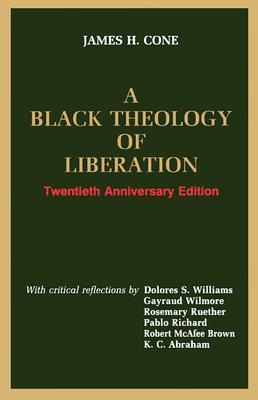
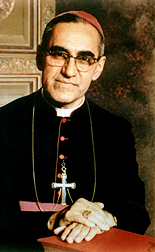
Three of the biggest influences on my particular brand of theology and Christianity are Bishop Oscar Romero, Dr. James Cone and Gustavo Gutierrez. Cone’s “A Black Theology of Liberation” changed the way I think about Christianity like few over books have. Gutierrez’s “The God of Life” had a similar effect. I believe Romero to be the ultimate martyr and example for the liberation movement, specifically in his transformation from an ultra-conservative defender of the status quo, to protector, leader and liberator of the oppressed masses of El Salvador. His death at the Lord’s Table, serving Communion while being gunned down by American-trained commandos, is a defining moment for the liberation theology, as it brought to light that any claim to Christianity by the powers-that-be is always contingent upon the subjection and subservience of Christianity, and as soon as that faith begins to assert itself, to liberate itself from the shackles of the world, the powers will inevitably use violence and force to attempt to chain it again.

I am making a conscious effort to read Paul this month from a viewpoint of liberation, through the lens of Gutierrez’s “preferential option for the poor.” I want to cultivate this line of thinking in myself, to earn the title one day of liberation theologian. I am to use the language of liberation in my exegesis of Paul, to hopefully enrich my readers here by helping you see the words of Paul and how they contribute to a faith that liberates all who are oppressed, as Jesus liberated his followers from the rat race of empire two thousand years ago. Because, as Dr. Cone writes, “Any message that is not related to the liberation of the poor in a society is not Christ’s message. Any theology that is indifferent to the theme of liberation is not Christian theology.”
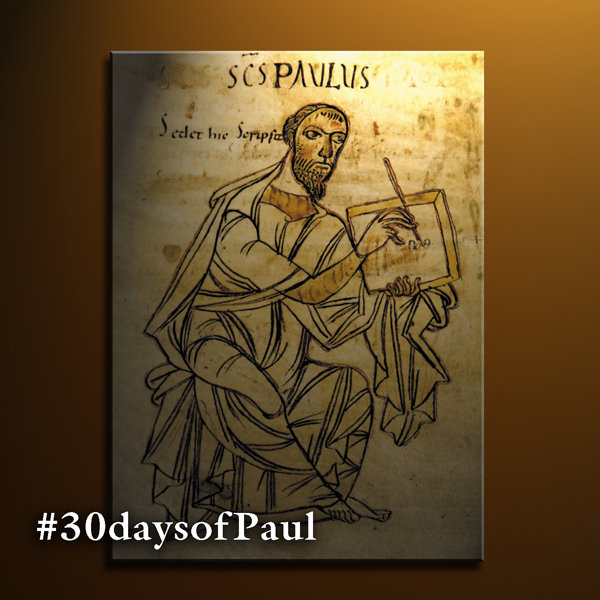

1 Thessalonians 1-3: An Inauspicious Start to #30daysofPaul

I, like a lot of progressive Christians I know and read, have had a difficult relationship with Paul and his writings. Letters genuinely written by him, and mistakenly attributed to him, make up a majority of the New Testament, and a good chunk of the Bible. Yet some of his theology can be quite dense, or downright troubling. Some of the ideas I believe to be the most destructive and hurtful to come from Scripture-condemnation of homosexuality, the subjection of women just to name a couple-have rationales drawn from Paul’s writings.

Yet so much Christian thought and theology is drawn from Paul. Ideas we take for granted-the universal church, justification by faith-aren’t teachings of Jesus, but in fact were first articulated, as far as we can tell, by Paul in his letters to the various churches he pastored. Yet, as I alluded to, we progressives have such a tendency to marginalize Paul, in order that we might not have to grapple with the difficult and sometimes uncomfortable things he wrote. This is a grave mistake, and we are missing out on a vital part of Christian tradition if we aren’t intimately familiar with the writings of Paul.

This is why I am so excited to be taking part in the “30 Days of Paul” reading challenge being hosted over at the Westar Institute. Blogger Cassandra Farrin is guiding us through a day-by-day reading of the seven authentic letters of Paul (1 Thessalonians, Galatians, 1 Corinthians, 2 Corinthians, Philemon, Philippians, and Romans) through the month of July. She will be writing daily reflections over at the Westar Institute, and I aim to do the same here. I encourage you to join in the reading at least, and the reflection if you feel led to. (Be sure to use the hashtag #30daysofPaul to promote your stuff!)

You can find a PDF of the reading guide for easy printing by clicking here.

So without further adieu, here is the first entry: 1 Thessalonians 1-3.


What a selection to start with. We are engaging in 30 days of reading some of the deepest, most interesting theology in Scripture….and this is what we get on day one. Greetings, some stuff about how cool the Thessalonians are, a little timeline of what Paul has been doing, and a prayer that the Thessalonians stay cool.

Way to hook you, huh?

I know I’m being a little flippant. Basically, what’s happening here is, Paul has gotten word that the church in Thessaloniki has been freaked out because they haven’t seen or heard from Paul since he planted the church, and they really just a little TLC from Paul. Paul sends Timothy to check on things, who reports back that the Thessalonians are doing a great job at being the Church. So Paul writes to tell them he thinks of them often, and more good is coming their way, but things will also be tough at times. He references his own difficulties and struggles, and the difficulties the church in Judea is having. Then he offers a prayer for them, that they will keep the faith and keep growing.

So not the most exciting stuff. But still important, none the less. First, we are setting up the drama of Paul’s final years across these seven letters. A lot will happen to Paul before we get to the end of Romans, things that will be alluded to, and things won’t often be this cheery and upbeat. But it’s a good starting place, to hear Paul’s voice being so positive and uplifting and encouraging. We all need that encouragement from time to time; we all feel forgotten from time to time, like we need a little acknowledgement of the things we are doing in our lives, and a reminder that others are thinking of us.

Exciting? Not so much.

Necessary? Absolutely.

Don’t give up on Paul this easily. Let’s do this 29 more times.

Why Respect for the Courage of Caitlyn Jenner and War Veterans Isn’t Zero Sum

Caitlyn (formerly Bruce) Jenner made her first public appearance this week, on the latest cover of Vanity Fair. If you’ve been through the checkout line of a grocery store at any point in the last six months, you surely have seen her face and been able to keep up with her transition via magazine cover. Now that she is going public, America’s finest and most intolerant are making their disdain well known via social media.

One theme I keep seeing specifically is a take on the “Jenner isn’t a hero, wounded veteran X is a real hero.” Digging deeper, there seems to be special outrage reserved for Jenner’s winning the Arthur Ashe Award for Courage at the upcoming Espys, over a paraplegic veteran who is now a sprinter. Because the Ashe Award is so terribly important, and we can all name last year’s winner off the top of our head.

I got into it with several folks on Facebook earlier over this specific grievance. Here’s my basic point: why are we treating respect and admiration as a zero-sum game? Why does the praise Jenner is receiving for being willing to step out publicly, put her image, career and business on the line and receive withering amounts of criticism, mean that others deserving of our respect and praise are now being sucked dry of all said recognition? This particular tack really frustrates me because it is a sham, a front to hide the real opinion being held: rampant and virulent homophobia, non-acceptance, disrespect and hate of this woman specifically, and trans people in general for being icky and confusing.

As Christians, we are called to love others as we love ourselves, as we love Jesus, as God loves us. Wrapped up in that love is respect, tolerance, acceptance, non-judgement, comfort, among many, many other things. To get on Facebook, hiding behind a keyboard and a feigned concern for injured veterans, is to act in a way that is not loving. It is disrespectful to Ms. Jenner, and it is disrespectful to the decorated veterans who are being used as a shield to conceal the commenter’s intolerance. In a word, it’s un-Christian.

Caitlyn Jenner deserves our love, our respect, our acceptance of who she is, our welcome with fully open arms. We should praise her courage, and admire her journey of self-discovery and fulfillment. She doesn’t need our judgement, and we are in no place to judge her for anything.

Wounded veterans also deserve our love, respect, acceptance of who terrible war has made them, and a welcome home in honor and comfort. We should also praise their courage, their sacrifice, their hard work, while caring for their hurts, both physical and mental. We should not judge them for the unjust situation they were unwittingly sent into, nor should we condemn them for doing their job competently and fully.

Showing love, respect, honor, welcome and comfort for all these people is possible. To give it to Ms. Jenner is not to take it from veterans, or anyone else. It simply injects more love into the world, instead of dividing up a finite resource. We should never shy away from praising everyone who deserves it, and never begrudge those who rightfully receive it. God’s love, and our reflection of it, is infinite and always a good, holy thing.