 Yesterday, the United Church of Christ and the Christian Church (Disciples of Christ) issued a statement condemning the recent hateful and intolerant rhetoric aimed at the Muslim community in America. As a candidate in the DOC/UCC ordination process¹, I am so proud of the leadership of my church, and I wholly support their words. The original text can be found here.
A joint statement of the leadership of the United Church of Christ and the Christian Church (Disciples of Christ)
As people of faith, we are called to “love the Lord our God with all our heart, with all our soul, with all our mind, and with all our strength.” Jesus charges us to “love our neighbor as yourself,” telling us that “there is no other commandment greater than these” (Mark 12:29-31). We are called to be peacemakers (Matthew 5:9), and to “pursue peace with everyone” (Hebrews 12:14).
Recognizing that all people are created in the image of God, and heeding the words of our sacred scripture, we are disturbed and concerned as we witness the divisive discourse in our country concerning our Muslim neighbors. The rhetoric of exclusion and vilification runs absolutely counter to our understanding of God’s oikos, which is an inclusive fellowship of God’s children and creation.
As leaders of the United Church of Christ and the Christian Church (Disciples of Christ), we offer our ongoing solidarity with and support for all those who are increasingly fearful for their safety and well-being as a result of the heightened vitriol. And we commit to continuing to pursue peace, to promote better understanding among our communities, and to pursue justice in all that we do.
We are witnessing the convergence of a massive global refugee crisis, not limited to the displacement of over half the Syrian population due to the tragic war there; a sentiment of fear resulting from heinous attacks in many places in the US and globally; and the relentless nature of a US presidential campaign in which candidates exploit circumstances and fears to put forward ever more restrictive and exclusivist programs to address perceived threats. In this combination of circumstances, Islam and Muslims as a whole community experience an escalation in violent rhetoric and action that is misplaced and unjustified—and that does not represent the ethos of nurturing stronger and deeper intercommunal ties in our society that we seek to promote.
Our two churches are vocal and consistent in our condemnation of all forms of violence, including terrorism; in our hope for a peaceful and swift end to the war in Syria; in our unwavering advocacy for humane and welcoming attitudes and policies towards refugees; and in our clear denunciation of language and actions that insult and harm people of any identity, including religious, and specifically Muslims.
Daily we see the destruction of human life caused by people who employ ideologies, policies, systems, and sometimes, religion. There are forces in the world that would choose death and destruction to life with abundance; and we stand in clear opposition to those forces. Many victims of injustice go unreported, hidden, or denied. God knows their pain; they do not go unnoticed. We are called to work for God’s kindom in this world.
In this moment, we own our Christian responsibility to lift up our voice once again to express our love and concern for our Muslim sisters and brothers. We stand in solidarity with communities of faith in our abhorrence of the xenophobic and racist attitudes that motivate such hate speech and actions. We live with the hope that peace and justice will prevail for all of God’s children.
The Rev. John Dorhauer
General Minister and President
The Rev. J. Bennett Guess
Executive Minister, Local Church Ministries
The Rev. James Moos
Executive Minister, Wider Church Ministries
The Rev. Bentley DeBardelaben
Manager, Justice and Witness Ministries
The Rev. Sharon Watkins
General Minister and President
The Rev. Ron Degges
President, Disciples Home Missions
The Rev. Julia Brown Karimu
President, Division of Overseas Ministries
- UCC and DOC share a ministry track, with graduates able to serve churches in either denomination

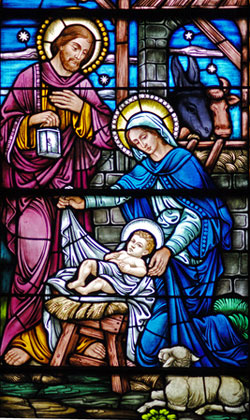 trailing only Easter and Pentecost in ultimate significance. The birth of Christ, and the period of hope and expectation leading up to it, is a season of celebration for the church, perhaps the most beloved time of year, with the most well-known and loved hymns and traditions. At the center of it all is the Biblical story of the Nativity, the birth of Jesus Christ, in a manger, in Bethlehem.
 Justin DaMetz