To learn more about this series, click here.
16 Then the men set out from there, and they looked toward Sodom; and Abraham went with them to set them on their way. 17 The Lord said, “Shall I hide from Abraham what I am about to do, 18 seeing that Abraham shall become a great and mighty nation, and all the nations of the earth shall be blessed in him? 19 No, for I have chosen him, that he may charge his children and his household after him to keep the way of the Lord by doing righteousness and justice; so that the Lord may bring about for Abraham what he has promised him.” 20 Then the Lordsaid, “How great is the outcry against Sodom and Gomorrah and how very grave their sin! 21 I must go down and see whether they have done altogether according to the outcry that has come to me; and if not, I will know.”
22 So the men turned from there, and went toward Sodom, while Abraham remained standing before the Lord. 23 Then Abraham came near and said, “Will you indeed sweep away the righteous with the wicked? 24 Suppose there are fifty righteous within the city; will you then sweep away the place and not forgive it for the fifty righteous who are in it? 25 Far be it from you to do such a thing, to slay the righteous with the wicked, so that the righteous fare as the wicked! Far be that from you! Shall not the Judge of all the earth do what is just?” 26 And the Lord said, “If I find at Sodom fifty righteous in the city, I will forgive the whole place for their sake.” 27 Abraham answered, “Let me take it upon myself to speak to the Lord, I who am but dust and ashes. 28 Suppose five of the fifty righteous are lacking? Will you destroy the whole city for lack of five?” And he said, “I will not destroy it if I find forty-five there.” 29 Again he spoke to him, “Suppose forty are found there.” He answered, “For the sake of forty I will not do it.” 30 Then he said, “Oh do not let the Lord be angry if I speak. Suppose thirty are found there.” He answered, “I will not do it, if I find thirty there.” 31 He said, “Let me take it upon myself to speak to the Lord. Suppose twenty are found there.” He answered, “For the sake of twenty I will not destroy it.” 32 Then he said, “Oh do not let the Lord be angry if I speak just once more. Suppose ten are found there.” He answered, “For the sake of ten I will not destroy it.” 33 And the Lord went his way, when he had finished speaking to Abraham; and Abraham returned to his place.
Genesis 18:16-33, NRSV
When people think of God, they usually think of God as omniscient, all-powerful, unmoving. God for the majority of Christians is immutable, and human beings are incapable of changing God is any way. This is prevalent view of God pushed by the church for almost two thousand years. This view of God is not the Biblical view, but instead was imported from Plato and the Greeks.
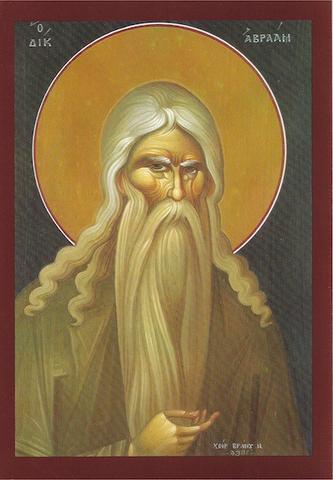 As a process theologian, I don’t see God that way. Rather, this story from Genesis illustrates my view of God much better. In this story, we see Abraham bargaining with God, reminding God of God’s promises of mercy and justice, and eventually even changing God’s mind.
Process theology views God as changing and growing with creation, not the “unmoved mover” far above and beyond it all. The God we find so often in Scripture is a God who feels and changes. God, through the experience of co-creation with humanity, is not static but is instead dynamic. The God I know is not omniscient and omnipotent, and this does not diminish God, but instead makes God more accessible, more loving and more able to feel along with humanity.
Abraham knew this about God. Abraham saw a vision of a more just and merciful world, and worked with God to make it so.
I love this story because it reminds me of the agency I have as a human being, the freedom and power God created me with, to not just be a passive receiver and conduit of the divine will, but to be a co-equal creator with God of a better world in every moment. Human freedom is absolute and God wills us to exercise it. God is not a prideful tyrant, unable to accept questions and doubts and challenges. In fact, we are compelled by God’s love to do so.

 Powerful words from Rep. Joe Kennedy III Tuesday night:
