Rachel Held Evan’s most recent “Ask…” featured Brian McLaren, the great Christian author and thinker.
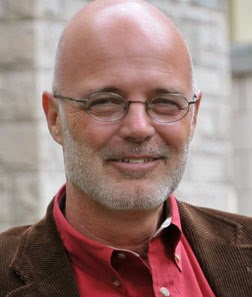
Brian touched on a lot of great issues, which I may or may not comment on more in a future post. But for now, I want to focus on the last question and answer. Here is the question:
From Cindy: As my denomination (United Methodist) continues to tear itself apart over how we will or won’t receive LGBTQ people in our midst, I despair that the losers in our struggle will be the poor and other marginalized people, who Jesus called us to be in ministry with. If you got to set a course for how we (and other denominations) could navigate through these choppy waters, what would it be?
Brian’s answer is good and thought out, and basically amounts to: gay people are here, and they aren’t going anywhere, and they are born to conservatives and progressives and Episcopals and Methodists and Baptists and simply closing our eyes and refusing to accept that fact will change none of this.
But I want to focus on his prescription for the UMC specifically going forward. Here is what he suggests:
But if I “got” (or was held at gunpoint and forced) to set the course, here’s one approach I would consider. From the start, I’d propose at least four or five options, not just two. When people are forced to choose between two options, they often fail to see the full range of consequences because they are only afraid of avoiding the opposite choice’s consequences. So options might be …
A. We accept LGBTQ people as equal, and accept that a significant percentage of people will leave, especially older and more dedicated donors, which will have results in closing seminaries, stopping mission to needy people, spending millions on lawyers, etc., etc.
B. We keep our conservative position but make allowances for congregations or conferences that differ, knowing that we will lose some people who will be against any compromise.
C. We accept a progressive position but make allowances for congregations or conferences that differ, knowing that we will lose some people who will be against any compromise.
D. We refuse to accept LGBTQ people as equal, and accept that a significant percentage of people will leave, especially younger and more educated people, which will have results in closing seminaries, stopping mission to needy people, spending millions on lawyers, etc., etc.
E. We allow current conservative regulations to continue and we create a mechanism for people to violate those regulations to remain, knowing that some people on both sides will leave because they disapprove of this option.
Then, I would institute a brief but intense study period to estimate the consequences of each option. I would spend the money on professional researches to conduct surveys so the results would be data-based.
Then, I would develop a way for the denomination to make a choice among options … with the estimated costs and benefits clearly articulated. I would also build in a review period with an opportunity to make corrections to whichever path was chosen based on unforeseen consequences that must be addressed.
I should say that I would consider a completely different line of approach as well. In that approach, I would invite the denomination not to solve this problem, but to see this problem as a symptom of much larger and deeper problems. In that light, I would invite the denomination to consider a historic restructuring – no, more radical than that, a historic re-founding.
Because at the end of the day, denominational structures are all under stress, even considered completely apart from this issue. Post offices, record labels, publishing companies, book stores, TV networks, travel agencies, education systems, economic systems, even governments are all under stress because they have transformed the conditions under which they were created. The church is not alone in facing these epochal shifts in culture. Almost all (maybe all?) institutions are in a period of stress, which is the critical ingredient of evolution … or extinction.
This is what I really like about Brian. He does a really great job of analyzing something from all points of view, and articulating those in a way that people on all sides can understand.
I want to run through his options here, but first, let me unequivocally state: I am strongly, strongly against the idea of schism within the UMC. I think unity is an essential part of carrying the message of Christ into the world. And one of the wonderful things about Methodism is we have historically been a “big-tent” denomination. You can see the diversity of our church not just at the General Conference level, but also with Annual Conferences and even Districts. There is no problem so difficult that it transcends our bonds as brothers and sisters in Christ.
That said, I know Methodists on both sides of the debate disagree with me, and believe that separation is the best way to preserve the calling of our consciences on this, and other, issues. And despite the best efforts and best intentions of those of us in the “unity” camp, we simply can’t force anyone to stay. So this conversation of how to we move forward is unavoidable and extremely necessary.
With option “A”, McLaren suggests we accept LGBT people as unequivocally equal. Personally, I believe this is the best way forward for the church. Accepting LGBT persons into the life of the church with no distinctions made between them or you or I is the only way to accurately reflect the radical equality and hospitality lived by our example, Jesus. LGBT people should be allowed to marry their partner, because loving, committed monogamous relationships are what we should be encourgaing. They should be allowed ordination. There should be no minority groups or people with suppressed rights in the church, as we are to reflect the egalitarian, love-filled kingdom of Christ on earth.

Option A, however, is probably a long shot for the UMC right now. The worldwide church membership is moving towards a fully-inclusive position quickly, but there is still a powerful and loud minority in opposition both at the leadership level, and at the congregational level. And, contrary to the stated beliefs of some, this opposition isn’t anchored primarily in Africa. There is a powerful contingent right here in North America that we are going to have to contend with going forward.
So the remaining four options are, I believe, much more likely. But not equally so. I want to tackle in order of what I see as the least likely to the most likely course of action for the General Conference to take.
Option D basically amounts to inaction. Not gonna happen. The issue has been discussed and dissected and argued and grappled with from all angles. Open letters have been written, ideas presented. The fact is, something is going to change at General Conference. Standing pat is an option no one, not even conservatives, will be happy with.
Not only is it highly unlikely, I think doing nothing would be irrevocably damaging to the church. Taking a pass on action would signal to many that the church is unwilling to speak relevantly and responsively to the needs of it’s membership. Trust in our ability to grapple with tough issues would be seriously eroded, and the four years following 2016 would see even more acrimonious bickering, and almost certainly, major schism, probably on the part of progressives who feel the church is abdicating it’s responsibility. I think their attitude would have merit. The UMC’s days as a unified denomination would certainly be numbered.
Let’s pray and pray that no matter what happens, the church takes some action on the LGBT question.
I place Option E next. I just don’t know how we would square the circle, so to speak, of turning a blind eye to regulations still on the books. We’ve seen with the actions of people like Frank Schaefer over the last few months that no matter the intentions or situations, there is a hard-core, devoted group who will search out and publicize every inclusive action taken by progressives on LGBT issues and make it a denomination-wide issue. And frankly, if we take the Book of Discipline seriously, the having a “wink, wink, nod nod” attitude to the flouting of regulations is no solution at all. Institutional acceptance of these actions moves us forward in no way. Right now, when people like Rev. Schaefer act, it acts as a stimulus to spur the church towards action on a justice issue, even as it violates our Discipline. If we leave the regulations in place, but refuse to enforce them, we are weakening the church by refusing to take a stand both on LGBT issues and on our ability to police ourselves. Option E is an easy way out, but certainly not a good one.
That leaves with us two options that are mirrored opposites of one another. We can either affirm a conservative stance on the issue theologically while allowing local polity’s to handle specific situations in a way best for them, or we can affirm a progressive theology while taking the same action. It’s basically the same move, but it will come down to a tug-of-war to see which side can move enough votes to not only affirm their position, but strike down the other.
So which do I see as more likely? Being the eternal optimist I am, I think the church will affirm progressive theology while allowing local autonomy on this issues. I think this is about numbers and trends. It’s clear which way the winds are blowing in both our denomination, and in our culture at large. Our church knows it needs to respond in a effective way to the majority of members who now accept LGBT equality. But if we are to maintain unity, we can’t do it in a way that ignores our more conservative brothers and sisters or leaves them behind.
Like I said at the outset, I think full equality is our future, as it rightfully should be. But we have to get there in a way that preserves the UMC and nudges those who need nudging in the right direction. Affirming equality would place the church in the correct place theologically speaking. But allowing local congregations who are not there yet to come along at their own pace is crucial to any diverse and broad coalition. We can’t force this on people who feel they are following the dictates of their conscience (and thus God.) That will only drive them away. But allowing them to come to us, and showing them that equality is an unmitigated positive that doesn’t destroy churches, is the only choice we have.
That said, a theology of equality demands that we present that face to the world. Thus, I would strongly suggest a companion amendment that condemns openly-homophobic or anti-LGBT statements and actions from UMC member churches and clergy. This shouldn’t be construed as a gag order in any way, but merely a confirmation that no matter what one’s views on homosexuality and gay marriage are, any statement or action that hurts or damages the humanity and well being of others is not Christian in nature. You can abstain from participating in LGBT marriages, and be unwilling to host an LGBT minister, but you don’t need to be flooding the airwaves with out and out homophobia under the Methodist banner.
As Brian says, this won’t placate everyone. People will still leave. As you can see in his options, this happens no matter what action is taken. The key is, what action can we take that absolutely minimizes the bleeding that will occur?
Like Brian, I think the refusal of many to accept LGBT equality is symptomatic of a larger ill at work in the Christian faith. As disciples of Jesus, we are called to emulate his example in the world, and that means radical inclusivity, hospitality, and equality. We have to recognize that if we are going to be His hands and feet in the world, then welcoming all into our embrace is essential. Otherwise, we are failing in our Christian duty to affirm the worth of all people, and the image of God they were created in and carry in them.
Brian wraps it up with a compelling statement on the need of the church, like any other institution to grapple with tough issues and evolve in a way that is true to both the shareholders involved and the traditions embodied in any such institution. The key word he uses is “Evolution.” As much as I would like to see this church take a completely open and affirming stance right now, the pragmatist knows that evolution doesn’t happen in large, sweeping actions, but instead in grinding, inevitable baby steps.
The UMC is too forward thinking and relevant to not “get there” on equality. Whether or not it will happen is not the issue. It all revolves around the how we do it, the timeline it takes, and whether we can still be “United” Methodists when we come out on the other side.


 Justin DaMetz