
 Christianity provides an extensive theological framework for a variety of important topics. Perhaps the most important subject it gives a lens to is that of human suffering. The Christian faith centers itself around the suffering act of God, experienced in the person of Jesus Christ. The Suffering Servant is a widely popular image of Christ, and the stories of the martyrs feature prominently in church tradition.
In this light, Johann Christoph Arnold’s little book, Escape Routes: For People Who Feel Trapper in Life’s Little Hells, is a vitally important read on how to apply real-life theological understandings to the suffering nature of human existence.
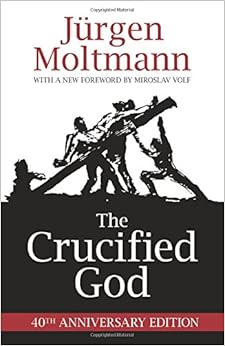
Any regular reader here knows I am not a fan of the “self help” model of religion that 21st century American Christianity so often falls into. Yet, over the past month, I have begun to become intensely interested in a “theology of suffering,” chiefly as a result of reading Moltmann’s The Crucified God. While I certainly don’t want to narrow the life and message of Jesus down to a simple how-to guide of dealing with the hard parts of life, I do think the faith, at it’s core, should be oriented towards better lives for all human being. And a crucial part of that work is addressing and putting into perspective the suffering every person experiences in their lives.
Arnold, through the use of stories about people’s life’s, addresses the various aspects of suffering. Running through lonlieness, despair, difficult pasts, the struggle of success, and (interestingly) sex, he shows the universality of suffering in the human experience, and thus is able to effectively address the loneliness someone struggling though any of these areas surely feels. This arc culminates in the highlight of the book, Chapter 7, entitled, simply, “Suffering.” Arnold tells several stories again, culminating in the life of Bishop Oscar Romero.
The book ends on more positive notes. One of the most noteworthy, and surprising, moments of the book, is in the chapter entitled “Travel Guides.” Arnold illustrates the lives of three people who endured much suffering, and yet persisted, carrying through to significant and lasting impacts on the world. Surprisingly, one of the people he highlights at this point is Che Guevara, the Communist revolutionary who fought in Cuba and Angola.
To encounter words of praise towards the leftist icon from someone within traditional Christianity is, well, rare, to say the least. And Arnold certainly doesn’t gloss over the most unsavory aspects of Guevara’s life and legacy. But crucially, he is able to draw out Guevara’s love for the regular people of Latin America, a love that drove him to fight against oppression and imperialism around the globe. As a young left-leaning person, I obviously grew up around images of Che. I have always been intrigued by the man and the passion he exemplified, but was troubled, as a pacifist, by the violent methods he employed at times. Arnold, in this section of the book, is able to put my mind at ease.
He does all this in service to his broader goal, of normalizing the act of suffering and reassuring those who suffer that they aren’t alone, that even great men and women in history suffered greatly on their way to the things they did in the world. I found this little book an easy and enlightening read. Indeed, as Arnold shows, suffering is a key component to the Christian experience. For every Prosperity Gospel success story of big houses and helicopters, there are a thousand suffering campesinos, toiling everyday for pennies. Their experience is the dominant experience of the Christian movement. Their lives provide the primary paradigm for understanding Christian theology. And it is their suffering that Jesus took on and identified with, and called us all to recognize. The Suffering Servant isn’t an unobtainable ideal; the Suffering Servant is each of us.
As always with the books I receive from Plough, I of course was bothered by the allusions to traditional views on sexuality and reproductive issues, but they are few and far between here. Escape Routes is a lovely little book, and can be a highly useful resource for those enduring suffering (that is to say, all of us), and those who are called to be shepherds to those who suffer.
Disclosure of Material Connection: I received this book free from Plough Publishers. I was not required to write a positive review. The opinions I have expressed are my own. I am disclosing this in accordance with the Federal Trade Commission’s 16 CFR, Part 255: “Guides Concerning the Use of Endorsements and Testimonials in Advertising.”

 ‘I rebel therefore we exist,’ says Camus. As those who suffer and are revolted at injustice, ‘we are,’ and we are even more than the gods and the God of theism. For these gods ‘walk above in light’ as ‘blessed spirits’ (Holderin). They are immortal and omnipotent. What kind of a poor being is a God who cannot suffer and cannot even die? He is certainly superior to mortal man so long as this man allows suffering and death to come together as a doom over his head. But he is inferior to man if man grasps this suffering and death as his own possibilities and chooses them himself. Where a man accepts and chooses his own death, he raises himself to a freedom which no animal and no god can have. This was already said by Greek tragedy. For to accept death and to choose it for oneself is a human possibility and only a human possibility. ‘The experience of death is the extra and the advantage that he has over all divine wisdom.’ The peak of metaphysical rebellion against the God who cannot die is therefore freely-chosen death, which is called suicide. It is the extreme possibility of protest atheism, because it is only this that makes man his own god, so that the gods become dispensable. But even apaart from this extreme position, which Dostoevsky worked through again and again in The Demons,a God who cannot suffer is poorer than any man. For a God who is incapable of suffering is a being who cannot be involved. Suffering and injustice do no affect him. And because he is so completely insensitive, he cannot be affected or shaken by anything. He cannot weep, for he has no tears. But the one who cannot suffer cannot love either. So he is also a loveless being. Aristotle’s God cannot love; he can only be loved by all non-divine beings by virtue of his perfection and beauty, and in this way draw them to him. The ‘unmoved Mover’ is a ‘loveless Beloved’. If he is the ground of the love (eros) of all things for him (causa prima), and at the same time his own cause (causa sui), he is the beloved who is in love with himself; a Narcissus in a metaphysical degree: Deus incurvatus in se. But a man can suffer because he can love, even as a Narcissus, and he always suffers only to the degree that he loves. If he kills all love in himself, he no longer suffers. He becomes apathic. But in that case is he a God? Is he not rather a stone?
 Justin DaMetz