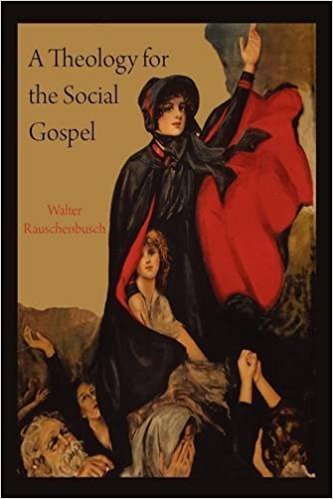
“Theology Needs Periodical Rejuvenation”

Theology needs periodical rejuvenation. Its greatest danger is not mutilation but senility. It is strong and vital when it expresses in large reasoning what youthful religion feels and thinks. When people have to be indoctrinated laboriously in order to understand theology at all, it become a dead burden. The dogmas and theological ideas of the early Church were those ideas which at the time were needed to hold the Church together, to rally its forces, and to give it victorious energy against antagonistic powers. Today many of those ideas are without present significance. Our reverence for them is a kind of ancestor worship. To hold laboriously to a religious belief which does not hold us, is an attenuated form of asceticism; we chastise and starve our intellect to sanctify it by holy beliefs. The social gospel does not need the aid of church authority to get hold of our hearts. It gets hold in spite of such authority when necessary. It will do for us what the Nicene theology did in the fourth century, and the Reformation theology in the sixteenth. Without it theology will inevitably become more and more a reminiscence.

The great religious thinkers who created theology were always leaders who were shaping ideas to meet actual situations. The new theology of Paul was a product of fresh religious experience and of practical necessities. His idea of the Jewish law had been abrogated by Christ’s death was worked out in order to set his mission to the Gentiles free from the crippling grip of the past and to make an international religion of Christianity. Luther worked out the doctrine of “justification by faith” because he had found by experience that it gave him a surer and happier way to God than the effort to win merit by his own works. But that doctrine became the foundation of a new theology for whole nations because it proved to be the battle-cry of a great social and religious upheaval and the effective means of breaking down the semi-political power of the clergy, of shutting up monasteries, of secularizing church property, and of increasing the economic and political power of city councils and princes. There is nothing else in sight today which has the power to rejuvenate theology except the consciousness of vast sins and sufferings, and the longing for righteousness and a new life, which are expressed in the social gospel.”

-Walter Rauschenbusch, A Theology for the Social Gospel, pg. 13-14

America First, God Second?

Last Friday, I wrote a post about the book of Jonah, asserting that America plays the role of Nineveh in that story, not the role of Jonah (as we like to tell ourselves.) Today, I want to follow that up with a little theological grounding for that idea.

I’m doing this because I can hear folks asking, how can I equate us with Assyria and people from places like Iran or Syria with Jonah, when those people aren’t Christians, or even Jewish? Why would God side with Muslims over us, even if, as a nation, we haven’t always acted very Christian in our foreign relations?

The answer is found in thinking about the relation of humanity to God, and specifically, the fundamental orientation of that relationship. In the telling where America plays the good guy role here, the assumption is made of a Divine-Human relationship where we get to set the terms. From us emanates truth, and all else swirls around us and is described in relation to us. America is good, not on God’s terms, but on our own terms. In this telling, the great fundamentalist fear comes to fruition: truth is made relative, in this case, to the needs of American imperialistic aims. The way of God is made unimportant; instead, the way of America is the guiding lodestar. America First becomes not just a quasi-racist catchphrase, but a theological assertion of primacy.

But this gets the human-Divine relationship backwards. When speaking of God – the Divine, the Ground of All Being, Ultimate Truth – one exists in relation to God, is defined by one’s relationship to the Divine. Paul Tillich writes of the “subject-object distinction,” asserting that God can never be an object in an object-subject relation, but is always the subject.

This argument can be problematic at times, especially when the subjective God is conceived of by human beings as a capricious, angry and self-obsessed God. This subject God, around whom all else orbits, becomes “Anti-humanistic,” a God with little if any concern for humanity, but instead completely caught up in God’s own whims and desires. Humanity’s actions and existence become by-products of God, rather than objects. The subject-object relation breaks down in this case.

God as subject works, though, when we understand God as concerned with humanity, and especially, as Jesus posited, with the “least of these.” This is one of the primary and most important contributions of liberation theology to the conception of God: a God concerned primarily with the oppressed, who stands on the side of those not in positions of power.

That’s what powers my assertion that America is playing the role of Nineveh, and persons in places like Iran or Iraq or Afghanistan are playing the role of Jonah. Because God takes the side of the oppressed. And in the case of American imperialism in the Middle East, the oppressed are the people in those places who are being bombed and terrorized and killed. God sides with them, no matter their religion, no matter their creed, and no matter their nationality. In cases where unjust power in being brought to bear, God could really care less about any temporal identifiers. God cares about the flourishing of human life, in its many varied forms. God takes the side of the indigent peasant farmer before he takes the side of well-fed suburbanites in conflict between the two.

Too often, America plays  the role of oppressor to peoples in the global south and east, especially poor people of color. We do it for well-reasoned “good” ideas, like democracy or liberty. But always, these are justifications that benefit not in solidarity with others, but at the expense of them. This is where I get my grounding the say: in Jonah, we are Nineveh. I have very little doubt about that.

The Ordinary is where we meet up with Jesus

“The ordinary is where we meet up with Jesus, and he is more profoundly nowhere else.” – Romand Coles

ordinary-life1One of the most extraordinary things about Jesus, something that confounded and proved a stumbling block to even his closest disciples, was the sheer ordinariness of his existence. I don’t mean this in the sense of his teachings; clearly, he was extraordinary in the Way of Being of exemplified.

Rather, I mean the ordinary nature of the man Jesus. In him, we have a Palestinian peasant, born in a village we would not of if he had never lived, to an unwed teenage, at the very edge of empire. He was a day laborer, probably spending the majority of his life before ministry traveling to nearby Sepphoris, working long hours on Herod’s magnificent city.

But even after his entry into ministry, Jesus retained his essence of ordinary. Rather than the conquering king, rather than the over-thrower of Rome and second coming of King David, Jesus was an ordinary human, who communed with and loved other ordinary, flawed humans. He ate with sinners, loved unclean women, forgave extravagantly. He preferred the company of lepers to that of magistrates and priests. He was essentially homeless, living off the generosity and goodwill of ordinary Palestinian people. He was poor. He didn’t aspire to power or greatness. He was executed as a criminal, with no friends at his side.

Jesus was “radically ordinary,” to borrow a concept from Hauerwas and Coles. And thus, he calls us to a life of the same. Christians are not called to be purveyors of power and control. We don’t long for a seat at the table with the rich and powerful and beautiful. We don’t become insiders, and place our trust in electoral victories or temporal power. Instead, we are called to serve the “least of these.” We look for the blessings of the hungry and the meek and the forgotten. We are called to be ordinary, and thus, to be radical agents of change.

The one place where Jesus wasn’t ordinary was his extraordinary understanding of the power of relational living to change the world in a lasting and meaningful way. And so, he practiced the ordinary life of a man who meets and knows people. Simply that. And he knew that would be the key to the Kingdom.

This isn’t an ordinary that disengages. As Coles writes a bit later, “…all the arts of the ordinary that read patience as an invitation to escape from the tasks of large struggles against the gargantuan and fast-moving whirls of destruction are likewise highways of delusion.” We don’t embrace our ordinary in order to withdraw from the power of the world. Rather, we engage it as a practice oriented towards change on the macro level. The ordinary, when practiced in a way that is self-giving with no expectation of return, becomes the most powerful tool known to humanity.

So we are called to be relational beings. We make the world become the way we know it can be by changing lives, and we change lives by knowing people, talking to them, hearing them. Institutional power, political power, is important in it’s way. But the real way to change the world is to get to know the people near you, as Jesus got to know the people near him.

We meet Jesus in the ordinary. We bring the Kingdom by being ordinary.