The shaping of history (The Politics of Charity, Part Three)

In opening his essay with a critique of liberation theology, Hauerwas was underscoring his main point: that Christian political engagement – and the theology under-girding it – is not judged on its effectiveness in the realm of worldly politics, but instead is to be judged on how Christians engage. In other words, the point for politically-conscious Christians should not be the end result, but instead should be the tactics and strategies we take to achieve things. Hauerwas describes his own purpose in writing as trying “to suggest how Christians should care for the poor, that is what form our charity should take, and in what sense such a charity is politics.” This here is the thesis statement of the entire essay. In future posts, I will get further into what Hauerwas means when he means “charity” but, following the track of the essay, first we must talk about the Gospel of Luke, because for Hauerwas, there is no good political theology if it is not grounded in the life and words of Christ as found in Scripture.
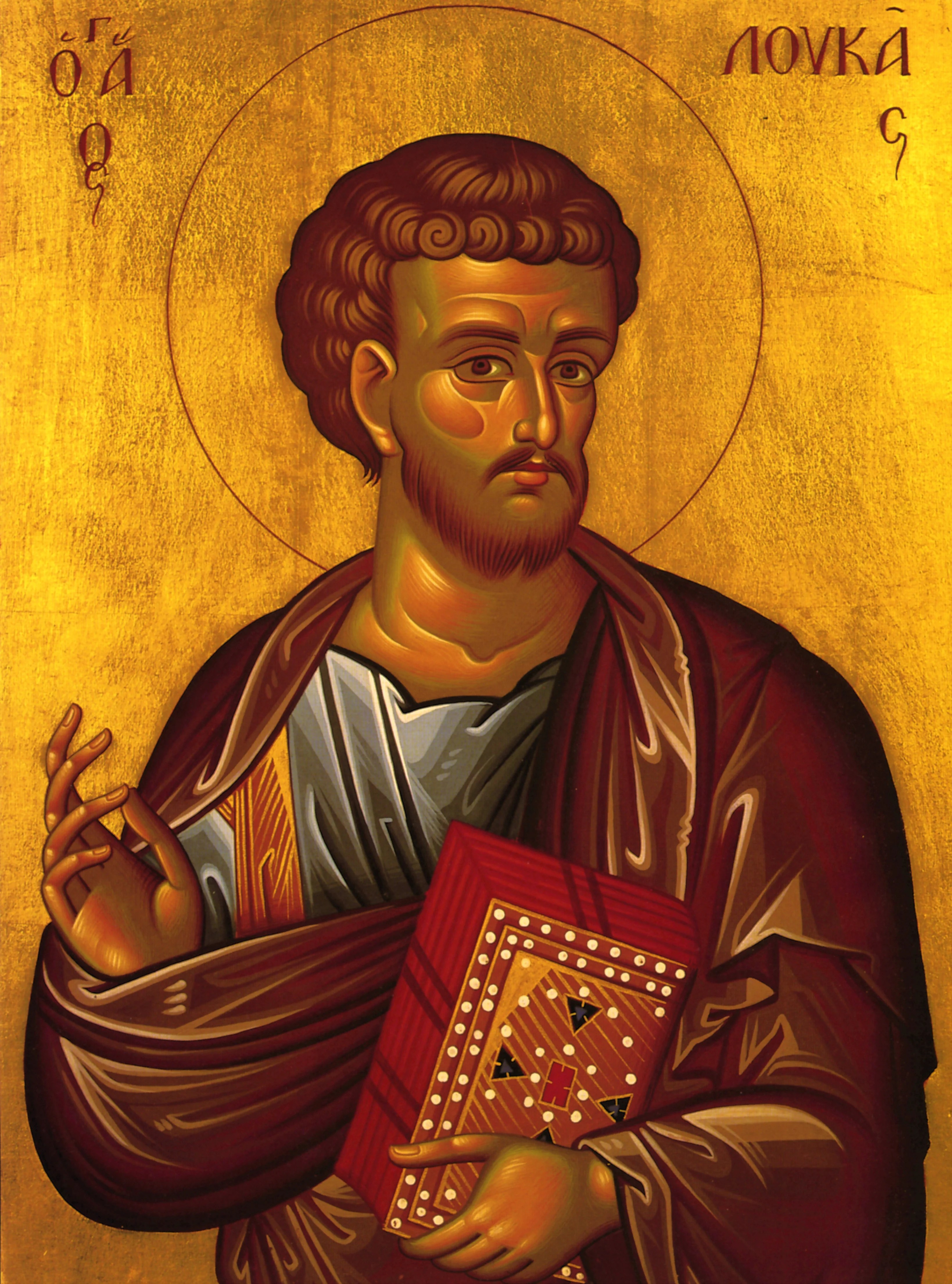
St. Luke

“In Luke,” Hauerwas writes, “we find the historical significance of Christianity, or as Luke prefers, the Way, most dramatically represented.” The Gospel of Luke is the most Gentile-centric of the four gospels we find in Scripture. Luke, most likely a Gentile himself, was writing his account of Christ and the early church to a Gentile audience, trying to bridge the Jewishness of Jesus to the Gentile culture of Greece and Rome. Luke was likely a disciple of Paul, himself someone famous for his commitment to bringing together Jews and Gentiles in one body. So, as he writing his account, Luke is looking to connect what could seemingly be sectarian or provincial tale of a far-flung religious disturbance to the wider happenings of the world, to make his readers understand how Christ is not merely another story on the world’s stage, but is instead the story from which the rest of history obtains its meaning. To quote Karl Barth:

For Jesus Christ is the fulfillment of the covenant concluded by God with Abraham, Isaac and Jacob; and it is the reality of this covenant -not the idea of any covenant – which is the basis, the meaning and the goal of creation, that is, of everything that is real in distinction from God.

Understanding Luke’s Gentile audience is crucial to Hauerwas’ essay because Luke was perhaps the first Christian thinker (or perhaps the second, after Paul) to communicate the world-encompassing importance of the Christ event, and by extension, to make the claim that Christ is the key component of God’s salvation of the entire world, and not just the Jewish people. God fulfills the covenant of Abraham, Isaac, and Jacob in the work of Christ on Cross, and that work extends to all people, everywhere.

This concept is called a “theology of history”; that is, it is the work of examining the arc of history and the meaning of the human story through a theological lens. In Luke, Hauerwas perceives a very specific theology of history. He writes, “the fact that dominates Luke’s Gospel and Acts is that the Gentiles have been grafted onto the promise to Abraham.” This is Luke’s theology of history, and by extension, also Paul’s: through Christ’s work on the Cross, the Way is made open to all people to accept God’s promise of building a nation of people, as innumerable as the stars, and under the everlasting promise of God’s good grace first made to Abraham and the people of Israel in their covenants.

So, what does this have to do with charity and effectiveness? Hauerwas correctly sees that this promise of God, and its subsequent transformation into a understanding of God’s work in history, takes on radically different valences in the context of a regional subpower’s relationship with a deity than it does in the context of a globes-spanning religion backed by the military and economic power of nation-states. To put it more simply, Luke’s theology of history means something radically different in America in 2020 than it did in Palestine in 70 CE.

Hauerwas explains the reason this is true by identifying the implications of Luke’s theology of history: “This view of history would seem to mean that in a fashion Christians have the key to history – that is, we know its meaning and we know where it is going.” If, as Luke claims, the history of all the peoples of the world is tied up in the salvation offered by Christ, then surely those of us who call ourselves Christians have some kind of stake in how the world turns out, right? If Christ extended the Abrahamic covenant to all of the world, then we seemingly have a covenantal duty to make sure that all the nations of the world become part of God’s nation. “For the Christ we Christians serve seems to commit us to having a stake in how history comes out.”

This creates a problem. If we Christians have a stake in the course of history, what happens when that history goes badly? If we, through the promise of the universal Christ, are responsible for the shape of world events, what does, for instance, the Holocaust mean for how well we are doing our jobs? The only logical answer, of course, is that we must fix it, and more importantly (in this understanding of history), we have a Christian responsibility to do so! And a necessary corollary of that responsibility becomes that we must change the world no matter what it takes to do so. The goal of God’s kingdom, brought about by our actions, is so important that we must get there, that we must not let the fallen nature of humanity and our misguided will be impediments to the goal. Take action, history seems to tell us, and let the future judge the results and not the actions. 

Are you starting to see how this kind of thinking – this misinterpretation of Luke’s theology of history – has led to so much evil and wrong in the world, done in the name of Christ? If we are responsible for the world – if our telos, our end goal, as Christians is the salvation of this world with a remit to fix things now – then we feel empowered to pursue almost any means to achieve that ends, as long as we are sure to state clearly throughout that we are Christians. Thus, God’s name can be invoked, for instance, in justifying war, as long as that war’s stated goal is the betterment of the world in accordance with the covenantal heritage extended to us through Christ.

At this point, it becomes rather simple for actors with bad or impure intentions to invoke the imprimatur of Christ to justify a whole host of actions contrary to the life of Christ. In short, in order to combat injustice done not in Christ’s name, this model lets us commit injustices to defeat those other injustices, as long as we confidently declare God to be on our side. You can see in this kind of reasoning, for example, the route some Christians take to justify the death penalty; we must stop murder by committing murder, because somehow our own murder is more just. Further, when paired with certain takes on atonement and missiology, more harm can be done, through justifications tied to a wrathful, retributive God, and a divine mandate to convert the world to our religion or else.

It’s not just bad or disingenuous actors who use this justification, either. Our rightful shock and disgust with the path human history has taken – and our own implication in the guilt of that history – seemingly requires even those of us justice minded folks to feel we need to “fix” history in order to do the work of God’s kingdom. Hauerwas is worth quoting at length here:

Thus our history gives us an even more powerful reason to combine charity with power and the effectiveness it brings. For we think the way to learn to live with a wrong is to make it a right. Indeed our history has been flawed, but we can rectify our past by changing our history to make it come out right. In other words, our very guilt makes us require a God not just of charity but also who gives us the power to do good. We want him to be a God of love, but a love that is coupled with the power to make that love effective.

This brings us back, then, to effectiveness and charity. Luke’s theology of history is important to our study because how we read it profoundly influences how we believe Christians are meant to act in the world. In the reading we have been examining so far, Luke’s theology of history seemingly hinges on what it is we are after – that is, the focus is on what we – emphasis on the “we” here; we are the primary actors in this telling of the story – imagine a just world ruled by God’s covenant must look like in the end. From here, acting in charity – that is, acting with that which Thomas Aquinas called “the most excellent of the virtues” – is not the primary focus of Christian social engagement, but rather, effectiveness is: how much can you get done, and what is the quickest way you can do it?

But, as Hauerwas has started to open our eyes to, this is a “profound misreading of Luke.” Please forgive me, but I must quote him at length one more time in order to unpack this point more effectively (emphasis is all mine):

For what Luke suggests is not that Christians are called to determine the meaning of history, that we have a responsibility to make history come out right, but rather that that is God’s task. What God has done in Israel and Christ is the meaning of history, but that does not mean it is the Christian’s task to make subsequent events conform to God’s kingdom. Rather the Christian’s task is nothing other than to make the story that we find in Israel and Christ our story. We do not know how God intends to use such obedience, we simply have the confidence he will use it even if it does not appear effective in the world itself…For in the form of the life of Christ is the form of how God chooses to deal with the world and how he chooses for us to deal with the world.

Phew. That’s some good theology right there.

Alright, let’s unpack that a little bit. In this passage, Hauerwas is posing the first look at the alternative he is presenting to the “politics of effectiveness” that comes out of that other reading of Luke. Rather than counting how close we come to abstract vision of how we think God would want the world to look (a exercise of monumental hubris if you really think about it for a second), the proper reading of Luke’s theology of history is one that understands the making of God’s kingdom as God’s own work. God is the builder, not us; rather, we are called to carry out our task, which is the task of grafting ourselves onto the story of Christ and his Church, as seen in the Gospels. In faith, we perform the tasks of charity, knowing God will shape such acts for the good.

And what form does that task take? Why, it is the form of Christ himself: a servant, humble, compassionate, merciful, abounding in grace, reveling in truth, rejoicing in the kinship of all of humanity. The work we are called to, in the greater task of God’s building of a nation, is to “love as God loves.” That’s it. It may not always be effective in the way the world counts effectiveness. But that was never really our goal, was it?

One final note: it can be easy to read this as an endorsement of political quietism, of a rapid withdrawal and disengagement in the world, and thus a kind of chosen ignorance about the injustices of this world as it is now. Simply claiming that it is God’s job to fix the world is the kind of political abdication practiced by so many toxic forms of mainstream, therapeutic pseudo-Christianity, right?

To understand the politics of charity in this way is to discount the potential embedded in the example of Christ to change the world. The example of Christ – the example of the peacemaker, of He who was willing to turn the other cheek and give of himself wastefully and to even die rather than wield power – is sufficient for the making of the world. It is the lie of the world to try to make us believe otherwise. We aren’t to become meek, humble, compassionate, loving and peaceful as a way of therapeutically avoiding the world’s suffering, as this lie would have us think. No, we are called to this imitation of Christ precisely so that we may more clearly see the suffering and injustice in the world around us, and then respond to it in a way that is truly effective, in the way effectiveness is counted by God. Will this always lead to a political, legislative, or activist victory? Not at all. But for Christians, our understanding of victory is counted on a different scale.

That brings us to the question of my next essay: what is the locus of our charitable politics in this world? Where and with whom do we practice putting on the story of Christ? The answer looks very shocking to a world dependent on – addicted to – the illusion of effective action and the wielding of power.
The effectiveness of the church, or what liberation theology gets wrong (The Politics of Charity, Part Two)

Any long time reader of mine knows I have a deep affinity for liberation theology. My earliest ventures into theology were by reading the words of James Cone and Oscar Romero and Gustavo Gutierrez. The highly political and radical nature of liberation theology strongly appealed to me, coming as I was out of my work in progressive politics and my early academic work in political science. Ideas like the “preferential option for the poor” were intoxicating to me, as much of my understanding of Christianity growing up never included such concrete and political concepts.

Stanley Hauerwas opens his essay, “The Politics of Charity”, by reflecting on liberation theology, and its approach to a world of injustice and deprivation. “Thus liberation theology,” he writes, “aims not just to aid the poor but to give the poor the means to do something structurally about their plight.” This is a succinct and accurate statement of the primary focus of the politics inspired by liberation theology. The reason liberation theology has become so popular on the religious left is exactly this emphasis on the empowerment of the poor, especially when considered in light of the politically-prominent American Christian Right’s focus on conservative, capitalist-friendly politics that alienates and disempowers those who aren’t the wielders of captial. Liberation theology has become one of the primary banners of the scores of Christians who can’t find a home in the more traditional public face of Christianity in America. Equally appealing is the permission structure it erects for doing political work under a religious banner; too many churches have long talked about the poor and the orphan, while doing little for them in a concrete, material way. Liberation theology, on the other hand, insists that actual, physical liberation is a necessary corollary to salvation, both for the oppressor and the oppressed.

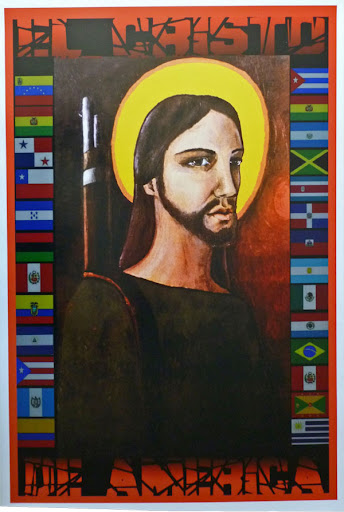
Despite this good work, liberation theology also has its own shortcomings, wrapped up in its own fealty to leftist politics and Third World class struggles. Hauerwas begins his essay highlighting this tendency. He quotes from a piece by Camillo Torres, a Colombian priest, revolutionary, and socialist, who wrote that for “love to be genuine, it must seek to be effective.” Hauerwas expands on this, writing “the logic of this position requires if revolution cannot come by peaceful means, the Christian in the name of charity must be willing to use a gun.”

The “effectiveness” of the Gospel is at the center of Hauerwas’ essay. Are Christians required, in the work we are prompted to by the love of Christ, to be effective? Should we be focusing on doing things that can ensure some sort of positive outcome, embracing a variety of means in pursuit of one salvific end? Or do we need to adhere to a different accounting of effectiveness, one more predicated on intentions and values, on actions and virtues?

Hauerwas is clear very quickly, taking the latter position. “It is just such a conclusion,” he writes in reference to his extrapolation of Torres, “that indicates that something has gone terribly wrong in the linking of charity with effectiveness.” To focus on the effectiveness of what we do is to focus on the wrong criterion of action. Instead, Hauerwas believes, “what becomes all important is how that kingdom is served…what is important is how Christ taught us to care for our neighbor.”

This here is the central point Hauerwas is making, and his large critique of much of popular Christianity – on the left and the right – in today’s world. Too often, we Christians judge the work we are doing based on the standards of what is politically or socially effective under the rules of the game as laid down by the world. But Hauerwas is reminding us here that the standard we should be basing ourselves on is not the world’s, but the standard of love as laid out by Christ – “and by the world’s standard Christ was ineffective.” When deciding what to do to face down injustice, Christians shouldn’t be asking “what can we do to wield power for good?”, but instead “what does Christ require of us?”

Now, it is crucial to understand: this isn’t a directive to withdraw from the work of the world. Too often, ungracious readings of Hauerwas accuse him of just that sort of sectarianism, of wanting to pull back from the world and be piously righteous from the outside. But this isn’t the intention of his critique of effectiveness. Instead, he writes “a politics of charity rightly formed should help the world redefine what politics involves.” The politics of charity, which is what Hauerwas posits in place of the politics of effectiveness favored by so many socially-minded Christians, should be predicated on presenting an entirely different set of priorities, values, and emphases to the world, as it reminds Christians of the crucial and irreconcilable difference between the church and the world. “For the politics of the world is perverted because it takes power and violence to be the essence of human and institutional relations.”

The job of the Church is to present a new way of doing politics, one predicated on a different understanding of what is and isn’t effective. “In a world where the value of every action is judged by its effectiveness, it becomes an effective action to do what the world understands as useless.” This is necessary for Christians because we have a different understanding of purpose and meaning for humanity than the world does. The priority of the world is under-girded by a drive for mere survival. But Hauerwas calls this desire to survive an “illusion” for disciples of the Crucified One. “The very heart of the Gospel,” he writes, is “that what we have to fear is not death, but dying for the wrong thing.” When this shift happens, priorities and values shift radically. When the situation the world is in is no longer viewed through the lenses of effectiveness and survival and scarcity, things take on a whole new color.

Before moving along with his argument, Hauerwas ends with one final critique of liberation theology. Within this branch of thought, one of the driving forces is the idea of the preferential option of the poor. This means that, for Christians, all social action becomes justified if and only if it is meant to alleviate the poor and suffering of some form of oppression. As Hauerwas writes, this focus too often becomes the ultimate good of liberation theology, and thus idolatrous. As he writes, “For when the poor become the key to history it is assumed that the aim of the Christian is to identify with those causes that will make the weak the strong.”

Of course, the plight of the poor is a crucial concern for Christians, and one we are all called to address. But, being poor does not make one a Christian automatically, and working to ease oppression or poverty is not automatically Christian work no matter what form it takes. This is related back to the first point above: when any form of revolution is given the sheen of truth, then the use of non-Christ-like means of action becomes easy to baptize. “I am sure that the poor have a special place in God’s kingdom, but I am equally sure that the Christian life involves more than being oppressed or identifying with the oppressed.” This isn’t to say that Christians should only be serving the Christian poor; we have a duty to all peoples, wherever they are, especially if they are oppressed. But it does mean that the means envisioned by some groups of the poor may be incompatible with what it means to be a Christian, and ways in which a Christian should and should not act. 

The work of the Christian in the face of overwhelming oppression and poverty is not to provide freedom or power at any cost. Instead, it is to ask how we can do this work in a way that puts us in sync with the story of Christ, and then to only accept the forms that are Christian in nature, whether or not they are deemed effective by the world or not. The point, in short, is not the end result; we are not utilitarians, after all. The point is, what should Christians do in light of the life, death and resurrection of Christ? This is the driving question behind Hauerwas’ politics of charity, which we will begin to unpack in my next essay.

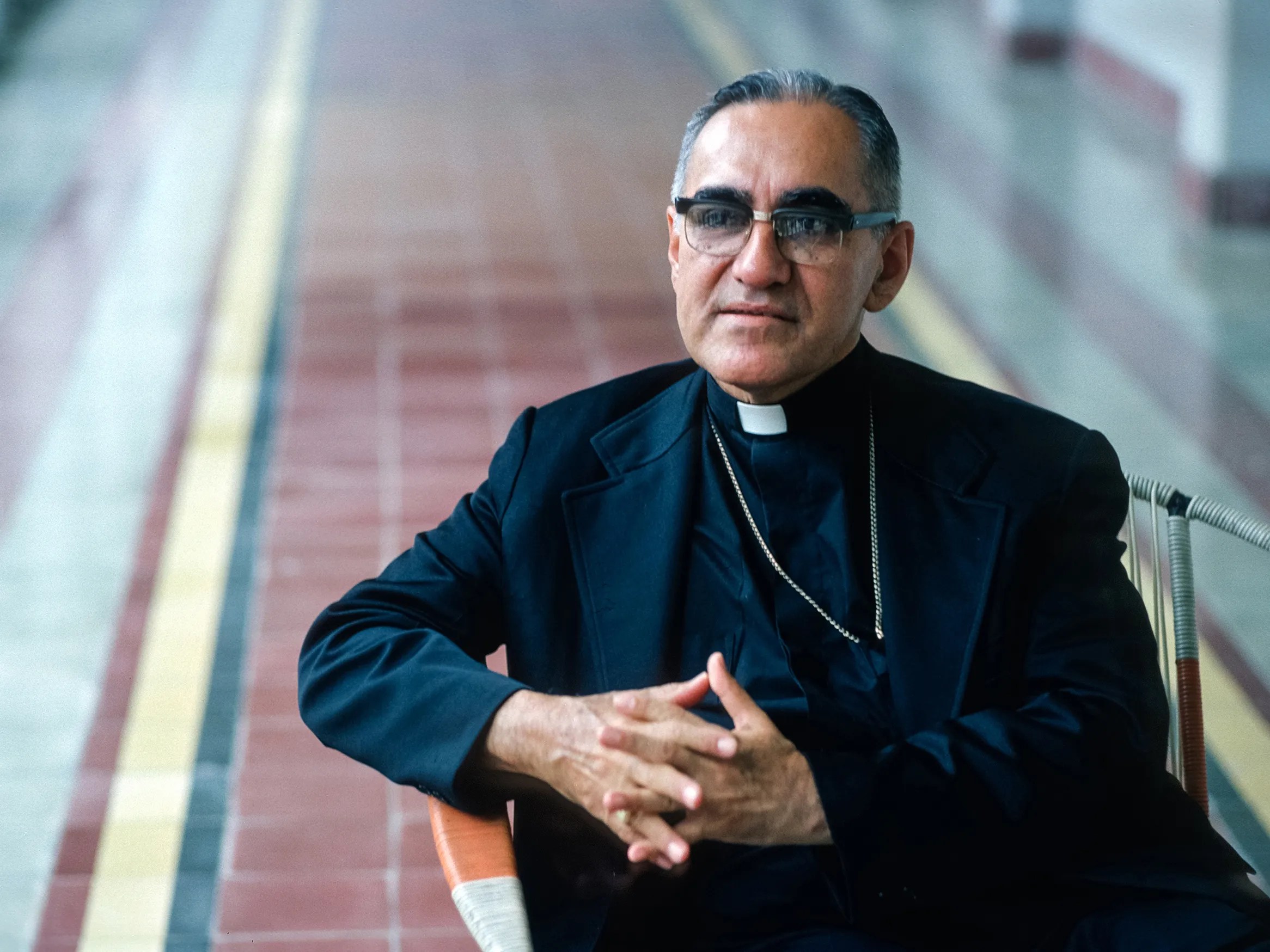
Archbishop Oscar Romero

One late note before we move on, in defense of liberation theology. As I stated at the opening, I have long loved liberation theology. My earliest days as an aspiring theologian were steeped in liberation thought, nurtured by the words of James Cone and Oscar Romero. I am still deeply indebted to them; in fact, I have an icon of Bishop Romero hanging over my desk, as a visual reminder of what theology is all about, in the end. I still believe liberation theology is an important strain of theological thought with much to teach the church. In a world of increasing inequality, and growing political and social oppression, it is as important as it ever was for the church to speak clearly and forcefully against injustice and for those who are oppressed and hurting in the world, whoever and wherever those people may be. Liberation theology is a fully formed tradition that can provide powerful words and ideas to help the church carry out this task. There is much to be learned and taken from this tradition. 

And there is perhaps no better place to look than at the words and life of Bishop Oscar Romero. Castigated in his lifetime by more extreme adherents to liberationist thought for being too conservative or too timid, Romero never lost sight of the Cross as the generating image behind liberation theology. Romero, in his fight to prevent the Church from being co-opted by conservative, reactionary forces driven by power and wealth in El Salvador, was equally unwilling to let the Church be co-opted by Marxist and radical liberation fighters among the people. Instead, the church stood as a third way between these two warring factions, both of which claimed the mantle of popular assent, but neither of which in reality held it. Romero understood that the hope of the people of El Salvador – and of oppressed people everywhere – lay not in economic growth or socialist ideology, but in the Cross of Christ and the community of faith that is Christ’s body. Romero expressed it perfectly, when he preached:

The political circumstances of peoples change, and the church cannot be a toy of varying conditions. The church must always be the horizon of God’s love, which I have tried to explain this morning. Christian love surpasses the categories of all regimes and systems. If today it is democracy and tomorrow socialism and later something else, that is not the church’s concern. It is your concern, you who are the people, you who have the right to organize with the freedom that is every people’s. Organize your social system. The church will always stay outside, autonomous, in order to be, in whatever system, the conscience and judge of the attitudes of those who manage or live in those systems or regimes.

The church is not capitalist. The church is not socialist. The church is the Church, and its work is Christ’s work, which may be of no concern to the way of the world – which may not be terribly “effective” – but which are of ultimate concern to God.

The Politics of Charity

This essay is the first in a series that I originally published on my now-defunct Substack newsletter in 2021-22. This series is near and dear to my heart, and so I wanted to reshare it here over the coming days. Because the material here is a little older, please excuse any references to news or happenings that seem dated.

“Charity of St. Elizabeth of Hungary” (detail)
by Edmund Blair Leighton

The concept of charity is quite often maligned in progressive Christian circles. Contrasted against the work of social justice, charity is often viewed as simple good deeds that fail to acknowledge or ameliorate the structural issues underlying the need being met. For instance, soup kitchens do admirable charitable work, but are ultimately insufficient, as they don’t do the hard political work of discovering why people are hungry, and then wielding the power to solve hunger. This latter work – the work of social justice – is viewed as the proper purview of progressive Christian churches. Progressive churches shouldn’t spend much time on charity, when it could be putting all their energy towards justice.

There is certainly a good deal of truth in this view; it’s the one I have subscribed to for most of my time as a Christian! I want to challenge this though. For a few years now, the bloodless, antiseptic focus on “justice” has been turning me off the progressive church scene. I’ve struggled to put words to this feeling I’ve had, but it has been very real. And I don’t think I’m alone. I only have to spend a couple of minutes on “progressive Christian Twitter” (yes, that’s a thing) to begin to see a simmering tension between strict social justice Christians, and those who are seeking a bit more. There is a real, growing desire among some on the Christian Left to disentangle our own faith commitments from the desires of the political left, and to rediscover and reclaim a spiritual drive to the work we want to do. The technocratic visions of progressivism aren’t good enough; the blood of Christ still flows and must play a role in discovering why we are called to love our neighbor and serve the weak. In short, we crave something a little more charitable in our social justice. Dr. Richard Beck, at his fantastic “Experimential Theology” blog, has been someone who I have seen experiencing this same turn during the time I have, as he “reconstructs” his own Christian journey, away from a purely progressive, pseudo-materialist faith, back towards more orthodoxy, and in his words, “re-enchantment.”

In his 1977 book Truthfulness and Tragedy, theologian and ethicist Stanley Hauerwas has a chapter entitled “The Politics of Charity.” Upon reading this chapter, I felt as if I had finally discovered the words that were describing the journey my own personal political theology has been on for the last couple of years. Reading his take was eye opening, and intensely hopeful for me. I have struggled for a while now to come to terms with both sides of the political theology fighting in my own head, embodied in the two most prominent theological voices that influenced me: the politically engaged religious liberalism of Jurgen Moltmann, and the post-liberal Anabaptism of Hauerwas. This internal struggle has led to a prolonged period of theological writers block. But, reading “The Politics of Charity” has been so hopeful for me because it bridged the gap for me like few other pieces have, and seems to have opened my mind back up to this work I am passionate about.

And so, I want to share the insights I drew from this chapter over the course of a few essays. In this series, I will walk through Hauerwas’ essay, unpacking his argument, highlighting the key points, and making connections to the situation of the Church today. This exploration goes beyond a merely superficial polemic about how the church is too “woke”, or too concerned with being social justice warriors. It’s also not an argument that will satisfy theological conservatives; I (and Hauerwas) are not interested in absolving the church of the important work of justice. Social justice has a strong, biblically-grounded place in the Church, and to deny that is to misread Scripture. The range of these essays will stray far and wide, before coming back to make an important theological argument: namely, that the work of charity is the politics of the church, a politics centered on the poor, the oppressed and the needy, not because justice is our lodestar, but because the God we see in a suffering Christ on the Cross – the God we see in the hungry, the naked, and the sick – is. Without a crucified and resurrected Lord, the work of justice is drained of its salvific nature, for all involved. Instead, it becomes passionless technocracy and bureaucracy, not a life-giving way of being more authentically human. What this means for the real work of justice in the world is that the work the church must do may not always be the most politically effective or relevant work; as Paul tells us, the wisdom of God is often the foolishness of men.

The concept of “effectiveness” is what drew me to Hauerwas’ essay; it’s the word I keep coming back to, and the one around which much of this series will center itself. Political action is inherently effective in intent, even if it fails to become so at times. Effectiveness is crucial to the work of self-government; human beings must be able to effectively do something in response to crises and to the everyday happenings of communal life. Hauerwas argues, however, that effectiveness is not the purview of Christians, at least not effectiveness as the world understands it to be. Christians who take an active role in the life of the world are not merely trying to make progress for progress’ sake; nor are we so concerned with specific outcomes that we become utilitarian in our work for change. The “how” of social and political action is the first concern of Christians, because we have a “how” for life that is unconditional. Thus, Christians are meant to live a certain kind of life, regardless of the immediate political outcome. We can do this because of the Resurrection, which is the assurance of God’s victory over death. Thus, life as a Christian becomes a way of life that we know is in fact effective in the way we want to be effective. This is at the center of Hauerwas’ essay, and it is a scandalous claim for the church, where politicization has gripped both the right and left and many Christians seem to be gripping tightly to control and power in a desperate attempt to make of the world what they want it to be. The task I am taking over the course of this work is to remind Christians that we don’t need to hold on that tightly; our hope is not in this political victory or that electoral success. We don’t have to be effective to get things done; we merely have to be faithful. What a joyful way to live that would be! 

While I am writing as a reconstructed progressive, I don’t mean for this to be only aimed at other progressives. I think there is great insight here for churches all along the theological spectrum who are eager to be the hands and feet of Christ in the world. As Hauerwas writes in an earlier chapter of Truthfulness and Tragedy, “Theology, therefore, is the attempt to keep us faithful to the character (the story and skills) of our community lest we forget who and why we are.” This is a challenge for every church; this series hopes to live up to the demands of Dr. Hauerwas in calling the community of Christ back to a faithful way of being the Church for the world.