Myths of the Nativity: The Adoration

By now, I think it’s clear that I regard most of the details of the Nativity story as told in Matthew and Luke to be chiefly “myth.” But today, I want to dive deeper into what I mean when I use that word.

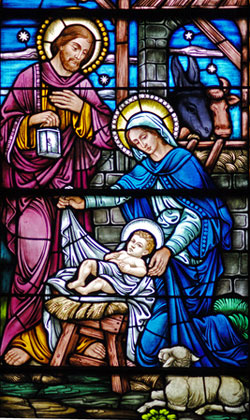
For instance, let’s look at the story of the Adoration. Here is Luke:

 In that region there were shepherds living in the fields, keeping watch over their flock by night. Then an angel of the Lord stood before them, and the glory of the Lord shone around them, and they were terrified. 10 But the angel said to them, “Do not be afraid; for see—I am bringing you good news of great joy for all the people: 11 to you is born this day in the city of David a Savior, who is the Messiah,[a] the Lord. 12 This will be a sign for you: you will find a child wrapped in bands of cloth and lying in a manger.” 13 And suddenly there was with the angel a multitude of the heavenly host,[b] praising God and saying,

14 “Glory to God in the highest heaven,
    and on earth peace among those whom he favors!”[c]

15 When the angels had left them and gone into heaven, the shepherds said to one another, “Let us go now to Bethlehem and see this thing that has taken place, which the Lord has made known to us.” 16 So they went with haste and found Mary and Joseph, and the child lying in the manger. 17 When they saw this, they made known what had been told them about this child; 18 and all who heard it were amazed at what the shepherds told them. 19 But Mary treasured all these words and pondered them in her heart. 20 The shepherds returned, glorifying and praising God for all they had heard and seen, as it had been told them.

And Matthew:

In the time of King Herod, after Jesus was born in Bethlehem of Judea, wise men[a] from the East came to Jerusalem, asking, “Where is the child who has been born king of the Jews? For we observed his star at its rising,[b] and have come to pay him homage.” When King Herod heard this, he was frightened, and all Jerusalem with him; and calling together all the chief priests and scribes of the people, he inquired of them where the Messiah[c] was to be born. They told him, “In Bethlehem of Judea; for so it has been written by the prophet:

‘And you, Bethlehem, in the land of Judah,
    are by no means least among the rulers of Judah;
for from you shall come a ruler
    who is to shepherd[d] my people Israel.’”

Then Herod secretly called for the wise men[e] and learned from them the exact time when the star had appeared. Then he sent them to Bethlehem, saying, “Go and search diligently for the child; and when you have found him, bring me word so that I may also go and pay him homage.” When they had heard the king, they set out; and there, ahead of them, went the star that they had seen at its rising,[f] until it stopped over the place where the child was. 10 When they saw that the star had stopped,[g] they were overwhelmed with joy. 11 On entering the house, they saw the child with Mary his mother; and they knelt down and paid him homage. Then, opening their treasure chests, they offered him gifts of gold, frankincense, and myrrh. 12 And having been warned in a dream not to return to Herod, they left for their own country by another road.

Now, obviously, I don’t think this is a factual retelling of a historical story. What I mean is, if you were writing a sort of “Witness statement” of what happened at the birth of Jesus, these things wouldn’t be in there.

Now, there are a lot of reasons I think that, many of which can be deduced from the last two posts in this series. In short, if Mary wasn’t married, and thus didn’t travel to Bethlehem and stay in a stable to give birth, then consequently, the tales of wise men and shepherds visiting her there wouldn’t have happened either.

But, none of that means that these stories aren’t important, or that they don’t mean something crucial to Christians, or even that they shouldn’t be recounted or included in the canon. Quite the opposite. I think they are absolutely crucial to understanding the nature of Christ as the Gospel writers are recounting it. It all comes back to that word, “myth.” What do I mean there?

The grandest explanation of myth within the Christian paradigm was provided by the incomparable Paul Tillich in his book Dynamics of Faith. In the chapter “Symbols of Faith,” Tillich first explains the nature of symbols vs. signs this way:

Sometimes such signs are called symbols; but this is unfortunate because it makes the distinction between signs and symbols more difficult. Decisive is the fact that signs do not participate in the reality of that to which they point, while symbols do. Therefore, signs can be replaced for reasons of expediency or convention, while symbols cannot.

This leads to the second characteristic of the symbol: It participates in that to which it points.

This important because, as he says:

The language of faith is the language of symbols.

Faith can only be described by symbol. Finite human beings cannot adequately comprehend or describe the majesty and ultimacy of God. We can only point at the nature of God through something as powerful as symbols. For instance, the idea of God as the Father has meaning not because God is a literal father, but because of what the symbol father says about the relation of one being towards another. In this case, “father” indicates the nurturing, protecting, strong figure of a classic father in patriarchal structures.

Now, naturally, many of us (myself included) reject the misogynistic view of God operating chiefly (or solely) as a father. We prefer to also refer to God equally as mother, because of the things the symbol mother conveys. Nevertheless, God is described in these symbolic ways because these are the only ways we can begin to comprehend of the nature of God.

This expands into myth, as Tillich continues:

Myths are symbols of faith combined in stories about divine-human encounters.

Myths are always present in every act of faith, because the language of faith is the symbol…

…It puts the stories of the gods into the framework of time and space although it belongs to the nature of the ultimate to be id beyond time and space. Above all, it divides the divine into several figures, removing ultimacy from each of them without removing their claim to ultimacy.

This is where I’m coming from when I say “myth.” Did these things “really” happen? No. Do the stories have crucial meaning about who God is and what God’s nature is? Absolutely. These myths-the Virgin Birth, the Adoration-reveal the nature of God through Christ by telling a story with scenes that have meaning to the larger picture. The authors draw on real life situations (for instance, a Roman census) with small changes that fit them into this story to help tell the story in a way readers will comprehend and understand.

The Bible as a whole is full of myths. But this doesn’t mean the Bible is only myth. The Bible is a collection of many different works, written by men thousands of years ago trying to recount the nature of God as they and their people were experiencing it. To do this, they used history and song and lamentation and geneaology and court records and letters and apocalypses and yes, sometimes, good old fashioned myths to do so. To reduce scripture to nothing but myth is as blasphemous as reducing it all to science book or literal history of the physical world, as some fundamentalists aim to do. Tillich explains:

All mythological elements in the Bible, and doctrine and liturgy should be recognized as mythological, but they should be maintained in their symbolic form and not be replaced by scientific substitutes . For there is no substitute for the use of symbols and myths: they are the language of faith.

To make the stories in the Bible “science” is to demythologize them, as Tillich describes, “the removal of symbols and myths altogether.” The attempt to resist the identification and interpretation of myth in favor of the myth being reality leads to command and control structures of faith, in which the goal becomes not reading to become better understand the human relationship to God, but instead reading to affirm the power structure that claims a monopoly on interpreting the Bible (even if they don’t recognize what they are doing as such.)

Reducing Scripture to nothing but the “infallible, inerrant Word of God” negates the power of it’s variability. To give full respect and deference to the Bible and it’s writers, we must grapple with the multiplicity of form and intent we find therein. To make the Bible unquestionable and infallible is to make the Bible God, is to practice that most deadly of sins according to Paul, idolatory, in the form on Biblolatory.

Recognizing the stories of the Nativity as “myth” isn’t to reduce them in importance or power or meaning. Instead, it is to recognize and acknowledge their true forms, and thus to recognize and acknowledge the kernel of Truth trying to be described. Analyzing these myths and the symbols that make them up is to give them their proper due. It is the work of better understanding the Divine.
Myths of the Nativity: Bethlehem vs. Nazareth

stained glass nativityFor part 2 of this series, I want to step back slightly from what we discussed last time, and plug ourselves back into the Nativity story as recounted in Scripture. Specifically, today we are thinking about where Jesus was born. No, I don’t mean whether or not he was in a manger, I speaking of what city, and what significance that had. Whether you agree with my conclusions about the parentage of Jesus or not, I think the arguments I make here about the place of birth will hold true.

The story of Jesus’ place of birth is really only told in Luke’s Gospel. The second chapter of that book recounts the birth this way:

In those days a decree went out from Emperor Augustus that all the world should be registered. This was the first registration and was taken while Quirinius was governor of Syria. All went to their own towns to be registered. Joseph also went from the town of Nazareth in Galilee to Judea, to the city of David called Bethlehem, because he was descended from the house and family of David. He went to be registered with Mary, to whom he was engaged and who was expecting a child.

So, Jesus’ family travels out from Nazareth for the census towards Bethlehem, where they arrive just in time for Jesus to be born. While this seems pretty straight forward, there is a lot to unpack here. Something just doesn’t make sense. I’ll let Reza Aslan explain, from his book Zealot:

Luke’s suggestion that the entire Roman economy would periodically be placed on hold as every Roman subject was forced to uproot himself and his entire family in order to travel great distances to the place of his father’s birth, and then wait there patiently, perhaps for month, for an official to take stock of his family and possessions, which, in any case, he would have left behind in his place of residence, is, in a word, preposterous.

Preposterous is perhaps an understatement about the possibility of this happening. It becomes even more inconceivable when you realize there is no outside historical recounting of an event that surely would have been quite important and disruptive to the Roman empire. There is no record of any census of any kind of the Roman world happening around 4 BCE, when Jesus is expected to have been born. Here is Aslan again on the historical situation:

Luke is right about one thing and one thing only: Ten years after the death of Herod the Great, in the year 6 CE, when Judea officially became a Roman province, the Syrian governor, Quirinius, did call for a census to be taken of all the people, property, and slaves in Judea, Samaria, and Idumea – not “the entire Roman world,” as Luke claims, and definitely not Galilee, where Jesus’ family lived.”

Finally, one last point from Aslan to move us forward:

What is important to understand about Luke’s infancy narrative is that his readers, still living under Roman dominion, would have know that Luke’s account of Quirinius’ census was factually inaccurate.

So, why would Luke include a detail that is factually inaccurate, and that his readers would know was factually inaccurate. The answer is found if we look back at Matthew’s only mention of Jesus’ birthplace, in 2:1:

In the time of King Herod, after Jesus was born in Bethlehem of Judea, wise men[a] from the East came to Jerusalem, asking, “Where is the child who has been born king of the Jews? For we observed his star at its rising,[b] and have come to pay him homage.” When King Herod heard this, he was frightened, and all Jerusalem with him; and calling together all the chief priests and scribes of the people, he inquired of them where the Messiah[c] was to be born. They told him, “In Bethlehem of Judea; for so it has been written by the prophet:

‘And you, Bethlehem, in the land of Judah,
    are by no means least among the rulers of Judah;
for from you shall come a ruler
    who is to shepherd[d] my people Israel.’”

The Gospel writers, in attributing Jesus’ birth to Bethlehem, were once again writing to fulfill Messianic prophecies from the Hebrew Bible. Bethlehem held great significance in that it was the hometown of King David. So by having Jesus be born there, they are tying him again to Israel’s greatest hero, and fulfilling prophecy. The story of the census is a simple literary device used to make the story plausible. The fact that readers of the time would have known the timing to be wrong was unimportant; the Gospel writers were well ensconced in a literary tradition that did not value historical accuracy higher than the greater message they were trying to convey.

In all likelihood, Jesus was born in Nazareth, the hometown of his family. If we accept the parental situation I proposed in my last post as being true, this becomes even more likely. Mary, a young, unwed, pregnant woman, would not have had the means or ability to make the long arduous journey to Bethlehem at this late stage in her pregnancy, had she even had some incomprehensible reason for doing so. Instead, she probably gave birth in the home of her father, in the small, inconsequential village of Nazareth.

Nazareth really is a provincial backwater, in every sense of the term. Besides the Gospels, Nazareth is never mentioned ever in any other writing. None of the books of the Hebrew Bible mention it, nor does contemporaneous Jewish writers Josephus or Philo. Archaeological records show a tiny hamlet, home perhaps 4 or 5 families, with no significant buildings or landmarks (And certainly not a synagogue, as the story of Jesus’ rejection by his hometown in Mark 6 would have you believe. Nazareth was located near to the royal city of Sepphoris, just six miles south of Herod’s great city. Working men like a young Jesus would have traveled to that city for work, as Nazareth would have offered nothing in the way of opportunity.

Today, Nazareth is a good sized town, with tourist attractions centering around the Church of the Annunciation, the purported site of the angel Gabriel’s visit to a pregnant Mary, and the largest Roman Catholic church in the Middle East. All of Nazareth’s size and importance happened long after the life of Jesus, as Christians recognized it’s importance and turned it into a site of pilgrimage.

Jesus coming from Nazareth holds great significance, perhaps greater than Jesus coming from Bethlehem would have. As we already identified last time, the idea of Jesus being born as an illegitimate child to a young, unwed peasant girl magnifies the glory of Jesus’ life and importance. His Nazareth origin only adds to the idea of an insignificant beginning. There would be nowhere more out of the way, more forgotten, more ignored, more unexpected for the Messiah to rise from. Again, God is shown to work through the least and the lowly. The small mustard seed, the tiny yeast, produces great results again.

Understanding the situation of Jesus’ early life, his family situation, his status as a child with no father, and his inconsequential hometown, we can begin to make sense of why Jesus was so committed to the worst and most forgotten of society. I think we often think of Jesus as one high and mighty, deigning to stoop down and notice these people. But in reality, Jesus was one of those people. He wasn’t crossing class lines; he was standing with his people, with the ones he grew up around, the ones he most understood. Jesus identified with the oppressed because he was one of the oppressed. The great teacher, the Messiah and inspiration for the world’s  largest religion, was no more than provincial trash, worth no more than he could produce for the empire.

This Jesus, the illegitimate Nazarene, is not a comfortable figure, the kind of guy you would rub shoulders with at the best parties. Instead, he was lowly. And so, in our quest to become more like Jesus, we need to understand these origins and also become lowly, become provincial and illegitimate and from a forgotten place. Only then can we understand how to serve those who need us most.

In this, we find more majesty and importance than any link to Bethlehem, the city of David, could ever evoke.

Myths of the Nativity: Mary, Joseph, and the Virgin Birth

stained glass nativityThere is no Nativity without the central figures of Mary and Joseph, Jesus’ own parents. They stand looking over Jesus in his manger in the pose of proud parents.

We know their stories by heart: Mary, the Untainted Virgin, visited by an angel announcing her impending pregnancy with the Son of God, and Joseph, dutiful and loyal husband, visited in a dream by an angel with the child’s name. They travel from their home of Nazareth, to their ancestral home of Bethlehem, for the Roman census. Upon arrival, they find no room at the inn, and are forced to bring their Holy Child into the world in a stable, where they are soon visited by admirers, both mighty and humble, divine and mortal. From there, Joseph is almost never mentioned again, while Mary becomes a faithful devotee of her son, before her veneration after death.

Yet, what if the Mary and Joseph we’ve been given are mythical figures, dreamed up this way to provide a specific royal and divine background to the birth of Jesus, mere window dressings to the early years of Jesus? What if we have lost what Mary and Joseph really looked like, what their story really is, in favor of a religious myth that serves a larger narrative?

To uncover the real Mary and Joseph, we must look at the Nativity stories present in Scripture. The story of Jesus’ birth is recounted in two of the Gospels, Matthew and Luke, each with it’s own perspective. Matthew, written to Jewish readers, emphasizes the patriarchal lineage of Jesus that ties him to the heavyweights of Jewish history, and this Joseph is the point of focus. Luke, writing to gentiles, and hoping to emphasize the miraculous in his telling of Jesus so that his readers might see Jesus as more spectacular than Caesar Augustus (and thus the “Son of God” more worthy of veneration) focuses on the Adoration and the heavenly host greeting Jesus’ entry to the world.

Only the Gospel of Matthew recounts the virginal nature of Mary, and thus the divine origin of her son. To modern readers, the idea of a virgin birth is spectacular, a sign of the singularity of Jesus as God’s only offspring. Yet, the unique nature of the story is precisely a result of it’s own existence in the dominant religious narrative of the Western world. To ancient readers, the idea of a Virgin Birth would be fairly anodyne, and yawn-inducing. A Virgin Birth? Big deal, get in line, you and a hundred other heroes can claim that.

This isn’t to discount the importance of Mary being a virgin to the rest of the story of Christ. Instead of a radical unique idea that stands alone in it’s improbability, the Virgin Birth instead stands as a marker of Jesus’ role as a Very Important Person, on par with Caesar Augustus, Alexander the Great and King Cyrus, all of whom were purported to be born of virgins and thus Divi Filius, the sons of god. By identifying Jesus as born of a Virgin, the Gospel writers were identifying Jesus with the great leaders and heroes of the world; they were starting his story by saying, “pay attention, this is an important person you are about to read of.”

Matthew, as I’ve mentioned, was writing to a specifically Jewish audience, and thus was concerned with showing Jesus as the fulfillment of Jewish scriptural predictions of the coming Messiah. The idea of Jesus as the son of God was supposed to fill one of these prophecies: Isaiah 7:14. In this verse, the prophet Isaiah is speaking to King Ahaz about the future of the nation of Judah. He says,

“Therefore the Lord himself will give you a sign. Look, the young woman is with child and shall bear a son, and shall name him Immanuel.”

The Hebrew word used for young woman here is almah, which translates literally to mean a woman of marriageable age. Her virginal state is indeterminate in the Hebrew. When Matthew quotes this in his gospel, he also uses almah, but uses it alongside a story that includes a Virginal Mary, and thus, a Jesus sired by God. A Son of God.

This also highlights the importance of Joseph to the story, and the inherent contradiction of his inclusion. In light of Jesus’ relation to God, Joseph serves to tie the family of Jesus to the kingship of David, and to the Hebrew patriarchs. Joseph not being Jesus’ blood relative makes this tie tenuous, but the importance is that Jesus’ family is Judahite, and Davidic, two other crucial markers of his Messiahship. Joseph is a stand-in for Israel, a connection that shows Jesus as belonging to the Hebrews, at the same time he belongs to God as a son. It matters not that he isn’t the actual son of Joseph, and therefore isn’t actually related to David. Family ties were intimately important, and Jesus being a member of this family establishes the link itself.

In all of this, there is no claim of the historicity of Mary and Joseph’s existence. In fact, in the original context, the historical accuracy is unimportant. Matthew and Luke are conveying a bigger, more important truth here, and debates over Mary and Joseph’s actual state of being were unimportant.

But they aren’t unimportant anymore. The idea of Virgin Birth no longer operates along other contemporary claims of Sonship, but instead stands alone. We no longer need such a marker of importance; what we need at this point in history, with two thousand years of baggage overshadowing the story of Christ, is a closer understanding of the historical Jesus, and what he meant to the world, and thus what he means to us. And that means understanding where he comes from, understanding his family and his birth, and what they say about the person of Jesus, not the icon of Christ.

So, what does the historical story of Jesus’ parents look like? Well, first, start by erasing Joseph from the picture. I don’t believe Joseph is a historical figure. I don’t think he actually ever existed as we think of him, as the steadfast husband of Mary and the stepfather of Jesus. As I demonstrated above, Joseph operates as a stand-in for Jesus’ Messiah-based ties to Israel. Joseph merely exists as a literary device that establishes Jesus’ place in the larger story of the Hebrew people.

Joseph also exists as a purifying agent for the character of Mary. The idea of a single mother who endured either sexual immorality or sexual violence, was surely unacceptable to the Gospel writers of the time. Joseph, then, dispenses with this inconvenience by putting Mary into a “pure” context, as a married, tame wife of a true Hebrew. In order to understand the humanity of Jesus, to get at the visceral reality of the Nativity, we must dispense of the character of Joseph, who serves as a patriarchal softener, a device to make the story more palatable.

This leaves us with Mary, alone and pregnant. No longer do we have a tame, domestic, passive Mother of God, purified of all earthly connections. Instead, we have the real Mary, living in the dust and dirt of first century Palestine, enduring the shit of a life on the fringes. This is a woman of the world, one who is distinctly human, and truthfully broken and impure and fallible, just like everyone around here. She no longer attains exceptionality because of what God did to her, but of because of what she does. And that surely was an unacceptable character trait to the early church.

Let’s think about why this would be. When Matthew and Luke wrote their Gospels, the historical Jesus was a memory, but a comparatively recent one. There may have been a few people alive in Nazareth who remembered Jesus and Mary, and certainly their children and grandchildren were still alive. Jesus was enough of a prominent member of the community, and the only thing of significance to ever come from Nazareth, and thus his story would have been talked about and remembered in his hometown. That of his family almost certainly would be too.

This was dangerous to the early church. Making the claim of Jesus being the Son of God, birthed by a Virgin Mary, was not only a marker of the Divine nature of Jesus, but also a guard against the real story.

What I mean is, if we concede the Virgin Birth as fabricated to provide gravitas to Jesus, then that leaves open the possibility that someone who knew an earthly father of Jesus, married to Mary, would be able to come forward and defend that father’s case. (For example, the family of that father, who would have a vested interest in presenting such a figure as their offspring, for reasons of both prestige and preserving the honor of their son.)

Yet, the Virgin Birth story persisted, meaning that an alternate story of his father never gained traction. But what if that is because Jesus’ father was unknown, or was suppressed?

I think there are two plausible explanations of Jesus’ paternity, the second more likely than the first, but both interrelated: either he was a illegitimate child, or he was the product of a rape.

Now, I know those are both fairly inflammatory options, but stick with me here, and let get to the profound, and important, theological implications of those possibilities.

Matthew writes, in 1:18-19,

“When his mother Mary had been engaged to Joseph, but before they lived together, she was found to be with child from the Holy Spirit. Her husband Joseph,  being a righteous man and unwilling to expose her to public disgrace, planned to dismiss her quietly.”

Within this verse is the seed of the idea of adultery and a bastard child, and the shame and humiliation brought on the families. There could be no more ignominious beginning to the live of the one who would become Messiah. It would be in the church’s best interest, and the interest of Jesus’ family, to cover up such a beginning with something so majestic as Divine Sonship. By ascribing to Jesus the title “Son of God,” any and all criticism or dissent from Nazareth would be neutralized.

The second possibility, that of a rape, is connected here. Perhaps he was a bastard due to the poor judgment of Mary. But what if he was conceived through no fault to Mary? I consider rape the more likely scenario, because Jewish law is fairly unequivocal about the penalty for an adulterous woman: death by stoning. The fact that Mary lived to give birth indicates that either the adultery was committed with a man she may have been betrothed to (a dishonorable and shameful act, but not punishable by death) or that sexual violence was committed against Mary.

Rape at the hands of the ruling Roman soldiers would not have been that uncommon. There was very little to check the power of soldiers enforcing Roman rule in distant provinces, and the word of a peasant girl against a Roman citizen soldier would hold no water. What if the exercise of that power in this case consisted of the forcible rape of Mary? Would that have been something outside the bounds of possibility? Absolutely not. In fact, it’s highly probable that a majority of Jewish women had less-than-pleasant encounters with Roman soldiers during the 100 years of Roman rule of Palestine.

Again, this would have been something of shame for the family to conceal, and the fact that Jesus may have been half Roman, or Germanic, or Greek, or wherever the soldier was from, would have been something to hide, especially if the goal was to establish Jesus as a truly Jewish Messiah. What better hiding place than behind claims of lineage directly from the most Jewish of all Jews, King David himself?

So, what do these two scenarios mean for understanding Jesus? Whether Jesus is the product of adultery or rape is irrelevant theologically; what’s important is that, in this telling, Jesus is descended from the lowest of the low. God chose the illegitimate son of a disgraced and humiliated peasant girl to show the Way of God. It shows that truth and meaning and hope can be found in the darkest of beginnings.

I want to emphasize that I don’t mean to minimize the centrality of Mary to the story. I am sympathetic to feminist critiques of the Gospel that emphasize the agency and power of Mary in the story of Jesus. And I know that a historically critical interpretation really strips Mary down to minimal detail, and thus seemingly strips her of that agency and power. I hold no such intention.

I believe the idea of Mary as a single teenage mother, the victim of a terrible act, raising a Messiah, imbues Mary with a extraordinarily formative role in the development of Jesus. If he is the product of adultery, then Mary was probably at best looked down upon by her family, and at worst, cast out by them. Either way, this leaves Mary as the one who chiefly raised and formed the child Jesus. This gives her much credit to his eventual ministry, credit she justly deserves. If she was the victim of rape, and thus raised the child of such a monstrous act, then she carries the awesome weight of an extraordinary woman, one who overcomes great hardship and incredible odds to raise a son of singular importance. Instead of crumbling in the face of ruthless imperial violence visited personally upon her very person, Mary made a life for herself and her unexpected son.

Mary, in this telling of the Nativity, is as central as a character can be. She moves from the passive vessel carrying the child of God, a largely silent and symbolic figure, to the prime mover in the first act of Jesus’ life. She becomes a person to be greatly admired for her strength of mind, of personality, of pure will to thrive.

I know all of this is fairly speculative. The myths surrounding the birth of Jesus are not unimportant; in fact, they are quite important in what they say about who Jesus was to the people who lived with and experienced him. In examining them to deduce some historicity, we have learned much about the meaning of the Scriptural texts. But to simply dismiss all of this, and say that it is outside the bounds of what is possible is to deny it’s foundation in reality. We know almost nothing about the early Jesus, and logical deductions based on culture and what little we have in the scriptures leads us to these conclusions. Are they speculative and, ultimately, unknowable? Sure. Are they without merit, and thus worthless? Absolutely not. Understanding the story of Jesus’ origins – the whole story, in all it’s forms and with a full exposition of the historical clues in the text – is central to understanding Jesus himself.

This story – Mary, impregnated by dishonorable means, giving birth to a son whom she wholly raises to become a leader, to become a Messiah for his people, whose origins are covered up in favor of a story that highlights his divine and royal lineage, his link to his people and their story – this story holds much power and meaning. But what does it mean for our celebration of Christmas and Advent?

It highlights the hopeful nature of the Advent season to ponder Mary as a single, unwed, teenage victim who birthed and raised the most consequential figure in human history. Besides the amazing rise of Jesus, contemplate the amazing elevation of Mary! From a forgotten and potentially cast-out teenager, to the beloved mother of the central figure of the world’s largest religion. What a story of hope! During the darkest days of her pregnancy, alone and humiliated, could she ever have imagined the heights to which her memory, and the memory of this unplanned son, would rise? Surely not! Yet, as Jesus later went on to teach, God uses the smallest, the most inconsequential, the rejected and lowly and disgraced and oppressed, to reveal God’s vision for God’s kingdom.

The story of Mary is the story of Advent. It’s the story of God’s kingdom. What a story it is.