Philippians 4:10-20: The Interconnected Church #30daysofPaul

We are on to a new letter here, the last one before Paul’s surviving “magnum opus”, the Epitstle to the Romans. Writing to the church at Philippi from prison, we hear Paul tonight writing in thanks to one of the few churches he accepts financial support from.
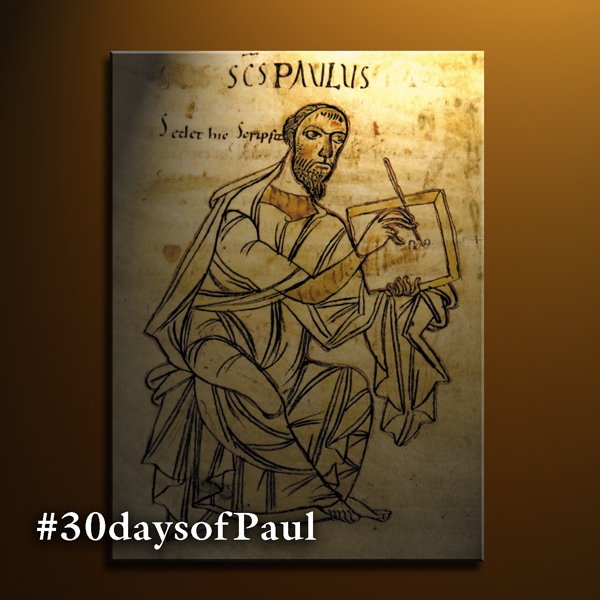
It’s widely shared that Paul comes from a family of tent-makers, and that he was also part of the Jewish religious authorities, so the assumption is often made that he was probably wealthy at best, or well-off at worst. But we forget that for at least the last twenty years of his life, Paul worked full time traveling to plant and support churches.

Needless to say, that is not a highly profitable field.

So, Paul was surely dependent upon the generosity of others to sustain himself and his fellow workers (such as Titus and Barnabas and Timothy) and his ministry. He makes a point in some letters to acknowledge that he has never accepted compensation from them (specifically in 2 Corinthians, where he makes a point in his polemic to highlight this fact.)

Paul wants to highlight here that he certainly doesn’t expect or require the Philippians to support him, but that he greatly appreciates it. He also points out that they were one of the first and only to do so.

We get a good picture into the interconnected, generous nature of the early church. Early traveling apostles could not exist without support from the congregations they planted and nurtured. Additionally, as we saw in 2 Corinthians as well, it was crucial that the better-endowed churches supported the less fortunate churches to assure their continued survival, and thus the continued spread of the Gospel.

It’s still true today: all the established churches are a web, interconnected and interdependent, as are all of us. We cannot survive without the touch and support of others, whether we find agreement with them on most things or not. All people, and all churches, are interrelated and propped up on all sides by one another. It is the only way to be, and the only way to continue to be. As much as some of us may try to pull away, may try to assert their individuality, their independence and ability to exist on their own, in the end, we are all drawn together, inevitably and assuredly.

In community we find support and strength and love.

Next: Philippians 1-2:18

For a PDF of the 30 Days of Paul reading plan, click here.

Philemon: A Window Into Paul’s World #30daysofPaul

The Epistle to Philemon is one book that makes you think, “What in the world was the early church thinking when they put this in the Bible?”

Philemon is very short -25 verses, 445 words, one chapter- and very, very light on theology. And by light, I mean there is none at all. Philemon is simply a letter from Paul to his acquaintance Philemon, asking for the slave Onesimus to be welcomed back with love and care, after an apparent falling out between the slave and his master.

And that’s it. It’s basically a note.

So what can we pull from it?

Well, it;s another good example of the personal Paul we’ve been encountering over the last couple of days. If you want to know Paul, if you want to get a feel for who he was and what he like and how he communicated to friends and loved ones on a personal level, then this is a great book for that.

In Philemon, we see Paul as we very rarely see him: humble, deferential, brown-nosing a bit, trying to praise and flatter Philemon as much as possible, so he will do what Paul is asking.

Martin Luther very accurately called this letter “holy flattery.”

We don’t know why Onesimus left Philemon-or if perhaps he was cast out. We don’t know where they were from. We can infer from verse 2 that Philemon was highly regarded enough to host a church in home. We don’t know the outcome of this letter, whether Philemon accepted Onesimus, whether he freed him or not, whether he punished him and sold him or what. All we know is what we read here, which is not much.

We can infer a bit of Paul’s theology tangentially here, since we have a good idea of his ideas overall. Paul was always interested in reconciliation. Here, he writes specifically to implore Philemon to practice reconciliation, and forgiveness, to live the Christian example in relation to Onesimus.

We also know Paul had an eschatology of immanence, so he likely believed it wouldn’t be long before the return of Christ and the breaking down of social barriers, meaning soon Onesimus and Philemon would truly be brothers and equals, thus Philemon should practice that Kingdom outlook here.

We know Paul was a product of his times, and something like slavery was so commonplace that if never occurred to Paul to advocate for abolition or manumission of slaves. It was just the natural order of things. As one commentary notes, for Paul to be an “abolitionist would have been at the same time an insurrectionist, and the political effects of such a movement would have been unthinkable.”

Paul’s eschatology prevented him from being one to rock the boat much, as he believed all this world was passing away soon anyways. He wasn’t out for political and social revolution; he was working to reconcile people and to make followers of Christ. Those who once used Philemon as justification for the continuance of slavery were not only morally and ethically compromised, but also dismissive of historical context for Scripture.

There isn’t much to work with in Philemon, but that doesn’t meaning there’s nothing. Getting to know Paul, getting a glimpse into his world and live and relationships-what a great opportunity from such a short work.

Next: Philippians 4:10-20

For a PDF of the 30 Days of Paul reading plan, click here.

2 Corinthians 1:1-2:13; 7:5-16; 8-9: The Letter of Reconciliation #30daysofPaul

In case you haven’t noticed, I’ve been behind on my #30daysofPaul challenge.

It started 4th of July weekend, when I took two days off to visit family in Kansas…and then just never made those days up. Since then, I’ve been working two to five days behind, and scrambling to make it all up.

Tonight, that’s what I’m doing.

These three selections from 2 Corinthians – 1:1-2:13; 7:5-16; 8-9 – all make up one letter, broken up by a couple others. They are known collectively as the “letter of reconciliation,” and appear to be written in response to Corinth’s reception of his “letter of tears,” which we tackled earlier in chapters 10-13.

So I just want to touch on the “letter of reconciliation” here, and get us caught up and ready to jump back in tomorrow.

The letter of reconciliation is a lot like the letter of tears: light on theology, more concerned with Paul’s relationship to the church at Corinth. He writes to them here to commend them for their response to his previous letter. It seems a single individual – a member of the church at Corinth – was responsible for the charges Paul answered in his earlier letter.

Although they were first angry and then grieved at his letter, Paul indicates they used it as an opportunity to grow. He says in 7:11,

“For see what earnestness this godly grief has produced in you, what earnestness to clear yourselves, what indignation, what alarm, what longing, what zeal, what punishment! At every point you have proved yourselves guiltless in this manner.”

Paul’s love for the church at Corinth shines through in his words to them here. He also encourages them to forgive and love the individual who caused this rift, just as he has committed to forgive and love him.

Finally, in chapters 8 and 9, he encourages them to give out of their abundance to the impoverished churches at Macedonia, commends Titus and other workers to them as they travel to Jerusalem, and then reminds them of their duty to take a collection for the church at Jerusalem to send with Titus.

In light of the previous letter in 10-13, I found this one very interesting, to see Paul making amends after his outburst. He seems almost embarrassed by the way he acted previously, making excuses for not visiting them in the meantime that seems to be covering up the shame he feels and his desire to not have to confront them face-to-face. The personal side of Paul we get in these letters is so fascinating for exploring him as a human being, and not some otherworldly Saint.

Thanks for tolerating my tardiness. Now, we are caught up! I promise to keep it that way over the final 11 days of #30daysofPaul.

Next: Philemon

For a PDF of the 30 Days of Paul reading plan, click here.