
Before we dig into our second reading, I want to address where I’m coming from, what lenses I’m primarily reading Paul through. I do this for your benefit, so you may understand what I’m writing, and for my own benefit, so that I can hash it out a little and provide some coherence to the next 29 days.
At this infantile stage of my Christian education and development, I consider myself primarily concerned with Liberation Theology. I hesitate to label myself liberation theologian, out of either respect for all those who have written and taught so prophetically about liberation, or fear of taking on such a mantel as a young, white, privileged, middle class straight male. I am the epitome of what most liberation theology focuses on as the power from which much liberation frees the oppressed and marginalized from.
However, I think all people are in need of liberation, regardless of their age or race or nationality or gender or gender identity or social class or religion. We are all held in thrall and oppression to something, and we are all called to spread to liberation to others. I believe strongly that Jesus preached liberation, drawing on the liberation rhetoric of early Jewish prophets; that his disciples and apostles carried that banner of liberation to the poor and oppressed masses across the Roman world; that the subsequent two thousand years has seen much oppression and injustice and shameful actions by Christians against others, but has also been rife with an ever widening net of liberation for more and more people.
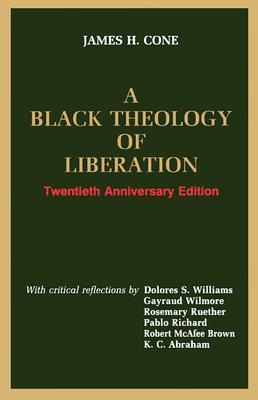
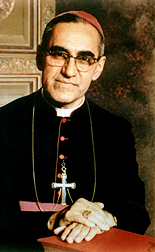
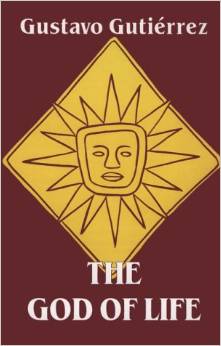
Three of the biggest influences on my particular brand of theology and Christianity are Bishop Oscar Romero, Dr. James Cone and Gustavo Gutierrez. Cone’s “A Black Theology of Liberation” changed the way I think about Christianity like few over books have. Gutierrez’s “The God of Life” had a similar effect. I believe Romero to be the ultimate martyr and example for the liberation movement, specifically in his transformation from an ultra-conservative defender of the status quo, to protector, leader and liberator of the oppressed masses of El Salvador. His death at the Lord’s Table, serving Communion while being gunned down by American-trained commandos, is a defining moment for the liberation theology, as it brought to light that any claim to Christianity by the powers-that-be is always contingent upon the subjection and subservience of Christianity, and as soon as that faith begins to assert itself, to liberate itself from the shackles of the world, the powers will inevitably use violence and force to attempt to chain it again.
 I am making a conscious effort to read Paul this month from a viewpoint of liberation, through the lens of Gutierrez’s “preferential option for the poor.” I want to cultivate this line of thinking in myself, to earn the title one day of liberation theologian. I am to use the language of liberation in my exegesis of Paul, to hopefully enrich my readers here by helping you see the words of Paul and how they contribute to a faith that liberates all who are oppressed, as Jesus liberated his followers from the rat race of empire two thousand years ago. Because, as Dr. Cone writes, “Any message that is not related to the liberation of the poor in a society is not Christ’s message. Any theology that is indifferent to the theme of liberation is not Christian theology.”
 Justin DaMetz