Dear Donald Trump,
 Congratulations! I just heard that Dr. James Dobson, who was at your little get together with evangelical leaders last week, has confirmed for us that you have indeed been saved and are now a born-again Christian. Great news!
We in the DaMetz household are ecstatic that you, like us, have decided that following the life and teachings of Jesus of Nazareth is the best way of going about life. It’s something really important to us, and to millions of others, and because of that, I just know you wouldn’t be claiming the name Christian as a political tool to win votes. You must be very sincere! So, welcome to the family, brother Trump!
And because we know being a Christian is really hard, as we are still figuring it out ourselves, I just wanted to drop you a note on what we have been learning, because, as the esteemed Dr. Dobson said, you are just a “baby Christian.”
So, here we go.
First of all, that whole thing a while back about your favorite Bible verse. You see, it sounded like you said “An eye for an eye” was your favorite. Which is great! That’s actually in the Bible, way back in Leviticus, so kudos to you. But, see, now you are a Christian, and Jesus did have something to say about “an eye for an eye.” It was something like this:
You have heard that it was said, “An eye for an eye and a tooth for a tooth.” But I say to you, Do not resist an evildoer. But if anyone strikes you on the right cheek, turn the other also. — Matthew 5:38-39
Yeah, geez, ok, so maybe you should find a new favorite verse, since Jesus kind of slapped that one down. But that’s ok! There are lots of other good ones to choose from!
(And really, this should be easy for you, right? I mean, you are the man with a warehouse full of Bibles in the middle of Manhattan, right?)
So anyways, let’s move on. Jesus was pretty explicit about what it takes to follow him as a Christian, and since you seem like the kind of guy who really appreciates easy-to-follow instructions, this whole Christian thing should come pretty easy to you, with just a little Bible study.
I mean, for instance, there is the one above: “turn the other cheek.” Basically, what that means is, if somebody does you wrong, you don’t try to get even or strike back. The Christian thing to do is submit, in love, knowing that breaking the cycle of violence is a lot more important that getting even. You can do that, right?
Then there is Luke 6:37-38: “Do not judge, and you will not be judged; do not condemn, and you will not be condemned. Forgive, and you will be forgiven; give, and it will be given to you.” So that’s all pretty cut-and-dry: Don’t judge, don’t condemn, forgive, give. Check, check, check, check.
How about some more from Matthew 5; these are some of my favorites, so I’m sure you’ll love them too. See, in this part of the Bible (called Jesus’ “Sermon on the Mount”; it’s a really big, like, rally speech he gave. Just like you do!!), Jesus gives us a list of people to bless. Now, you always tell us how much you love all the people (especially winners, right?), so you should really like this part. Here are the people Jesus thinks we should exalt:
- the poor
- the mournful
- the meek
- the hungry and thirsty
- the merciful
- the pure
- peacemakers
- the persecuted
So, yeah, I know that, technically speaking, none of those seem on the surface like “Winners” or the rich and powerful or influential or anything. But, hey, this is what Jesus said it takes to follow him, and you are now a born-again Christian now, so I guess you can get on board, right?
So, jumping ahead a bit in Matthew 5, Jesus says that if you are angry, then that’s really bad. So, yeah, no more anger towards other people.
Jesus also says we need to love our enemies. Now, I know this is hard. Because there are a lot of enemies out there. And it would be really great to just bomb them back to the stone age, and move one, right? Or at least, build a really big wall so that we don’t have to see them anymore. But, see, that’s just the thing. Jesus said we can’t do that. Like, he’s very adamant and everything. So make a note, we are going to have to revisit that part of your campaign platform.
Oh, and right after that, he says this:
“Whenever you give alms, do not sound a trumpet before you, as the hypocrites do in the synagogues and in the streets, so that they may be praised by others.”
Now, I know you made a big deal about giving $1 million to a veterans group a few weeks ago (except you actually didn’t give them the money, and then lied about it. Oops!) Donald, you can’t do that. Just donate the money and move on, because it’s not about you, right? It’s about them, and your reward is in heaven and blah blah blah. Ok.
Along those same lines, Jesus says “Do not store up for yourselves treasures on earth.” So we are going to have to talk about you giving away a lot of stuff. Like, a lot. Start picking a few things to keep. This is really important, because just a few verses later Jesus says, “You cannot serve God and wealth,” and then “It will be hard for a rich person to enter the kingdom of heaven.” (He said that last thing after telling the rich man to go sell all he had and give the money to the poor. Yeah, I know.)
Now, I know you’ve been told your whole life that the fact that you are rich and powerful and well-known means that you are obviously blessed and favored by God. But, well, see, Jesus actually says that’s not true. Jesus’ overarching theme is that favor rests on the meek and oppressed and poor and lowly. I know, that kind of turns this whole world upside down, and reverses everything we’ve been told about how the world works. But that’s the point! Jesus turns it all upside down! Crazy!
Because, here in America, we like to tell ourselves that Jesus is found in the boardroom, in victory lane, on Wall Street, in success and riches and power. But, again, that’s just not what the Bible actually says. And, I mean, if you are a Christian now (and James Dobson says you are and who am I to doubt that ringing endorsement?) then you have to start following what Jesus actually said. And later on in Matthew, in chapter 25, he says this: “Just as you did it to one of the least of these, you did it to me,” and by least of these, he means the hungry, the thirsty, the stranger, the naked, the sick and the imprisoned. What he is saying is, he (Jesus) is found with people like that.
I know, this whole Christian thing is starting to seem really hard and uncomfortable. I get it, ok? But, I also know that you have “Really great stamina” and that you are really strong and smart and powerful. I know all this because you told me this. Over and over and over again. So, I know you can do this. I believe in you Donald.
Anyways, I know this is a long letter, and it’s hard to focus for this long, so I’m gonna wrap things up. Again, I’m so excited you are a Christian now. And I know how sincere you are, and so I can’t wait to see you start living out the Way of Christ in your life. What better way to spread the message of Jesus, then by having someone of your stature living it everyday in the public eye!
Your brother in Christ,
Justin DaMetz

 American politics has become quite dependent on what Hauerwas and Coles term the “politics of fear.” Yet, one of the central ideas of Christianity is a “love that drives out all fear,” and consequently, a way of engaging in the world that reject the structures that are dependent on fear for their own continuance. Liberal democracy, in Hauerwas’ view, is such a structure.
 That’s an obvious thing to say. Of course they are. Candidates, for the most part, are running to win. And while they may see the writing on the wall, or they may know they are a long shot, or even they may understand that in the end they won’t, in fact, win, they are all out there every day trying to convince their fellow citizens that they need to win, for very real reasons.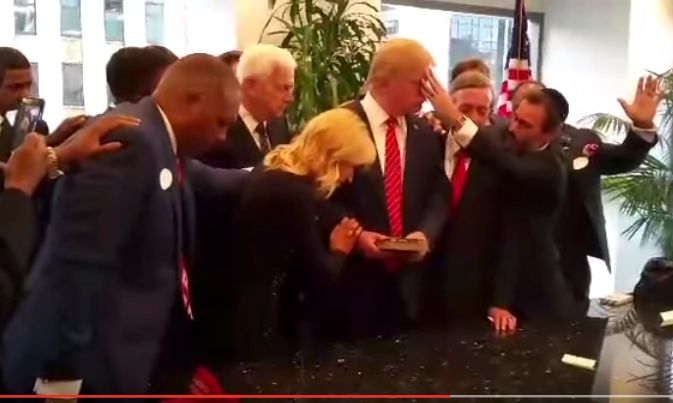
 Justin DaMetz