friendship

God has willed that we should all depend on one another for our salvation, and all strive together for our own mutual good and our own common salvation. Scripture teaches us that this is especially true in the supernatural order, in the doctrine of the Mystical Body of Christ, which flows necessarily from Christian teaching on grace.

“You are the body of Christ and members of one another…And the eye cannot say to the hand: I need not thy help: nor again the head to the feet, I have no need of you…And if one member suffer anything, all the members suffer with it; and if one member glory all the others rejoice with it.”

So now is the time to tell a thing that I could not realize then, but which has become very clear to me: that God brought me and a half dozen others together at Columbia, and made us friends, in such a way that our friendship would work powerfully to rescue us from the confusion and the misery in which we had come to find ourselves, partly through our own fault, and partly through a complex set of circumstances which might be grouped together under the heading of the “modern world,” “modern society.” But the qualification “modern” is unnecessary and perhaps unfair. The traditional Gospel term, “the world,” will do well enough.

All our salvation begins on the level of common and natural and ordinary things. (That is why the whole economy of the Sacraments, for instance, rests, in its material element, upon plain and ordinary things like bread and wine and water and salt and oil.) And so it was with me. Books and ideas and poems and stories, pictures and music, buildings, cities, places, philosophies were to be the materials on which grace would work. But these things are themselves not enough. The more fundamental instinct of fear for my own self-preservation came in, in a minor sort of a way, in this strange, half-imaginary sickness which nobody could diagnose completely.

The coming war, and all the uncertainties and confusions and fears that followed necessarily from that, and all the rest of the violence and injustice that were in the world, had a very important part to play. All these things were bound together and fused and vitalized and prepared for the action of grace, both in my own soul and in the souls of at least one or two of my friends, merely by our friendship and associations together. And it fermented in our sharing of our own ideas and miseries and headaches and perplexities and fears and difficulties and desires and hangovers and all the rest.

Thomas Merton, The Seven Storey Mountain

I’m blessed enough to be able to say I have formed a group of close friends akin to what Merton describes here, a group where we can share “our own ideas and miseries and headaches and perplexities and fear and difficulties and desires and hangovers and all the rest.” I really have come to depend on these men, who have rescued me in some important ways. What a powerful and important gift friendship is, especially in an increasingly lonely world.
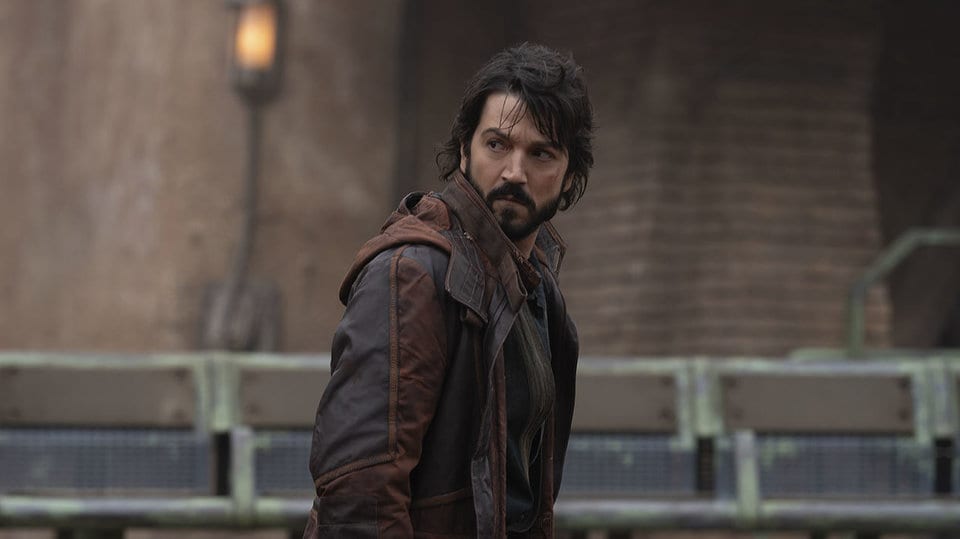
Andor

I mentioned this briefly in my Status Updates newsletter that went out yesterday1, but I just wanted to expand on my thoughts here briefly. I am really enjoying the new Star Wars series on Disney+, Andor. (Some minor spoilers follow here for those who haven’t watched yet.)

Diego Luna, who plays the title character

The story follows Cassian Andor’s entry into the burgeoning Rebellion, years prior to the events of the equally good Rogue One. The series is being presented as a more “adult” take on Star Wars, with a darker story, more mature themes, and just an overall much more serious tenor. It is a classic spy thriller, and honestly one could be forgiven for not even realizing this takes place in the Star Wars universe until several episodes in. We don’t see stormtroopers, lightsabers, classic battle ships, or hear familiar strains of orchestral music until episode 4 at the earliest, and even there, its all very muted and distant. The story stands alone really well, and while I’ve seen some criticism about this from fellow Star Wars fans, I actually really like it. The galaxy is a big place. Life in places looks different than life in other places. It is completely conceivable to me that on an mid-to-outer rim world like Ferrix, life would have its own rhythms, and the absence of the Empire in favor of a corporate security presence is very plausible. Its not that I don’t want more “classic” Star Wars stuff; I love Mandalorian and Kenobi and the other Star Wars content that scratches all those itches and includes all the Easter eggs and callbacks. But its just really cool to see something very different.

We are five episodes in, and the first three episodes in particular really stood out to me. There is a coherent storyline that makes them all feel like a movie, and they climax in a showdown where the tension builds and builds at the end of episode three that is unlike anything I have ever seen in Star Wars. It was riveting, and three weeks on from first watching it, I am still thinking about it a lot. It was just fantastic film making, which for all its glories and successes, it not something that is often said about Star Wars.

I am, all in all, a big fan of what Star Wars has become under Disney. I was a Star Wars fan before, and have only seen my love for that world grow as a result of everything we have gotten over the last seven years. I see old SW heads still complaining about all the Disney stuff, and I just think to myself, aren’t we supposed to be having fun? Isn’t this imaginary world of spaceships and lightsabers and aliens and robots supposed to be something we enjoy taking in, and something we should be overjoyed to get more of? How lucky are we, after all the years where all the Star Wars we had was the original films and a handful of less than stellar novels and comic books, to now have new Star Wars material to take in month after month! We get these really well done shows, we get some stellar novels, including the fascinating new High Republic stuff, we get some really well done video games, and even the comics are really enjoyable (and I say that as someone who is not really a comic book person at all.) This should be fun. God knows there is enough dreariness out there. Let’s enjoy2.

Anyways, I’ll get off my soapbox. Andor is good, really really good, and even if you are not a Star Wars fan, it is the kind of thrilling sci-fi – spy thriller that anyone who loves a good story can get behind. I can’t wait to see more.

1 Are you subscribed to my newsletter? No? Well, you should be! There is a lot of good stuff happening over there. Its free, check it out!

2 All of this paragraph also applies to Tolkien and the new Rings of Power series, which I am loving as well. I may write about that more soon.

Christian illiberalism

While I’m on the topic of labels…

Over the past few years, I’ve found myself largely disillusioned by classical liberalism, especially as it finds itself being practiced today, in a world where rampant individualism and capitalism have collided in a way that I think is doing significant damage to people, culture, politics and the earth. Nonetheless, I keep finding myself drawn back to classical liberalism, especially at intersects with democracy and pluralistic Western society. I’m steeped in this liberal tradition, and I don’t anticipate ever being fully free of it.

That said, I just want to lay down a marker to say, I find the Christian illiberalism of Leah Libresco Sargeant (click that link and read that article, don’t pass it by) very attractive and powerful, and I keep at least a toe in that camp. Stanley Hauerwas, John Howard Yoder and Alasdair Macintyre all influence me the same way, and remind me that, inevitably, Christianity in its best forms finds itself at odds with classical liberalism. This is a tension I will always have to live with.