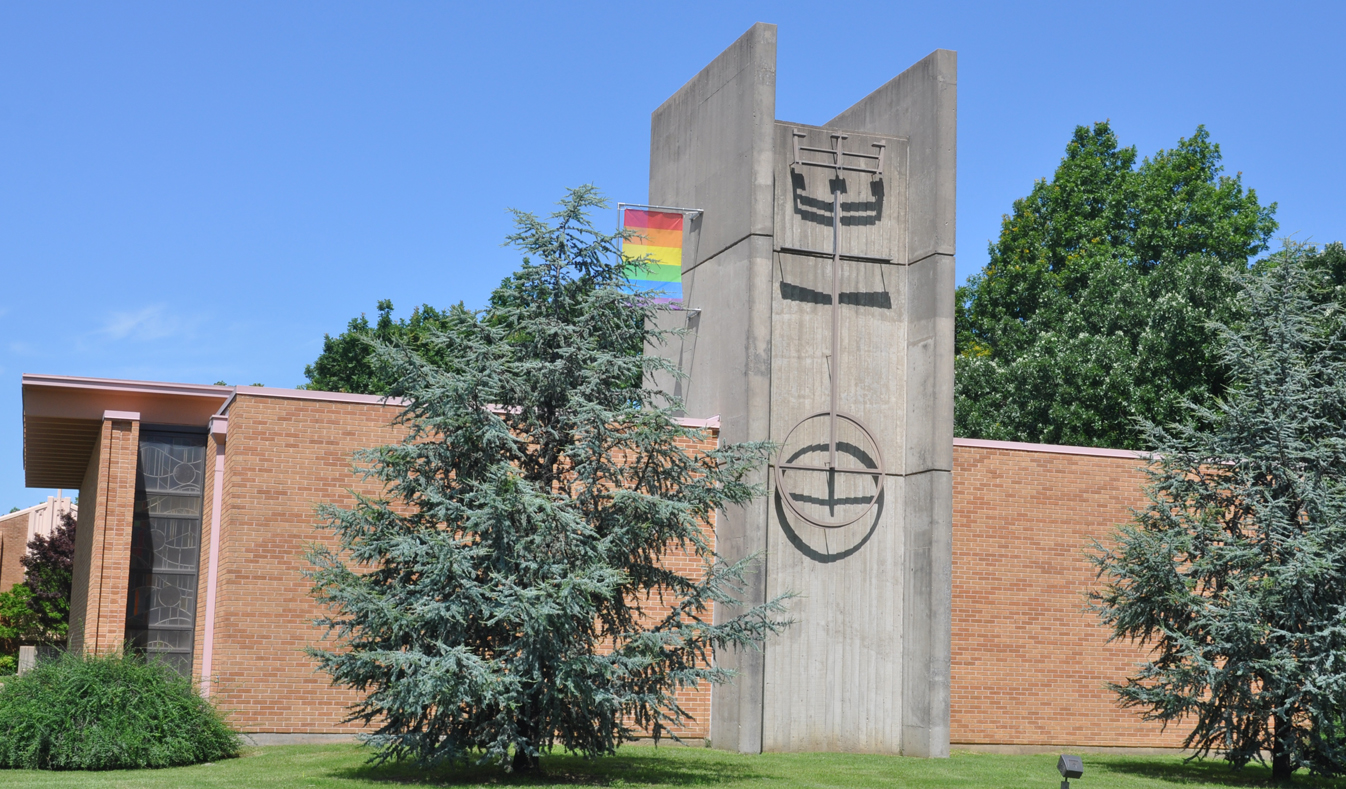
Since it was made publicly official during worship yesterday, I wanted to go ahead and make it public here as well: I am starting a new job in July! I was hired this week as the Coordinator of Youth and Family Ministries for Fellowship Congregational Church, here in Tulsa.
I am very excited about this opportunity to return to working in churches and putting theological education to good use. Being able to mix in the skills I’ve learned during my time as a teacher only makes it that much better.
Fellowship Congregational Church, UCC
Fellowship is a member of the United Church of Christ, a Congregational denomination with an emphasis on being justice oriented and open and affirming, as well as Biblically serious and proud of its long history and tradition stretching back to the great Congregational churches of colonial America. This church specifically occupies as special role in Tulsa as a preeminent Christian congregation that welcomes all, and provides a home for those who aren’t welcome elsewhere.
I hope to be able to share the work I am going to be doing here in the future!
I just wanted to take the opportunity to invite you to subscribe there, if you haven’t already. It is free, and comes directly to your inbox. The project is launching into a new phase, and now is a good time to get in.
What is the project that I am engaging in on my newsletter, and how is it different from this blog?
The Radical Ordinary is my small attempt to work out my own theology, to explore the ideas and voices and works that have shaped and influenced and inspired me, and to begin to achieve some coherence
In order to find the intellectual coherence I crave, I need an organizing principle. The Radical Ordinary provides that for me. I love this concept, the tension it creates, between the idea of something being both Radical – revolutionary, extremist, uncompromising – while also Ordinary – common, habitual, traditional.
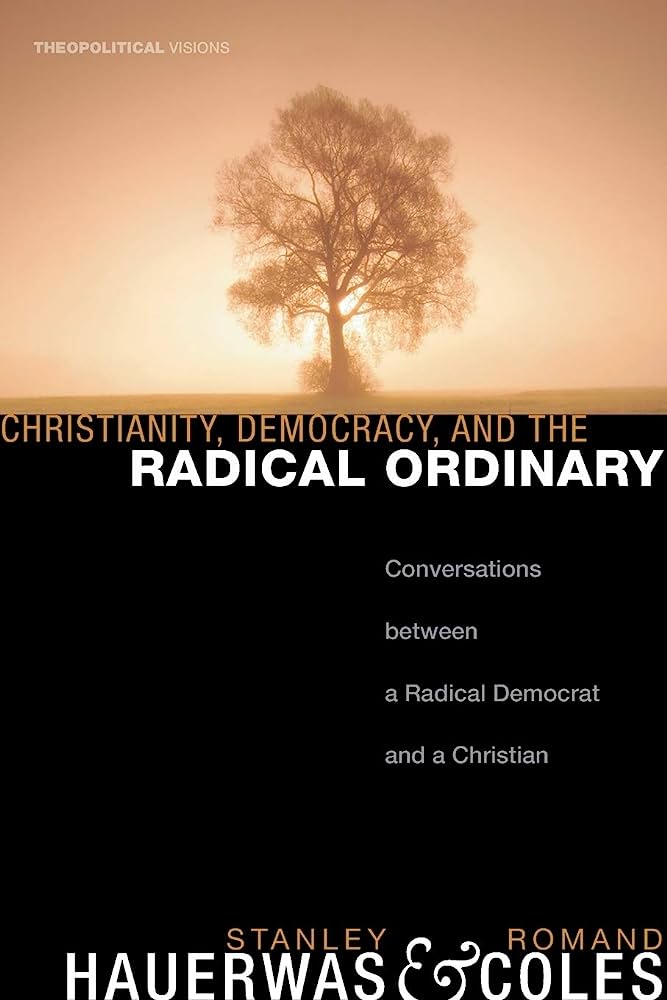
I draw the name The Radical Ordinary from the book Christianity, Democracy, and the Radical Ordinary: Conversations between a radical democrat and a Christian, by Stanley Hauerwas and Romand Coles. I first read this remarkable dialogue in book form in 2015, while at Phillips Theological Seminary. I haven’t been able to shake it ever since. It forced me down the political and intellectual road I’ve been on ever since. It forced me to reexamine my faith in traditional forms of political engagement, and my belief in the unproblematic engagement of the church with politics as the world does it, and to start asking hard questions that kept giving me uncomfortable answers. It shook me out of my unthinking political and theological assumptions and priors. It’s a book I return to often.
Throughout this project, I will be exploring a variety of ideas and thinkers – John Howard Yoder, Jurgen Moltmann, post-liberalism, liberation theology, Oscar Romero, process theology, martyrdom, Stanley Hauerwas, the Book of Acts and the Epistles of Paul – all of these, and more. I invite you to join me, to read and think and respond and challenge and share.
I went up to Kansas, my home state, for Memorial Day Weekend, and took a trip with my family up to Great Bend, the town where my maternal grandparents lived when I was young and where my mom spent part of her teen years. It was the first time I had been in that area since high school, and I was reminded how much I love the small towns and rolling hills of central Kansas.
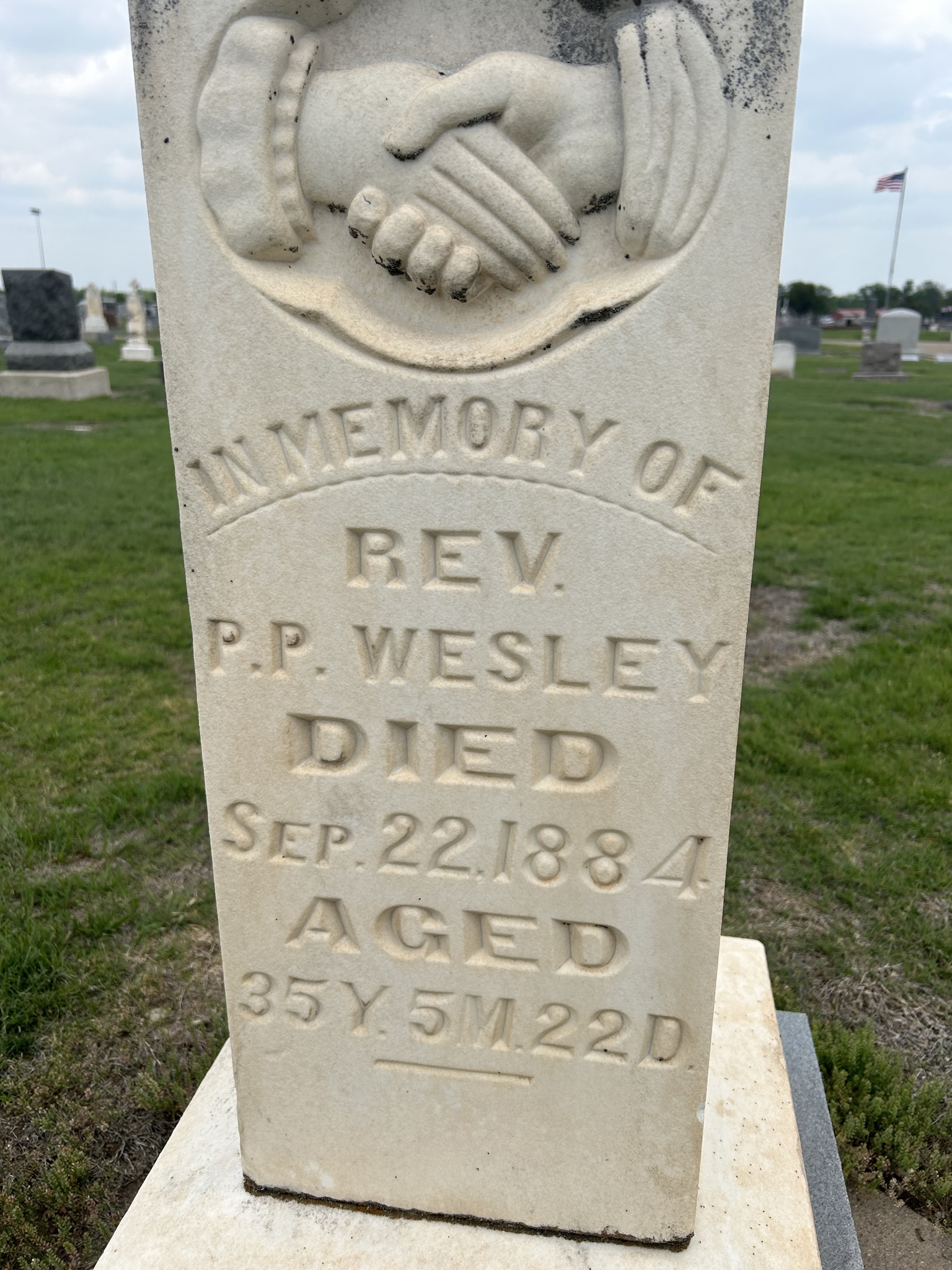
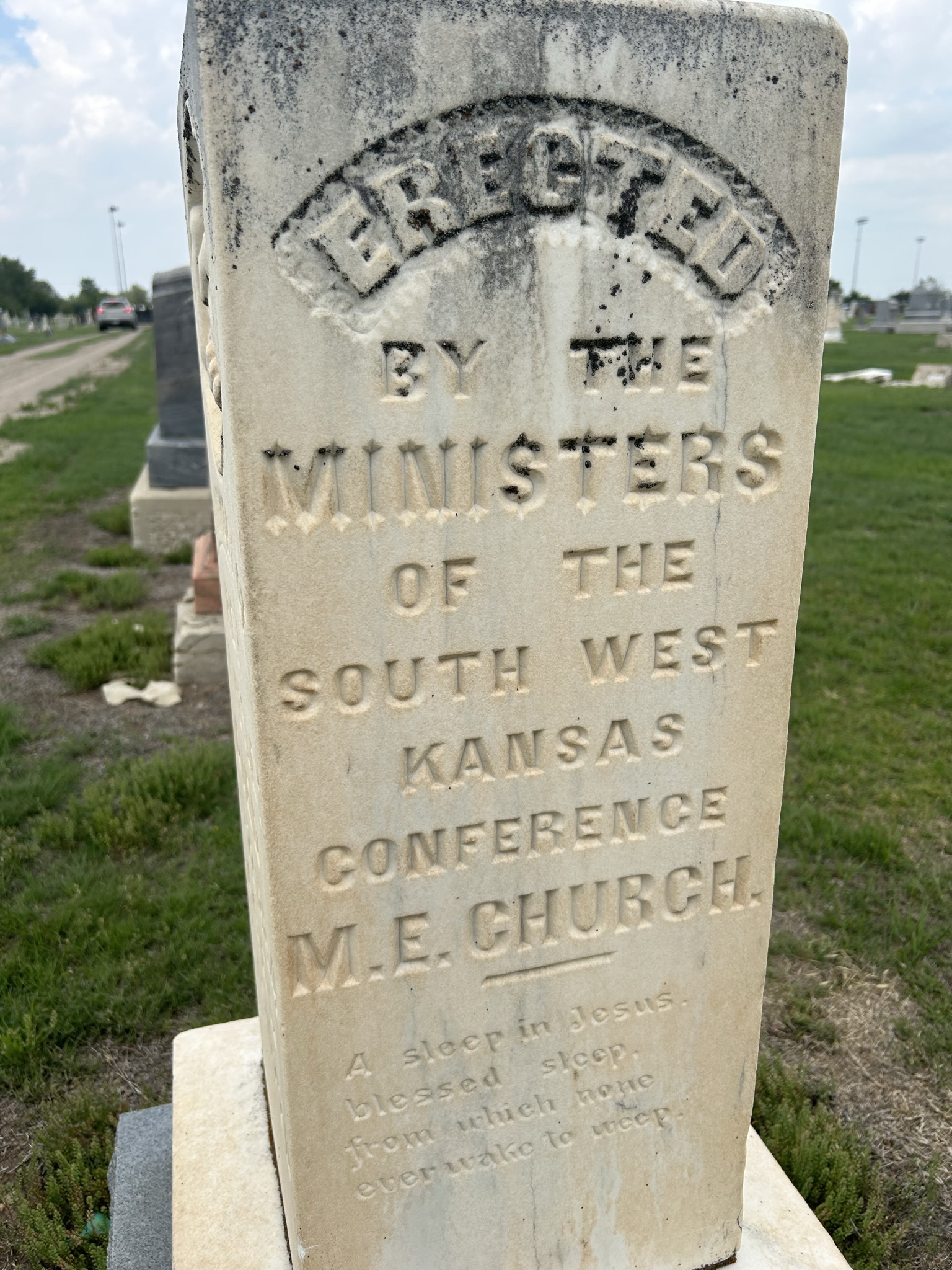
It being Memorial Day, we were in town to visit and put flowers on the graves of my grandfather, uncle, and great-grandparents. The Great Bend cemetery has an old section, populated with grave stones dating back into the 1870s, when the town was founded. I took some pictures and wandered about, but I was especially struck by this tall stone pillar memorializing a deceased Methodist minister, erected by his fellow circuit riders. There must be some story behind this one.

 Justin DaMetz