
This weekend, for Father’s Day, my wife got me and her tickets to Rob Bell’s tour stop in Tulsa on his How To Be Here Experience. Not even knowing that Bell was making a stop in Tulsa, I was so excited to get the tickets and experience this. (She’s great, isn’t she?!)
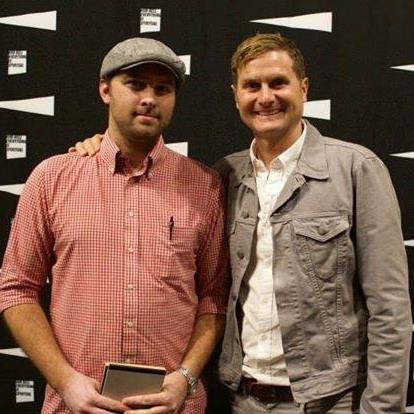 I saw Rob in person last year, when he was here in Tulsa on his Everything is Spiritual Tour. The show was amazing and inspiring and thought-provoking and a thousand other things. I wrote about it here.
I’m a huge fan of this guy. At first, when my then-girlfriend (now wife) Arianna showed me a Nooma video, I had never heard of Rob Bell, and I was suspicious and unimpressed. It seemed like the same, hipster-youth director, evangelical thing I had tried to hard to get away from. No thanks.
But he grew on me. This is mostly thanks to Ari, who loves Rob as much as I do. For her, Rob had opened up new vistas of possibility and questioning with her faith. She talks about the Nooma video entitled Lump, in which the phrase “There’s nothing you could ever do to make me love you less” features prominently. For a young woman whose lived experience of Christianity was the all-too-typical story of trying (and feeling like failing) at pleasing a angry, distant deity poised to banish her for all eternity, the idea of an uncompromising, never-ending, all enveloping love was a revelation as profound as any thing one can imagine. To be able to be in relation with God not in order to initiate the proper bribe to stay in God’s good graces, but instead to be in a relationship of unconditional love, was a life-shifting moment for Ari.
All that to say, Rob Bell was kind of a big deal to Arianna. And so, as a result of her evident passion and his effect on her, Rob grew on me.
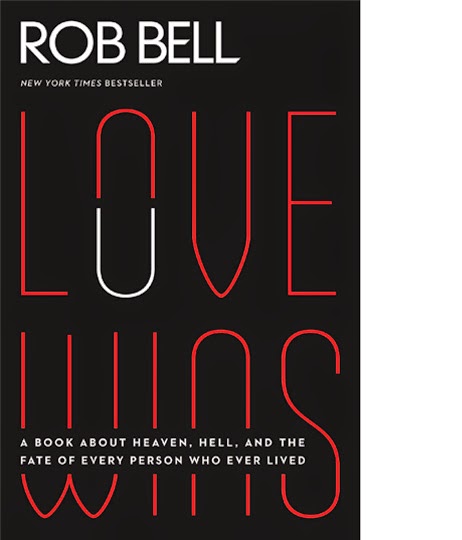 What flipped me, as it did to so many, in both directions, was Love Wins. The idea of a major evangelical leader through off the shackles of hell and substitutionary atonement and a negative Christology was huge, obviously. We bought Love Wins not long after it came out, and on a two-day road trip to Vegas to help my parents move into their new home, Ari read the book aloud in the car.
What a book. If you haven’t read it yet, well, do so.
For me, it was a life-altering kind of read. I credit it now with launching me into a trajectory towards a life of ministry. Although not necessarily imparting any new ideas or theology on me (I had already embraced universalism at this point), to hear it coming from such an inspiring and articulate person, not to mention in the context of him exploding this book onto the evangelical scene, was just really meaningful for me. And, at this point, Rob had my full attention.
I watched more Nooma. I listened to his talks and sermons and interviews, and added his Tumblr blog to my regular reading list. And in doing so, I found a person and an intellect and a personality so compelling and inspiring to me. That is really what Rob Bell represents to me. Whenever I watch him or read him or listen to him, I feel filled up creatively. I feel he is someone similar to me in background and worldview, and his enthusiasm and passion for living and creating and being just really inspires. I always go away from his output ready to contribute my own art to the world.
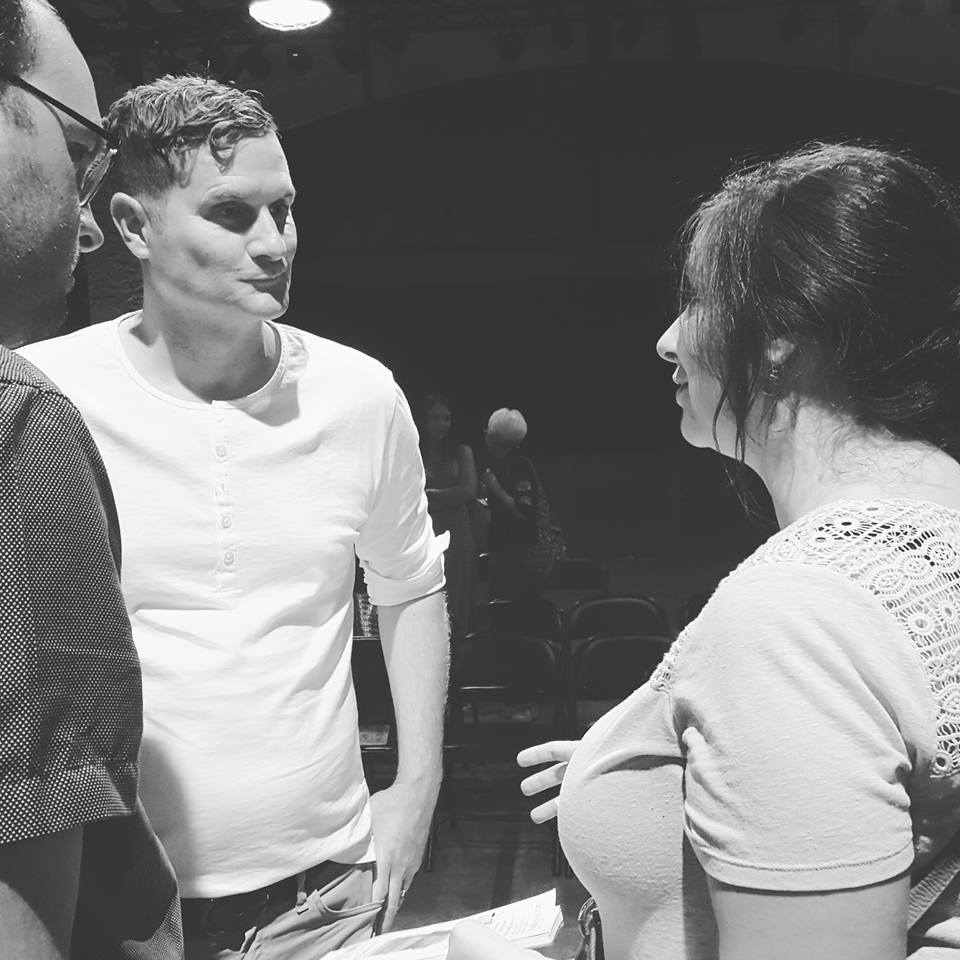 That is what I am left with after Saturday. This experience was a whole new animal in terms of style and presentation. Whereas last year’s event was held at the Brady Theater here, a traditional auditorium with rows of seats and a stage, this year’s tour is much more intimate. Held at the historic Cain’s Ballroom, the set up was about 150-200 chairs set up in rows around a central bar chair. The total diameter of this square of performance space was no more than 30 feet. Rob held forth from the middle, walking circles, engaging all four sides, interacting with the people around him.
And it wasn’t just the set up. The show was scheduled to run from 10am until 6pm. I know, right?
 There are few people I could listen to for that long. Rob Bell is one of those people. Rob mostly held to the structure of his newest book (also titled How to Be Here), but this wasn’t just a speech or talk. It was a wide-ranging, free-flowing conversation. Rob would expound on a topic from the book, and then ask us in the room “what do you think?” And we were free to share anything: observations, questions, criticisms, ideas. Any topic was open. We could respond to each other. This was honestly a conversation, facilitated by Rob Bell himself.
(And no, it wasn’t eight hours straight. We took three breaks, including 90 minutes for lunch.)
 I left feeling filled up, light, inspired, ready to create and love and learn and be here. In short, I felt like I always feel about experiencing Rob Bell, but instead of a 45 minute pod cast or 20 minute sermon or short blog, I got a whole days worth of fuel and energy.
If Rob brings his show near you, go. Don’t hesitate. Just go experience it. In the meantime, listen to his RobCast. Read his books, especially Love Wins and How To Be Here. Watch the Nooma videos. All of it is good stuff.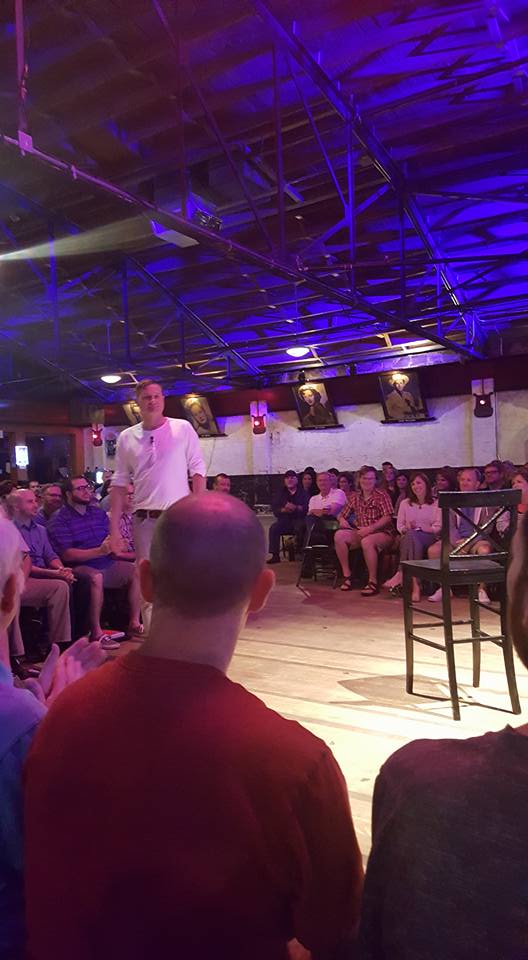
I have a lot more to say. Tomorrow, I’m gonna do a mini-review of How To Be Here, focusing mainly on the best part of the book to me: Finding your 1. I’ll explain tomorrow.

 Justin DaMetz