I’m working on getting back in the writing space by forcing myself to write daily. Usually, that has meant handwriting whatever has been going on in my days in this big black unlined sketch book. I force myself almost daily to do this just to exercise the writing muscle. I figure most of it is crap, but 1 out of 100 times something good will come and that, over time, I’ll get back in the swing of things.
So I’m now trying to work blogging daily back into the mix too. This is a much heavier lift, but I want to do it. And I’ve realized something that I think will help.
Ever since the election, I’ve been very resistant to the idea of writing about Trump or politics or current events, even though I have very strong opinions, stemming from my religious convictions, about what is happening in the world. I think I’ve been feeling like I shouldn’t stoop to that stuff, that I should write about something that “matters,” like theology or something. (I’ve broken this rule a couple times, like my MAGA post Wednesday.)
That’s crazy right?
I’ve realized, that stuff – Trump, politic, current events, injustice in the world – is really what gets my engine running, what drives my passion. So I’m gonna write about it. Sometimes it’ll connect to religion. Sometimes I’ll just purely write about religion or theology or Christianity. But sometimes I’ll just comment on things that are happening in the world. I mean, it all has spiritual implications; I’ve always felt strongly that our faith cannot disconnect from real world actions and consequences. So I’m gonna write about it all.
I’ve have at least three weeks worth of blog posts in the hopper here, so I’m feeling positive about consistency. I have at least two “Series” I want to do, some book excerpts to share, and a lot of standalone pieces. And I’ve got several pieces of big news I’ll share here soon! To everyone who is here and reading, thanks for sticking around, and I look forward to your comments and engaging with you all!
The following is based on a finals project for a class I completed at Phillips this semester; for this paper, we are exploring the question of why the Hebrew Bible texts are important for Christians. I have reworked the paper for a public theology project for a different class, crafting it instead into a blog post. Enjoy!
The Hebrew Bible is an underappreciated corpus of texts in liberal and progressive Christian circles in the 21st century. The skepticism that greets the words contained in them is often well intentioned, but arises out of a deep misunderstanding of the texts, and even a deferral to a more conservative or fundamentalist-style reading of them. This is unfortunate, as the Hebrew Bible has much to offer progressive strands of Christian tradition, and those who count themselves as such should strive to reclaim them in pursuit of a more just and equitable world made in the image of the Kingdom of God.
Divine Violence in the Hebrew Bible
It is certainly true, on a very basic, narratively-minded level, that the Hebrew Bible presents an image of God distinctly at odds with the one many progressives hold; namely, that of a God more loving than angry, more merciful than vengeful, more justice-oriented than arbitrary and demanding, more rational and compassionate than unpredictable and quick to anger. The God we see in the Hebrew Bible does often seem violent and cruel. Just a few examples quickly highlight this. For instance, in the laws and instructions laid out in the books of the Torah, especially Leviticus and Deuteronomy, the Divine voice that is allegedly dictating these words commands the people of Israel to put to death violators of a variety of commandments, from the act of adultery (Deut. 22:22) to the act of working on the Sabbath day (Exodus 35:2,) to a child who disobeys their parents (Deut. 21:21.) God’s punishments for rule-breaking rarely seem to be proportional to the violation by modern-day standards.
Beyond the consequences of breaking the Torah instructions, God also makes violent appearances in the narrative sections of the Hebrew Bible. A most egregious example of an arbitrarily violent God is found in 2 Samuel 6:2-7; in this tale, the Arc of the Covenant is being transported on a cart when the ox pulling it stumbles. Uzzah, a man escorting the Arc, reaches out and steadies the falling Arc by touching it, and is immediately struck dead by God for a supposedly irreverent act.
Finally, another commonly cited text in accusing the God of the Hebrew Bible is found in the book of Joshua, when the titular character leads the people into Canaan. They are instructed to “possess the land” (Joshua 1:11), which is understood as meaning to commit Divinely-ordained genocide against the people already living there. And this is indeed what Joshua and the Israelites do, as is recounted vividly in the cases of Jericho (Joshua 6) and Ai (Joshua 8). As the account of the latter conquest states quite explicitly, “The total of those who fell that day, men and women, the entire population of Ai, came to twelve thousand. Joshua did not draw back the hand with which he held out his javelin until all the inhabitants of Ai had been exterminated.” (Joshua 8:25-26) Our modern sensibilities, rightly so, recoil at accounts of such barbaric genocide.
But to accept these stories of violence as the true actions and words of the Divine is not only to misread the Hebrew Bible, but is to accept an interpretation of such dictated by conservative and fundamentalist voices. It is an inherent contradiction of views to assert that the Bible was not in fact divinely ordained and thus a product of human hands and minds, while at the same time declaring these Hebrew Bible passages as describing an angry and violent God. One must consistently apply their hermeneutic to the entire Hebrew Bible, and understand that, just as Leviticus 18 does not carry binding weight towards the nature of same-gender relations in the eyes of God, neither does Joshua 8 definitively describe the will of God regarding violence.
Further, to reduce the Hebrew Bible to a set of passages of recounting a violent and angry God, and thus essentially useless and discardable, is to miss out on what these texts do have to offer to progressive Christians. The Hebrew Bible is crucially important to those who consider themselves Christians, of any stripe, because it is a central current in the stream of tradition in which we count ourselves. This functions on two primary levels; the texts are crucial in that they are the paradigmatic lens through which we must interpret Jesus and the church that arose after him; they are also beautiful and instructive in their own right for any who seek the Divine, regardless of their impact of Christ and the early church. In this understanding, the violence found in the Hebrew Bible that is ascribed to God must be interpreted in the light of a people who lived in a violent world many thousands of years ago. In this contextual view, the Hebrew Bible takes its place as a progressive understanding of history and humanity, providing a view of the world shaped by the inherent goodness of people and an eye towards justice for the downtrodden and oppressed.
Reassessing the Hebrew Bible: Four Examples
Take the Psalms as a first example. Made up of 150 hymns, laments, and prayers of thanksgiving, this book is a beautiful glimpse into the worship life of the Israelite people. The theological breadth and depth of Psalms is astonishing, with these collections of works finding meaning and use in worship today, many thousands of years after they were first written and compiled. As Walter Brueggemann and Tod Linafelt write in their Introduction to the Old Testament, “…the Psalter is evidence of a long practice of Israel finding poetic, artistic ways to voice faith.” The desire to know and relate to God has never departed from humankind, and the Psalms are a beautiful collection of works that show the timelessness of such pursuits. The King James Version, another text so often derided in liberal and progressive Christianity, provides a particularly striking translation of the Psalms, and should be appreciated for its own inherent beauty.
Another text in the Hebrew Bible that stands alone in its theological complexity and ability to speak to modern sensibilities is Job. Brueggemann and Linafelt write, “It is no overstatement to say that the book of Job is a towering classic of the human literary and theological imagination.” The book presents itself ostensibly as a narrative of the tragic account of Job, who as a result of a wager between God and a figure known as “the Adversary” loses all he has, a series of poetic discourses between Job, his friends, and God grapple with the theological implications of suffering. The book doesn’t end definitively, leaving the reader to ponder whether or not God should exercise God’s power to act in such a way. The presentation of a God who takes and tests, and is thus subsequently rebuked and questioned by human beings, should be enticing and appealing to progressive Christians who look to question structures of authority and power. While certainly not a rejection of the authority and sovereignty of God, the book of Job is a powerful struggle to understand the Divine-Human relationship that carries much meaning in a world riven by injustice and oppression.
The Hebrew Bible is also important for anyone who considers themselves “Christian,” as it provides the primary lens for understanding the context of Jesus, and the church that arose around the memory of his life. Indeed, one cannot read the Epistles of Paul, or other texts such as Hebrews, without a familiarity with the Hebrew Bible and its implications. To read the New Testament without such knowledge is to court anti-Semitism, as Jewish tradition is subsumed by a western Christianity largely detached from the context in which it arose.
Jesus made a ministry of preaching justice to an oppressed people. His priorities did not arise in a vacuum. Rather, Jesus was living into a well-established Israelite tradition. The defining narrative of the Israelite people was (and is) the Exodus out from Egypt, as recounted in the Hebrew Bible book of Exodus. As a result of the story, the Israelite people understood their God as a liberating God, one who sets oppressed peoples free from bondage, and who rejects the structures of empire and power epitomized by Pharaoh’s Egypt. “The God who defeats the oppressive power of Pharaoh and who thereby emancipates Israel from slavery is characteristically the God who delivers from oppression,” Brueggemann and Linafelt remind us. Thus, in order to understand the import of Jesus speaking words of liberation against an oppressive empire, one must understand that he was necessarily alluding to the central narrative of the Hebrew Bible.
Out of this narrative of liberation and justice for the oppressed arises the tradition of the Israelite prophets, who make up the latter half of the Hebrew Bible. Again, to understand Jesus, one must understand that Jesus was stepping into the rhetorical tradition of the prophets. The prophets spoke to an Israel mired in injustice and exile, imploring them to act with justice, and promising the faithfulness of their liberating God. Likewise, Jesus speaks to a people occupied and oppressed, and presents a view of a world reordered to God’s liking. This is most explicit in the quoting of Isaiah attributed to Jesus, found in the Gospel of Mark. Isaiah, writing to an exiled people, promises God’s restorative justice, in the form of restoring those on the bottom to their dignity: “The spirit of the Lord God is upon me, because the LORD has anointed me; He has sent me as a herald of joy to the humble, to bind up the wounded of heart, to proclaim release to the captives, liberation to the imprisoned; To proclaim a year of the LORD’s favor and a day of vindication by our God; the comfort all who mourn…” (Isaiah 61:1-2). The author of Mark puts these words in Jesus’ mouth, in order to draw a parallel between the God who returned the exiles to Jerusalem, and the God who would deliver them from the Romans. In order to understand the mission Jesus felt called to, one must understand that he understood himself as working in the line of prophets stretching back a millennium.
Supersessionism and Responsible Reading
There is danger in this reading of the Hebrew Bible, of course. Supersessionism – the idea that “Christianity has fulfilled and improved on the teachings of Judaism” in the words of my professor, Dr. Lisa Davison, from a lecture she gave in January – is a dangerous habit of Christians, one that silences the authors of these texts and the faith tradition they were contributing to. I invoke Christianity here, not as the “proper” lens for understanding the Hebrew Bible, but in the illustration of the importance the authentic Jewish tradition has in shaping and forming the Christian faith. Christianity arose and formed in a primarily Jewish context; one only has to make a cursory reading of Paul or the Epistles to the Hebrews to see this. So, in order to understand and participate in the Christian tradition, an adherent needs to understand the Jewish faith; there is no better way to do this than to read and grapple with the Hebrew Bible. One shouldn’t replace or supersede the Hebrew Bible with the New Testament -there is no hierarchy of ideas here- but should instead recognize the inherent beauty, power and theological might of these texts, both for their own sake, and for how they help us understand our own faith that formed as a result of this wrestling with God.
Why should Christians read the Hebrew Bible? We should read it because, without these texts, there is no Christianity, no western civilization as we know it, no major monotheistic tradition apart from it. We should read it because we stand in a great river of tradition, and we must understand where we came from to decide where we are going.
Trigger Warning: Sexual assault and abuse of children, pedophilia
Note from Justin: One of the many wonderful people I met and worked with in Turley last year was Tori Jameson. Tori moved to Turley from the East Coast, leaving everything behind, because she was excited by and believed in the work being done at A Third Place. Her passion for the people of Turley, for the community and the good work to do, were evident every time I was around her, and few people have been more affected by the recent news that Tori. Late last night, she reached out to me and asked if she could share her thoughts. They are as follows.
Tori Jameson is a graduate of Andover Newton Theological School. She served the Welcome Table from January to December 2016.
A group of folks from Turley visiting the Tulsa Farmers Market. That’s Tori in the black shirt with the clergy collar, third from left.
What brought me to Welcome Table was an extraordinary ministry of a decade of missional service in the poorest part of Tulsa – a ministry that served the poor and disenfranchised by literally living among and belonging to them. The ministry did food justice work because there was a food desert and people were starving, the ministry ran a community center because there was no free, safe place to hang out and belong, the ministry ran an arts program because people needed an outlet to express themselves and a literal way to counter the decay and devastation around them. Joining Ron at the Welcome Table was an extraordinary opportunity and an affirmation of my own call to contextualized community ministry. Following in the radical way of Jesus, who mostly could be found with the people in the margins and only occasionally in the religious institutions of his day (and when there, usually stirring up trouble), I sought to do the good work of the world in service of creating a community of being and belonging for all people. In Turley, I was welcomed with open arms by a folks who chose to love and claim me as one of them. For any of the kindness I showed, I received ten fold more. My community members, many desperately poor and lacking in access to resources and education, shared meals with me, helped me move in and donated furniture for my house, and invited me into their homes and lives. I cuddled babies, chased toddlers, had deep discussions with young adults, married people on my lawn at near midnight, sat with the elderly, helped ladies find bras in the right sizes from our donation racks, chased people through the farmer’s market, prayed softly and sang loud, pulled out weeds and carrots, buried some folks and so much more.The extraordinary people of Turley showed me what resilience looks like and a deep and fierce love of place and community beyond circumstance.
I left the Welcome Table and Tulsa after only 11 months (in early December 2016) because of financial insolvency. A few months into my service, as I was falling in love with my people and my place, I asked to see the books to work on documentation for a grant. After some resistance, it came to light that the records I needed did not exist and documentation had not been occurring for quite some time. This is also the time when a young family, impacted by the missional vision Ron cast, the deep need in Turley and the ready embrace of our community of them, was set to move into the area in service to the Welcome Table but quickly exited in large part due to the same financial (non)disclosure. I began at that point to reshape my vision and hatch a plan to serve elsewhere, which was a heartbreaking decision. Further, I was bivocational, working for the mental health emergency services team in the county and then in sales for a beverage company, in addition to my work as a pastor. I didn’t mind,for a time, but the intention had not been to do that forever but move into a financially viable ministry role in quick time. Now, not only was that not the reality, but there was a constant campaign to keep the lights from being cut off and no accounting of where the donations, when received, for the light bills were being spent if not on the lights.
I first met Ron when I was in a class at Harvard Divinity on church planting for Unitarian Universalists and he was a guest presenter. I was excited to meet him and hang out with him at general assembly and connect with him further through the Unitarian Universalist Christian Fellowship, of which he was completing his term as president. I was asked alongside a few others to interview and discuss different topics in missional ministry for a series he was running on Youtube, and when the opportunity to come to Turley presented itself, I jumped at the chance. Ron had a looming presence in our very particular tributary of religious tradition (a huge fish in the tiny pond that is Christian missional movements utilizing Unitarian Universalist praxis). Ron also had impact all over Tulsa, teaching at the progressive seminary and partnering with social work programs for contextualized studies, with the local food and permaculture movement, as well as preaching and teaching community and faith groups and serving as expert on a number of panels about the needs of North Tulsa. When Ron wasn’t at one or another meeting or at the church, he could be found babysitting his grandchildren.
When I heard Thursday’s news and saw the pictures of his arrest, I could not believe it. Only a month ago, Welcome Table caught fire and I was awoken in the middle of the night by my phone ringing with a frantic call from a community member saying that Ron and his wife couldn’t be reached and that the church was on fire. I wrangled the right community people to get to the church and then contacted the Robinsons until they responded and headed down there. The loss of the majority of the functioning parts of the church building was a blow and though services had resumed (in truth, never really stopped but just relocated), the community was very much still reeling when the news of his betrayal broke. I didn’t really believe it, couldn’t believe it, thought that there was a terrible mistake despite news stories stating that he was confessing, until I read the indictment. The indictment was the single worst thing I have ever read or seen, and that is really saying something. My body stopped shaking just this morning long enough that I could drive, and my sadness has been supplanted by anger.
In theory, as a minister, Ron (and I, and every other clergy and person in a helping profession to some degree) answered a call from the divine into a life of service, giving up anonymity and a lot of personal autonomy to meet the needs of people and to reflect the divine to and in them, to nurture their best selves and love them through the worst moments, and to be present in the mundane and the extraordinary. At least, this is what I thought he was doing, but now I am less than sure. I can tell you that this is what I pledge to the people I serve, with the caveat that I am far from perfect just as they are far from perfect. I can be overbearing and mean, and when my anxiety gets the best of me, I weep and feel despondent and stuck. I am messy, though I try hard not to be, and I have a particular fondness for the f-word and ranting at times when a rant is not called for. In other words, I am human and an ordinary screw-up sometimes. The transgressions for which Ron was arrested for Thursday were an entirely different category than these sort of ordinary human foibles, and one that, I think, negates the above narrative.
The alternate view from this, the scarier view, is that Ron is and was a pedophile for a long time, long enough that the do-gooder life and ministry he created was a costume to hide what he was really about. I don’t propose this lightly- I loved this ministry and believed in this man and his vision so much that i moved across the country to join it- but the indicators seem clear in the indictment that he was deeply entrenched in this kind of pornography such that he was on a live-video-sharing website that required knowledge on how to access, that he commented in vile ways on multiple videos and he was brazen enough to show his face. According to that indictment, the entire time that my involvement at the Welcome Table was being discussed and worked out and the entire year of my service, Ron was under Federal investigation by homeland security and the sheriff’s office. The comments that he said about children (!) in the indictment were about not only sexual assault (heinous in and of itself) but subsequent physical attack and death of those children (an unspeakable horror). Clergy, and especially clergy serving in a community setting like the Welcome Table, are trusted. I was handed people’s babies all the time at the free food store to hold while they shopped, and trusted to entertain the little ones during meetings or at the garden park – and so was Ron. Such trust is a gift but also part of the job and call. It is the biggest violation imaginable for him to hold someone’s child and simultaneously to be struggling with violent and pedophiliac fantasy. Such a contradiction in a person does not fit in my theology- such a contradiction is not possible in a truly called minister, but only in a monster.
I am forced therefore to conclude that none of us knew Ron at all, and that we fell prey to his costume.Some of my community members and folks who worked alongside Ron have been quick to name that he struggled with a sin, but that he was good at the core. I am so repulsed by his repugnant act, and so betrayed by his charade, so violated by the trust given to him that he exploited, that I cannot name him as good. The impulse to call him such comes from a sense that if he is a monster, all the work done through the ministry was in vain – but this simply isn’t true. Though it was often represented as Ron’s ministry (by Ron, perhaps or by outsiders not understanding the loose connectional structure of the organization), Ron was largely not present in the year I served. The food pantry was stocked and staffed by a dedicated team that did not include Ron except for an occasional check-in, the art studio had none of his participation, he served as a figurehead in the garden park but had an allergy to manual labor and so did not work out there, I coordinated the farmers market runs alongside teams from all souls and the market and I ran our sexuality education efforts and condom distribution, a few community members ran a game night and free dinner every few weeks. Volunteers would sweep and mop and do much of the repairs, and an intern this summer ran a beautification project. Ron had access to people, a lot of access to students and volunteer teams and people on retreat and volunteers, but the continuous and diligent work was not his. His big efforts this year at the center was a push to continue dinner church, which was sporadic and poorly attended at best. The work in the past year wasn’t Ron’s, but from the community. Though my argument is that Ron ought not be honored, the work done by others in the place he happened to found still has meaning and value. That does not mean, however, that the ministry he created ought to continue. I am of the strong opinion that it should not. Welcome Table should immediately close and be left to rot with Ron in prison and the energies of the volunteers and community should be redirected to getting a new shepherding group to care for the garden park and a new organization (an extension of one of the large food justice orgs already in Tulsa, perhaps?) to immediately start a new pantry in a new location. I am even of the mind that the rest of the building ought to be razed and leveled so that Turley does not have to see and be constantly reminded of the monster that fed on their best works and greatest needs.
I am a former fundamentalist Christian, and so in my religious vocabulary and imagination is a devil who prowls the earth seeking people to devour (a rather literal reading of 1 Peter 5:8). I was taught that devil was many things – “evolutionists”, spies from the USSR, someone with a tattoo that might be a barcode, a seductive lady who dared to wear a skirt above the knee or a skirt that showed any part of the collarbone or a hint of cleavage. I gave up a literal devil as part of my leaving fundamentalism, and as a Unitarian Universalist, I pretty well gave up the idea that individuals are themselves inherently evil -I’ve written oh so many sermons and papers about that evil lives in our systems and so to eradicate evils we need to address the systems that create the evil. A reconsideration of this systemic view of evil might be in order, given that I served in ministry with a person on the prowl who has confessed to the most disgusting, heinous fantasies and speech and viewing choices one can possibly have accessed.
Ron talked so much about following in the radical way of Jesus, but he seems to have forgotten much of the speech of Jesus surrounding the responsibilities of teachers and preachers.. Matthew chapter 23, in concert with other similar statements throughout the hebrew bible and new testaments, speaks of the especial responsibilities of those given to a religious life to be doubly mindful not to fall after greed and lusts and to teach and facilitate justice and mercy. In particular, verse 27 and 28 “Woe to you, teachers of the law and Pharisees, you hypocrites! You are like whitewashed tombs, which look beautiful on the outside but on the inside are full of the bones of the dead and everything unclean. In the same way, on the outside you appear to people as righteous but on the inside you are full of hypocrisy and wickedness.” To be honest, hypocrisy and wickedness are too mild a description for what Ron did.
It has been only about 54 hours since I found out about his arrest and I am far too close in to this to have worked out a fully formed adjusted theology of evil. I have spent a large portion of these hours with crying and angry people, our people, my community, who are betrayed and scared and need someone to listen to them. Ive spent most of the remaining portion ranting and crying to others myself, because I am also feeling betrayed and angry and worried about what else might arise and how Ron knowingly has hurt the people I love and children none of us will ever meet. I, along with the community in Turley and those affected beyond Turley are going to have to relearn to put one foot in front of the other and walk into the good work after evil, deception and betrayal, but it might take us all some time to get there.

 I’m working on getting back in the writing space by forcing myself to write daily. Usually, that has meant handwriting whatever has been going on in my days in this big black unlined sketch book. I force myself almost daily to do this just to exercise the writing muscle. I figure most of it is crap, but 1 out of 100 times something good will come and that, over time, I’ll get back in the swing of things.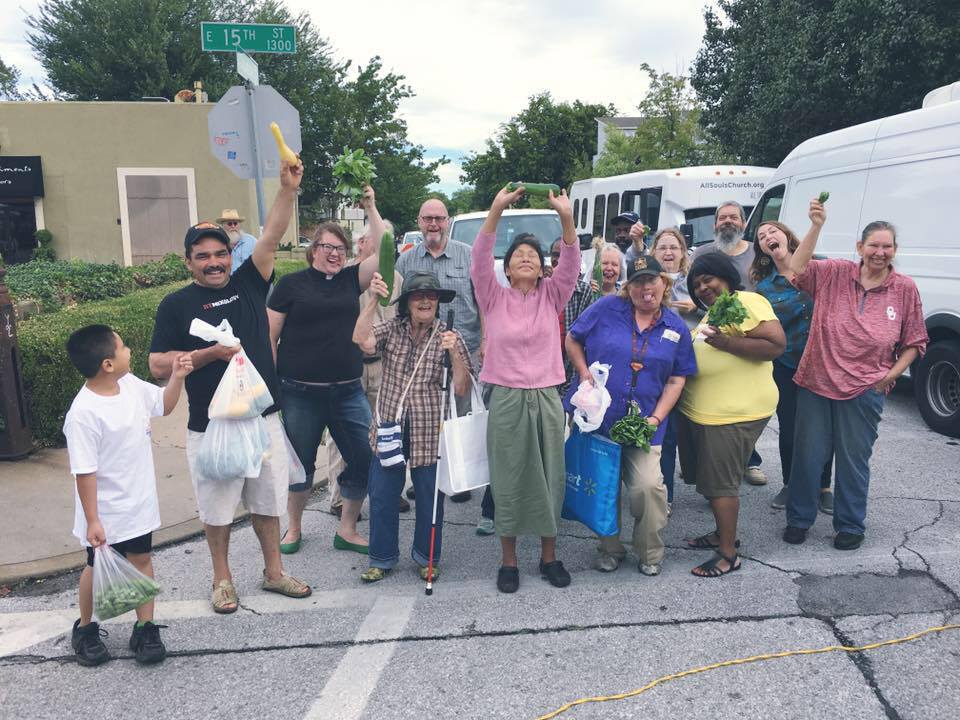
 Justin DaMetz