The Teacher, The Ruler of Men, and The Little Children: A Parable

A wise Teacher was walking with a Ruler of men through the land he ruled one day. The Ruler was showing all the great and fabulous things he had built in the land, huge monuments to himself, and ingenious ways of making money, and power structures that ensured the good life for those who deserved it, and great weapons that could kill a hundred men in a single shot. All the glories of the greatest and most powerful kingdom of all!
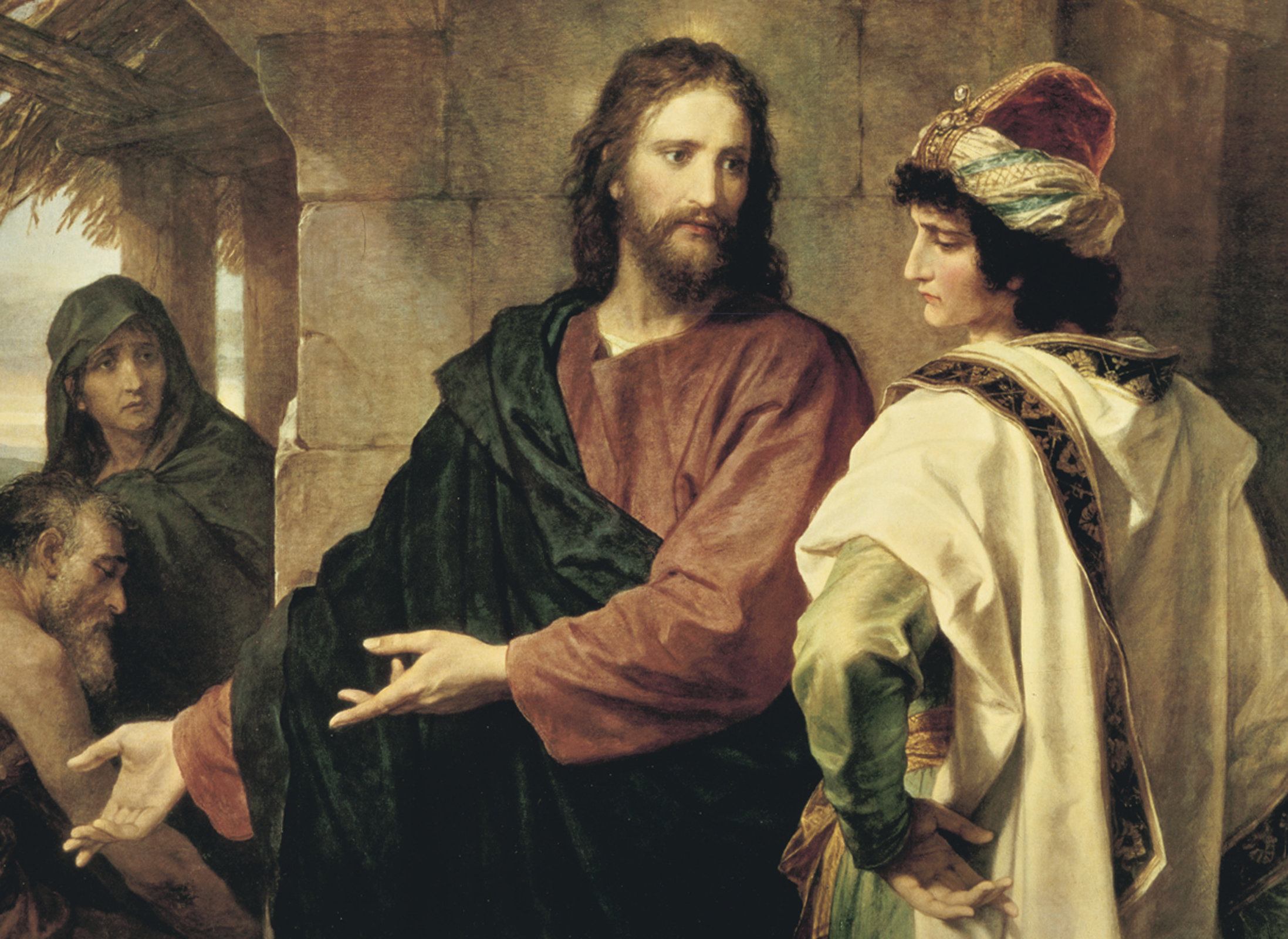
The Ruler was getting frustrated, because he noticed that the Teacher wasn’t impressed by all these great things. What was there not to be impressed by? All this amazing stuff, buildings and statues and shiny things and bright lights; it was enough to dazzle even the most cynical! But yet the Teacher wasn’t ooo-ing and aaa-ing; instead, he seemed to be looking around for something.

The Ruler, being so caught up in these thoughts, was no longer paying any attention to where they were walking. Before he knew it, they had rounded a corner to one of the last places he wanted to take the Teacher. But here they were, and the Ruler decided to do his best to make even this place seem just great, to make it another symbol of his own power and might.

Before them was a prison. In it was housed children, of all ages and races and backgrounds. The Teacher walked up to the nearest holding cell, and gently asked the children inside, “Who are you?”

The Ruler stepped in. “These are lawbreakers! Their names hardly matter; they all sound alike anyways. All you need to know is that they broke my law, and so they are where they belong.” The Teacher was a smart guy, thought the Ruler. He knows and understands what happens to lawbreakers. Law and order must be preserved.

The Teacher knelt close to the bars. “Why are you in jail?” he asked them.

The Ruler answered again. “These criminals had the gall to live in my land without asking me! They didn’t even try to get the right paperwork. They thought they could just waltz on in and take from those who make. They wanted a free ride!” The Ruler’s anger was rising; he glared at a little girl in the cell. What a thug, he thought.

The Teacher gripped the hand of a small child through the bars. “Where are you from?”

The Ruler shoved his way in between the Teacher and the cell. “The only thing that matters about where they are from is that it isn’t here! And everyone knows this is the biggest and best and most remarkable kingdom in all the world, and anyone from anywhere else wishes they were us. But they can’t be! Not unless they pass my test and prove they can contribute to the glory of my kingdom! Not unless they earn the papers I give them that allows them to stay, out of the goodness of my heart.” Surely, the Teacher would see the logic and worldly wisdom in this. You can’t let just anyone in a kingdom, after all!

The Teacher looked kindly at an older child. “What did you do, before you were brought here?”

What a ridiculous question to ask, thought the Ruler, his patience waning. “These illegals claim to be students and workers and friends and sons and daughters. But it’s a lie! A criminal is a criminal. Nothing else matters in this case.” Case closed. This Teacher couldn’t get around such a black-and-white case as that.

The Teacher looked with great compassion at the smallest child, a girl of no more than two. “Where are you parents?” he asked her quietly.

That was it. The Ruler had had it. “Their parents? As if these hooligans aren’t bad enough! Their parents are even worse criminals than they are! They actually thought they could escape the mess they made in their own kingdoms by bringing their kids here to grow up. What a stupid plan! I’ve already shipped them back to their forsaken lands. And the only thing stopping me from doing that with these monsters is the pointy-headed intellectuals and journalists and judges who won’t let me do what I want in MY kingdom!”

At this point, the Ruler was stamping his feet and shaking so badly with anger that his hair looked like it was going to fall off his head. The little girl, watching the Ruler rage, felt compassion for him. She had once thrown a fit like this too, when she didn’t get what she wanted. She understood. She reached her little hand out between the bars and touched the Ruler’s little balled-up fists.

The Ruler jumped straight up in the air and screamed like he had been bitten by a snake. In that moment, his fear of all that was different, and his intense self-doubt that fed that fear, was laid bare for all to see. He wasn’t as angry at these kids, as he was terrified of them, and their language, and their culture, and their skin, and their humanity.

But quickly, he covered that up again with great anger and hatred, rekindled now as never before.

“Out!” He screamed at the Teacher. “You get out of my kingdom too! I thought you came here to confirm my rule, to show the people of the world how great I am! I thought your purpose was to make sure the people knew I was the best and greatest leader ever! But no, I see now, you only care about trash like these stupid kids. So you get out too! I don’t need them and I don’t need you to help me rule my kingdom. I have my towers and my statues and my money!”

The Teacher seemed sad at this. But he understood. So he shook the dust off his feet, and turned his face towards the world. Before he began walking, however, he looked at the Ruler one last time. “I can solve a problem for you. Let the little children come to me. I will take them when I go. For the kingdom I come from belongs to them.”

The Ruler was flabbergasted. A kingdom run by little criminals? What a bunch of horse manure! That could only be the most unsuccessful and poorest kingdom ever! “Fine!” he shouted. “Take them with you. And good riddance to the lot of you! And don’t expect to get back in to my kingdom once you leave! I am going to build a huge wall on the border between us, the most fabulous wall anyone has ever seen!” That’ll show them, he thought. After all, walls make the best neighbors, the kind you don’t have to see or hear or care about. No one in, and no one out. He’d be safe from those kids, with such a big wall.

The children filed out of the jail and gathered around the Teacher. “What about our parents?” the little girl asked him. “Oh, don’t worry. We will find them. They are probably already in my kingdom.” So the Teacher and the children set off on the road, leaving the Ruler standing in their wake. He watched them go, still flabbergasted and angry and scared, all at once.

But he was also curious about one more thing. This was a strange feeling to him, because he had never been curious about something before. So he ran and caught up to the Teacher. “One more thing, before you go back to your trash heap. What in the world would make you want these children and their outlaw families? And why would you turn over your kingdom to them? It doesn’t make any sense! You can’t win with them. Don’t you want to win? What gives you these crazy, backward ideas?”

The Teacher looked at the Ruler for a moment, again in pity. Finally, he said, “The tradition of our people does. I thought you came from that tradition too, but it seems you have forgotten it. Our tradition tells us to loose the bonds of injustice, undo the thongs of the yoke, let the oppressed go free. It says to bring good news to the oppressed, bind up the brokenhearted, proclaim liberty to the captives, and release to the prisoners. Our tradition says to feed the hungry, sate the thirsty, welcome the stranger, clothe the naked. It says that the poor and the meek and the merciful and the peacemakers are blessed. And it says the first,” and here he put his finger on the Ruler’s chest, “will be last.”

And off again he and the children walked, leaving the stunned and confused and angry and scared and impotent and sad little Ruler of men standing on his great road, surrounded by his great monuments and statues and money and towers and weapons, completely and utterly alone.

The Heresy of Make America Great Again

By now, I’m sure you’ve seen coverage or video of First Baptist Dallas’ “Make America Great Again” hymn and all-around freedom fest on Fourth of July Weekend in Washington DC. If you haven’t, and you think you can stomach it, here it is:

I’ll give you a minute to go vomit, if you need to.

The “Make America Great Again” song – and really, the whole MAGA concept – is about as anti-Christian as one can get. The fact that a major church in America can really build an entire brand around MAGA just shows the theological bankruptcy of much of American Christianity. Most Christians, it seems, regard no more than a few verses of the Bible – those having to do with “gnashing of teeth” and Jesus being the only choice and those allegedly about sexual orientation – and discard the rest, especially those places about justice and compassion and mercy and caring for the least, the lost, and the alien.

The Way exemplified by Jesus, as we read it in the Gospels, is anti-empire. Jesus consistently stood against the coercive use of power – economic, political, military – in pursuit of human achievement. Jesus understood that so often power is used by one tribe or group against another, and that as a result, people suffered.

Instead of wielding power and promoting an “us-against-them” ideology, Jesus showed that abundant life comes through love of neighbor, through spreading a big tent over all humanity, and welcoming everyone in, especially those on the margins of society. Jesus stood against empire, showing its moral bankruptcy through his use of the power of love for its own sake.

MAGA and Trump are empire at its worst. Trump’s governing ethos has been the coercion of power in the pursuit of money and influence for a small group of people over and against every one else – against foreigners and immigrants and black people and LGBT people and Muslims and liberals and poor people. Trump cares only about himself, and his most ardent followers care only about themselves. They live in an economy of scarcity, in which the stuff of life is rare and must be hoarded and kept away from the undeserving and the sinners. A Christianity that sides with MAGA is nothing but pure heresy, a disgusting perversion of the words and deeds of Christ.

Jesus’ Way is the Way of Abundance: abundance of love and compassion and mercy and life, for all people. Jesus stood with the least against the powers because he knew abundance was the reality of God’s kingdom, and the only way to show it was to raise of the weak and show that their elevation didn’t mean a reduction of others. “A rising tide lifts all boats,” indeed.

Christianity isn’t about nationalism and America First and conquering others and victory. Christianity doesn’t take sides, and certainly doesn’t identify with America. Christianity is about universal love, and radical hospitality, and weakness conquering all, and about relinquishing power. Christianity is where losers are admired, and winners pitied in their emptiness. Christianity is about always – ALWAYS – critiquing and standing against those wielding power, even when they are “our guy” or are on our team.

The very best of early Christianity understood that Christianity’s equation with and coercion by empire was a tragedy, not a triumph. They realized that critiquing empire meant critiquing even those leaders who were themselves “Christians”, those leaders who had once stood with them. In the modern context, this means radically critiquing even the leaders were help put in place. Because the Way of Jesus never identifies itself with power; it always, stands with those who are powerless.

Making America great again isn’t what is needed. What is needed is “Making the Kingdom come on earth, as in heaven.” And that only comes from each and every one of us operating with an attitude of abundance towards each and every other human being, from putting the needs and well being of others first and above our own, of practicing the radical and overflowing love of God towards others. Only then will things be great.

The Fragile Brilliance of Glass: An Ethic of Glory in Trump’s America

Following-up last week’s post about Hauerwas and Coles’ Christianity, Democracy and the Radical Ordinary, I want to point out another passage from early in the book. The book, a series of essays and letters, was compiled in 2008, but this particular essay by Hauerwas was originally written in 2006. Despite being a decade old at this point, it feels especially relevant today, as another example of brokenglasswhere our American civil society is in 2016.

Hauerwas is writing about Augustine’s City of God, and his discussion of the glorification of Roman heroes juxtaposed against the glorification of Christian martyrs, and what each of these mean for their communities. 

Hauerwas writes (emphasis mine):

In contrast to the Roman desire for political glory, as the only way to defeat death, Dodaro calls attention to Augustine’s understanding of martyrdom. For the martyr, fear of death was overcome by faith in a reality that, from the Roman perspective, could not help but appear “invisible.” Yet the martyr’s victory challenges the Roman understanding of “politics,” because the martyr does not depend on memory secured by military or political glory. The martyr’s memory is secured, rather, in the communion of saints who dies victorious because they broke forever the fatal victim/victimizer logic¹. The martyr cannot be a hero – whose glory is his own – because the glory of the martyr is a reflected glory – a reflection of the glory of Christ – signaling an alternative political ethic…

…Accordingly, Augustine asks “is it reasonable, is it sensible, to boast of the extent and grandeur of empire, when you cannot show that men lived in happiness, as they passed their lives amid the horrors of war, amid the shedding of men’s blood-whether the blood of enemies or fellow citizens-under the shadow of fear and amid the terror of ruthless ambition?” The only joy such people achieve has the “fragile brilliance of glass” and is outweighed by the fear of loss. So the rich and the powerful are “tortured by fears, worn out with sadness, burnt up with ambition, never knowing the serenity of repose.” In contrast, the person of limited resources is loved by family and friends, enjoys the blessing and peace with his relations and friends; “he is loyal, compassionate, and kind, healthy in body, temperate in habits, of unblemished character, and enjoys the serenity of good conscience.”

The contrast here is between a political ethic that glorifies “winning” with an ethic that achieves lasting victory. And not victory in a political, temporal sense, but victory in a more cosmic, justice-oriented sense.

Think about it this way: we don’t remember the heroes of Rome; but many of us do celebrate the feasts of the martyrs and saints even today.

The politics of Empire – the politics of death – inevitably are driven by self-glorification and competition. American democracy is no different, and this competitive, self-centered  way of being is only grotesquely enhanced by capitalism’s ethos of winning at all costs and personal enrichment. There is no reflected glory of the Divine in our political ethic of Empire. Instead, it is a dull glory, quickly forgotten and with no lasting impact. And, in 2016, we have have wrapped our arms around it completely.

Martyrs, however, serve here as exemplars of a people who have rejected structures and strictures of being in the world in the way it says you must. In doing so, they have proven the futility of the world’s need to make scapegoats, a la Rene Girard. As Hauerwas points out so beautifully, they have overcome the logic of the victimizer. They cannot be seen as someone punished with death, because they have embraced death with open arms, showing it to be, not a punishment, but a glorification, a vindication.

This break is especially relevant in a modern political climate that has taken victimization to a level not seen since Nazi Germany. Political leaders – especially our president-elect – have played the victim card, which white Christian American has eaten up, and consequently, the supposed perpetrators of this victimization – immigrants, Muslims, refugees, gays, black nationalists, lefts – have been targeted.

Donald Trump, I believe, is the apotheosis of Hauerwas’ examples of everything wrong with liberal democracy, as shown here. We have a president-elect desirous of glory, willing to play to the masses by promising their safety through the death of others; a man so obviously eaten up with envy and ambition and insecurity, covered in fragile bluster and fear and anger. He is a reflection of the pathology of white Christian American. And the only way for him and them to cope with these insecurities is to project them outwards, on to others, to make themselves the victims and their enemies – the Others – as their oppressors.

Those of us who fall in these labels, or who know, love, and respect those who do, don’t have to play this game. Hauerwas continues:

In short, a community shaped by the memory of the martyrs makes possible a people capable of the slow, hard work of politics of place, because they are not driven by the politics of fear. Yoder’s “wild patience” assumes that such a people must exist if the work of nonviolence is to be a radical challenge to the way the world is. What the church contributes to radical democracy is therefore a people who seek not glory but justice. Such a people have been made possible because they have been formed through liturgical action to be for the world what the world can become.

There is a way out of the cruel logic of the scapegoat. It is the way of love, of radical acceptance and hospitality, of refusing the blame or live in fear and suspicion of those perceived as the Other. As we saw in my previous post, it is a way that sees what those different than us have to bring to the table, and respecting that.

The politics of glory and death is not the call of the followers of the Crucified One. We don’t “win.” We don’t get first place.

Instead, we reflect the glory of the Divine. We take a back seat. We are willing to lose so others may win. We embrace the possibility of death and loss, because of the promise of resurrection. And in so doing, we show the possibility of a different world, achievable right here on earth, if we only have the courage to see it.

***

¹From the (much-longer) book footnote: “Rome could kill Christians but they could not victimize them.”