the heat this summer is a different kind of heat

I’ve been very alarmed by weather trends this summer. It’s been really, really hot. Alarmingly so. Even here in Oklahoma, where long, hot, humid summers are the norm, the difference has been noticeable. I’ve had to limit the amount of times my kids are spending outdoors, and I worry every time they climb on or off the trampoline, that the metal frame is going to burn them. Watching the news is equally alarming, with talk of record high averages worldwide, extreme temperature streaks across the American southwest, and wildfires increasingly common. Its really hard to look at the weather and come to the conclusion that things aren’t different than they used to be. To deny this is the case is to stick ones head in the sand. Kevin Drum is consistently good on climate issues, and this is him Tuesday:

In the 1960s, we could expect maybe two heat waves of three days each in a typical year. Today we can expect six heat waves of four days each. The overall summer heat wave season has tripled from 20 days to 70 days.

If you wish, you’re welcome to pretend this is just the normal variability of climate. Sometimes it’s hot, sometimes it’s cold.

But that would make you an idiot. This is all due to global warming, and it’s an excellent example of how a smallish change in average temperature can produce massive extremes at the edges. The same phenomenon is at work with sea level changes, where a modest change of just a few inches can produce killer storm surges.

A dozen years ago I wrote:

The fact of climate change will become undeniable [by 2024]. The effects of global warming, discernible today mostly in scary charts and mathematical models, will start to become obvious enough in the real world that even the rightest of right wingers will be forced to acknowledge what’s happening.

I got the first sentence dead on. But I’m still not sure about the second. Right wingers have turned out to be far more stubborn than anyone could have imagined.

This heat is not normal, and we shouldn’t act like it is. Its scary, especially as a parent. And it comes with an added layer of fury, that so many could just continue to deny reality and not care. Their indifference is driving a new extreme reality for the rest of us, one we didn’t ask for and knew could be prevented.
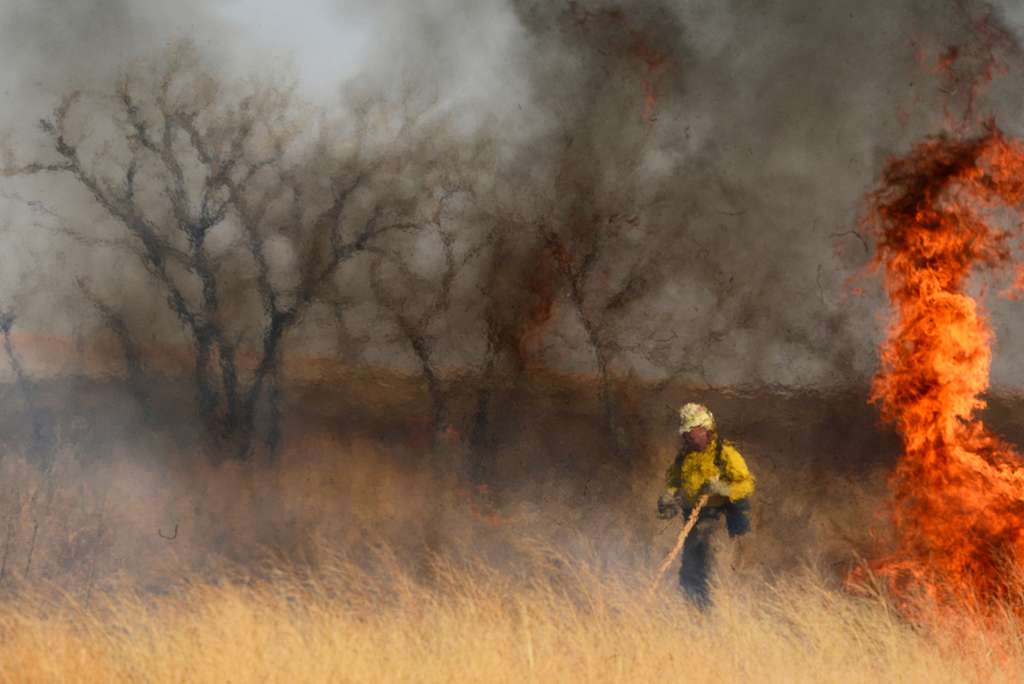
From a theological perspective, this kind of indifference and intentional refusal to act is very obviously sinful, especially because those who will be most effected will be the least among us, those who cannot afford or don’t live in places with high-powered AC units or the ability to relocate. We are, once again, abandoning the vulnerable among us. And, as Rowan Williams points out, this is due to an ill-formed view of what Creation is for:

“Our present ecological crisis, the biggest single practical threat to our human existence in the middle to long term, has, religious people would say, a great deal to do with our failure to think of the world as existing in relation to the mystery of God, not just as a huge warehouse of stuff to be used for our conveinence.”

Earth is, in the common capitalist, modern worldview, a giant container of resources meant to be exploited for economic growth. But that’s not what Scripture tells us. Creation belongs to God, and we are stewards of it. And we have a really, really bad track record of stewardship.

All of this ties to much of the emphasis I gleaned from Wendell Berry, about our proper relation to nature and agriculture and how we use our natural resources. We certainly aren’t called to leave nature untouched, but neither are we too destroy and build over. There are sustainable, holy ways to make use of this wonderful planet and the life on it, to live in peace and coexistence with Creation. Berry often describes this way of living in his writings, some of which I tried to bring here in recent weeks. But, again, despite knowing what must be done, we just refuse to do so. And so, we burn this summer, and in all future summers (and winters, and springs, and autumns) in my life, at least, and probably in the lives of my kids as well. Hopefully that won’t be the case; hopefully they’ll do better than us. But we left them a hell of a house on fire to deal with.

I shouldn’t be completely doom and gloom. Kevin also points out that, on the carbon front, net-zero is now an achievable reality by 2050. But that doesn’t help us this summer, or the next, or anytime soon. Stay cool, stay hydrated, and help those who are suffering in this heat. Pray for fall to arrive soon.

friction

The point of any technology or tool is the reduction of friction. Friction is more than the physical process by which an object encounters a force that slows its momentum. Friction is any force in our lives that slows us down, makes things more difficult, or provides resistance to our best efforts to move faster or more efficiently. We have fetishized the process of removing friction. The world has come to mirror the beliefs of capitalism, to believe than any barriers to movement and progress are bad, and that we must eliminate all frictions as quickly as we can, that we have a moral imperative to do so. Technology mirrors this drive. Technology no longer serves to make human life simply more fulfilling, but as something that can reduce all friction in our life, to maximize our leisure and our ease at every turn.

We need a return of friction to our lives. We need a reminder that slow, hard work is good for us, and may be a good in and of itself. Friction is a reminder that we are mortal, something we spend our lives trying to forget.

Romand Coles describes radical democracy as a process of doing and undoing. He envisions a political process that checks itself. This is a form of friction, over and against technocracy, bureaucracy, and the politics of the strong man who can fix it all for us. Democracy is messing, inefficient, halting. It achieves progress in starts and stops; sometimes, its two steps back for every three forward. But that friction is good, contrary to the thinking of many across the political spectrum today. Many are overly concerned with the outcomes of our political system, and less with the process of democracy for democracy’s sake. Radical democracy is a political process of constant self-criticism and undermining, not in favor of some particular outcome, but in order to ensure a turning of the soil, so that the voices at the bottom are consistently brought back to the top, to voice. This democratic friction ensures things don’t move so swiftly or efficiently that regular people get swept under the feet of Progress or Utopia.

This kind of democratic friction is also something that should be desirious for any Christian who cares about the society we live in. All systems of government and power – even democracy – are part of the Powers and Principalities Paul talks about. They are systems that have good intentions, yes, but are inherently systems that entrench sin, injustice, and violence, because of their roots in fallen human nature and the endeavors that nature pursues. Thus, any friction that slows down forward momentum and allows time for breathing, for the voices in the wilderness to cry out in the face of injustice and death, is a good and desirable thing. As Christians, we should be very careful to overly idenitfy our faith with the god of Progress, no matter how just that progress may look, because it has its origins in our limited human nature.

Additionally, any progress powered by the state is a progress being powered by violence, because the state is the only “legitimate” wielder of violence in our modern liberal order. Violence, in any and all of its forms, is antithetical to Christianity, and results achieved with the power of violence – whatever form that violence takes – should be viewed askance.

All of this is just a way of saying: lean into the friction, whether it be the friction of an older technology, or an inefficient process, or a check and balance in our politics. Friction is good.

Threads

Kevin Drum points to this piece by Rebecca Jennings at Vox, lamenting how “boring” Meta’s new Threads app is. Here’s her take, as compiled by Drum:

Logging onto Threads is like logging on to the internet roughly a decade ago. I have now seen two strangers share their “hot take” that actually, pineapple on pizza is good, a sentiment copied and pasted from all the world’s most boring Hinge profiles….Threads is Twitter for people who are scared of Twitter.

….Twitter is a platform that attracts a certain type of person….The best Twitter users aren’t people who are looking for sponsorship deals or mugging in front of a camera; by replicating your follower list from Instagram to Threads, you’re not necessarily seeing posts by interesting or funny people. Instead you’re seeing posts from acquaintances, brands, and influencers, and these are not the people who are going to invent the internet’s next best posting format or a new genre of humor. There is nothing revelatory or novel about what’s happening on Threads….For now it’s simply a much less interesting version of Twitter.

Jennings says Threads being boring, being tame, being a place where you just see the people you decide to see, a place that looks like “the internet roughly a decade ago.” And to all that I say, yes exactly. Thank God. What a breath of fresh air. I know the Twitter bubble is real, so some power users may not understand this, but some of us are sick of social media’s “excitement”, being a place where the loudest and most belligerent are featured, a feed of uninformative crap spewed by people that many of us never signed up to see or hear in the first place. So yeah, Threads is kind of bland and boring and half-formed. And some of us like it that way.

I’m sure Meta will figure out how to overmonetize and ruin Threads sooner rather than later. Big tech is good at almost nothing else. But lets enjoy the moment before it does.

On a related note, looking for a social media platform that will never be ruined by monetization schemes and hyperbolic power users? Try out Micro.blog! It’s a fantastic place to be, a true open-internet place where things are calm, counting your likes and comments are impossible, and you only see the people you want to see.