‘What worlds are at hand, for me to conquer?’

Early in The Mirror and The Light, the third part of her excellent Thomas Cromwell trilogy, the late Hilary Mantel presents a remembered conversation between Cromwell and the soon-to-be-executed George Boleyn, brother of the erstwhile Queen Anne Boleyn, herself on the way to the executioner’s block. A short exchange between the two men stood out to me, for all that it has to say about out own power-mad world:

‘I have read the gospel, but not followed it,’ George said. ‘I think I have hardly understood it. If I had done so, I would be a living man as you are. I should have lived quiet, away from court. And disdained the world, its flatteries. I should have eschewed all vanities, and laid aside ambition.

‘Yes,’ he said ‘but we never do it. None of us. We have all read the sermons. We could write them ourselves. But we are vain and ambitious all the same, and we never do live quiet, because we rise in the morning and we feel the blood coursing in our veins and we think, by the Holy Trinity, whose head can I stamp on today? What worlds are at hand, for me to conquer? Or at the least we think, if God made me a crewman on his ship of fools, how can I murder the drunken captain, and steer it to port and not be wrecked?
in memory

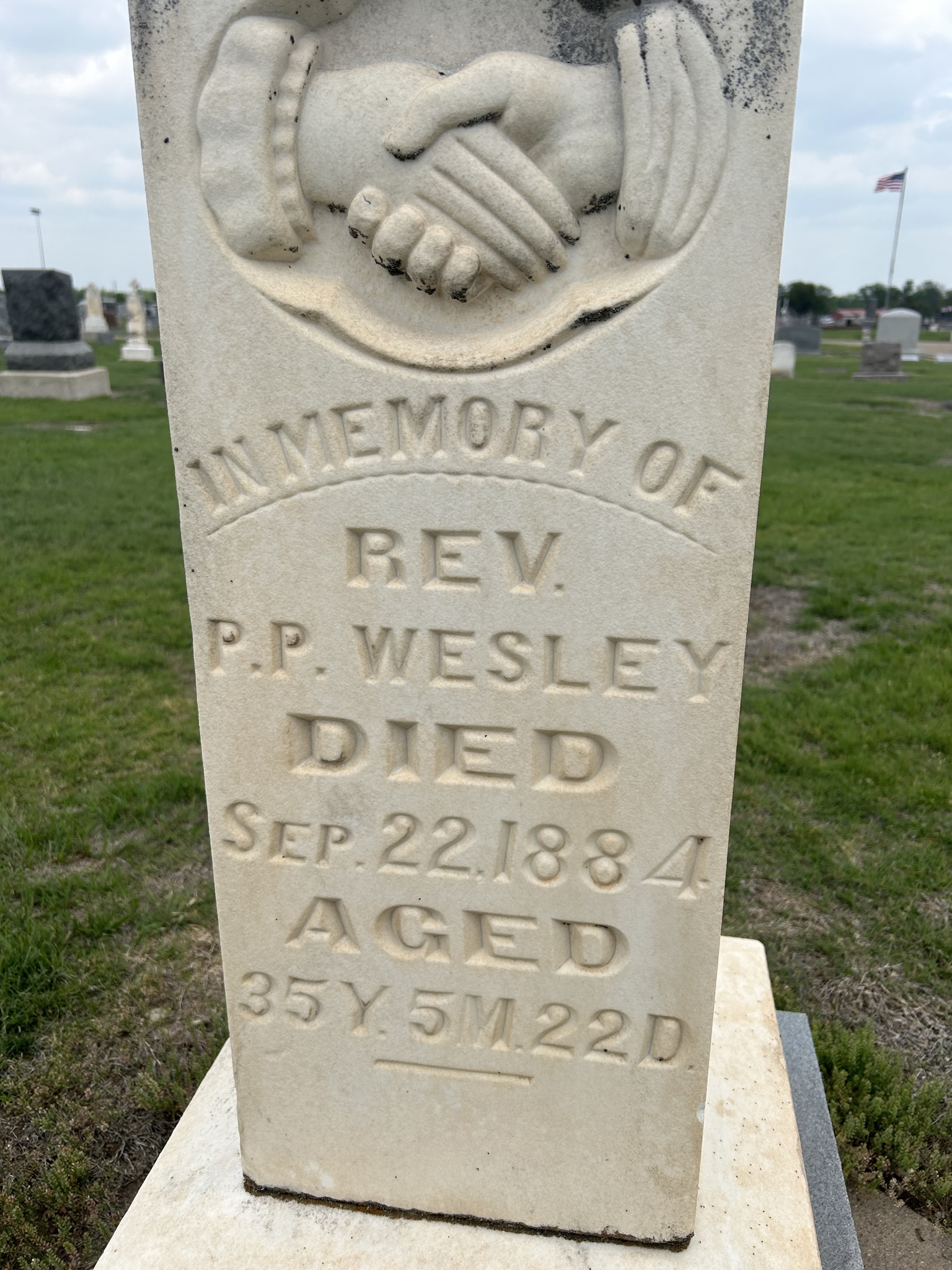
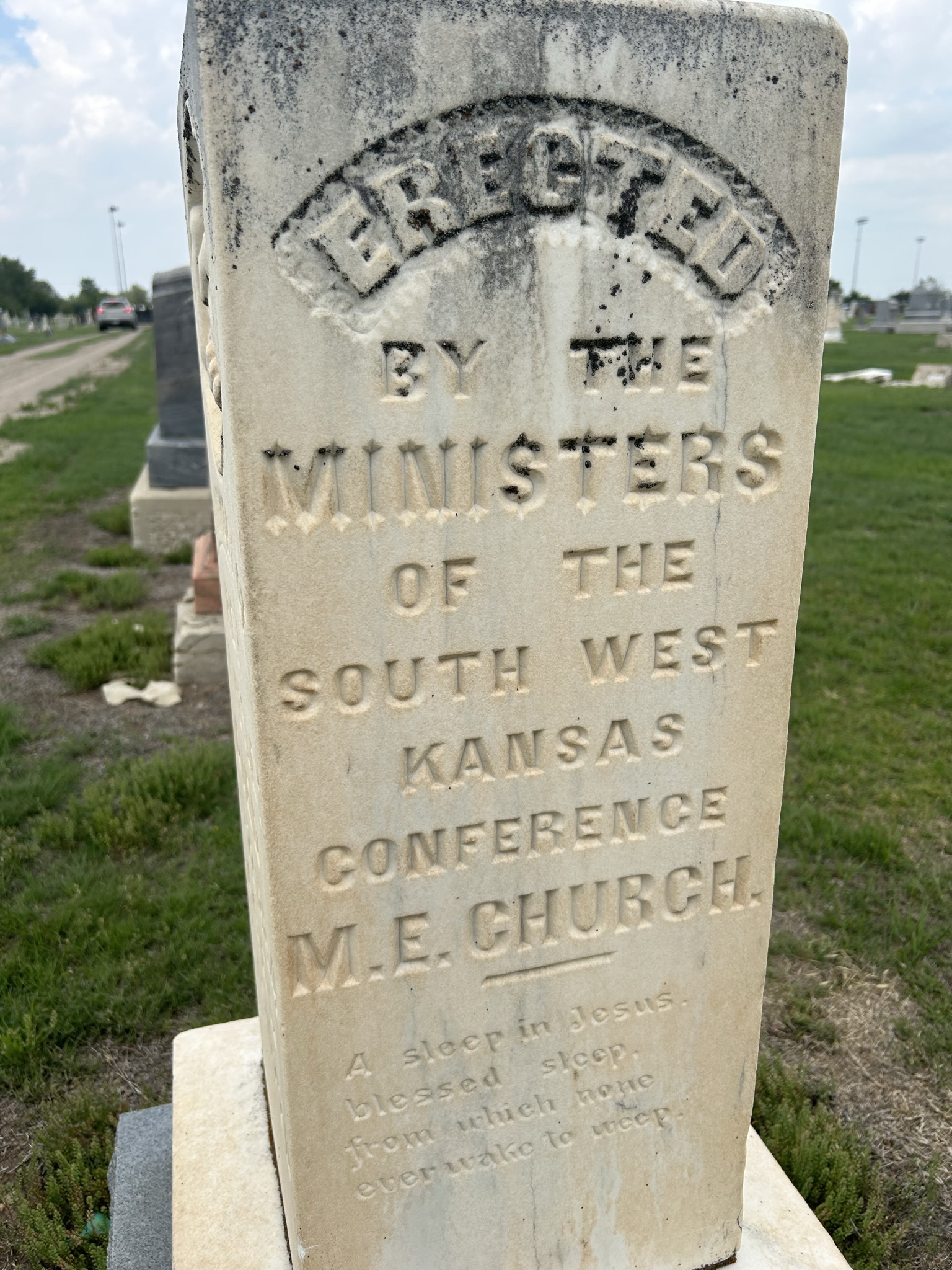
I went up to Kansas, my home state, for Memorial Day Weekend, and took a trip with my family up to Great Bend, the town where my maternal grandparents lived when I was young and where my mom spent part of her teen years. It was the first time I had been in that area since high school, and I was reminded how much I love the small towns and rolling hills of central Kansas.

It being Memorial Day, we were in town to visit and put flowers on the graves of my grandfather, uncle, and great-grandparents. The Great Bend cemetery has an old section, populated with grave stones dating back into the 1870s, when the town was founded. I took some pictures and wandered about, but I was especially struck by this tall stone pillar memorializing a deceased Methodist minister, erected by his fellow circuit riders. There must be some story behind this one.

excerpt #26: the organized church

Organized Christianity seems, in general, to have made peace with “the economy” by divorcing itself from economic issues, and this, I think, has proved to be a disaster, both religious and economic. The reason for this, on the side of religion, is suggested by the adjective “organized.” It is clearly possible that, in the condition of the world as the world now is, organization can force upon an institution a character that is alien or even antithetical to it. The organized church come immediately under a compulsion to think of itself, and identify itself to the world, no as an institution synonymous with its truth and membership, but as a hodgepodge of funds, properties, projects, and office, all urgently requiring economic support. The organized church makes peace with a destructive economy and divorces itself from economic issues because it is economically compelled to do so. Like any other public institution so organized, the organized church is dependent on “the economy”; it cannot survive apart from those economic practices that its truth forbids and that its vocation is to correct. If it comes to a choice between the extermination of the fowls of the air and the lilies of the field and the extermination of the building fund, the organized church will elect – indeed, has already elected – to save the building fund.

Wendell Berry, “God and Country” in What Are People For?