
I’m leaving Facebook. And I think you should too.
I’ve taken two extended breaks from Facebook in the past, one while I was writing my thesis, and one early this year. Both were mainly to allow myself the time and attention to focus on other things I needed to be spending time on; but both were also largely in part to preserve my own mental health from platforms that I see as increasingly dangerous and damaging. Social media has one goal, and that goal is not to good-naturedly connect you with friends and family and create some form of “online community”, or to be a purveyor of the “truth.” This makes for a good PR narrative, but in reality, the goal of social media sites like Facebook and Twitter is to drive ad revenue for themselves and their corporate partners by engaging users, and they have found that the best way to do that is to feed you emotionally-stimulating content. They do this by learning what engages your brain most effectively, and then their algorithm feeds you similar stuff over and over. And what exactly have social media companies learned drives this best? Anger, rage, and hate. Its classic human psychology 101, and these companies know (even if they would never say this in an earnings report or shareholder update) that the best way to keep you engaged and clicking and filling their pockets with ad revenue is to enrage you. Anger is the most visceral of human reactions, and causes us to act in unconscious ways, and these companies know that in the context of a social media platform, those actions will most often be clicking, sharing, and engaging other users. Thus, they work to harness your emotions in a way that is damaging to you, but beneficial to them.
I see this dynamic at work in myself all too often on Facebook. It takes very little prodding to get me scrolling endlessly, getting angrier and angrier at what I see, and then clicking and re-sharing things that, if I took five or ten minutes to calm down and cool off and think rationally, I would never do. To step back from that and realize it is terrifying; its terrifying because it makes you think about how much control these social media corporations have over not just our cell phones and computers, but over the wiring in our brains – in short, how much control Facebook and Twitter have come to have over our humanity. I consider myself intelligent, mentally strong, and emotionally in control over myself; but when it comes to the algorithmic psychology at work in social media, I am little better than a slobbering, screen addicted pair of eyeballs with two working thumbs and an over-stimulated prefrontal cortex.
Its scary and sad for me, as well, to see what these platforms have done to many of my friends and family. Facebook has taken people dear to me, and seemingly twisted them beyond recognition, at least in the digital space. There are people who I know, in the real world, who are kind and good and smart people, but when you encounter them on Facebook (and lets be real, that’s where most of us encounter each other anymore) they are completely different: they become angry, and mean, and thin-skinned, and dumb. I see strong relationships get torn apart over stupid shit on social media, over someone’s comment on something, or their reaction to a post. Its sad, and its infuriating, and it makes me despair for the future of our nation and our humanity.
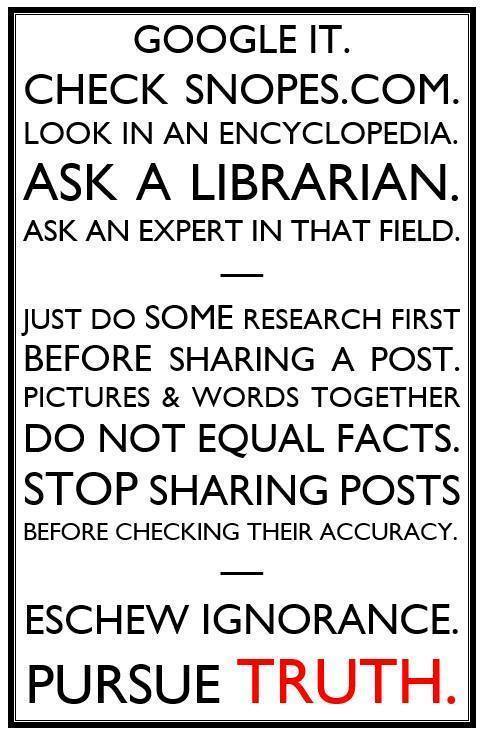
I also have become deeply grieved over what social media is doing to concepts like truth, and morality, and knowledge, and ethics. I am someone who deeply values the pursuit of what is true and good. I have spent a large number of years and an even larger number of dollars doing academic work in theology, ethics, philosophy, political science, and public policy. The discovery and transmission of what is true to so important to me. I have no issue with anyone who believes differently than me on a whole host of issues; I love good debate and argument! But I hate the turn I increasingly see across the whole spectrum of beliefs and positions away from what has commonly been understood as empirically-founded and sincerely-held values about what is true. There is no hope for us as a community if we no longer value what is true more than scoring points or owning the libs or virtue signaling. Far from being bastions for free speech and truth-seeking and good will, Facebook and Twitter have become hubs for misinformation and lies and willful ignorance. It does not matter, for instance, to a good number of my acquaintances on social media that I have sunk the better part of decade in reading, writing, debating, and learning about theology, of instance. If a political or hot button issue is at stake, then my expertise, and the expertise of thousands of others in countless other fields, is denigrated and thrown aside and disrespected. One growing feeling in my own engagement with social media over the last year or so is an intense feeling of disrespect towards the work I’ve done and the knowledge I worked so hard for. I know this sounds very hubristic, but there are a lot of us out here who put in the time and effort to know things, and know them well, and just because you have a keyboard and a social media account and a Google search bar doesn’t mean you are more of a expert on something or have more knowledge than those of us who have earned the right to be respected and heard and trusted on these topics. Experts are an important part of a democracy because none of us has the time or the ability to become experts on everything, or even one thing. Truth matters. Facts matter. Any platform that degrades and tears down truth and expertise and knowledge is not only bad for you, it is a immoral tool working against our shared humanity. I have no doubt in my mind that the state of our world – creeping fascism and nationalism, a pandemic, dangerous leaders, a deeply neurotic and toxic cultural milieu – is driven in large part by social media. I have no doubt that our struggles here in America to do the right thing and face COVID-19 in a fact-informed, well-planned way is in large part driven by social media misinformation and herd-building tendencies.
So, in a few days, I will be deactivating my Facebook and my Twitter accounts. I intend to keep my Instagram, because I have a very small list of things I follow, mostly centered around food and sports and architecture and books and other things I love. I don’t find Instagram, by and large, to be a toxic space. That could change. It is owned by Facebook. I also will be blogging here, I have a newsletter I send out occasionally (and hope to use more) and I’m on Micro.Blog and Goodreads. Hell, I’d love to start an email or snail mail correspondence with you, if you want to be in touch with me; let’s talk for real! Those tools are all more than enough for me.
But beyond me just leaving, I strongly, strongly implore you: leave Facebook and Twitter behind. Do the actual work of maintaining connections, not with as many people as possible, but with those you most love and care about. Find groups of shared interests in less toxic places. Don’t rely on Facebook for your news, or your facts, or your knowledge of what is happening in the world. Put in the effort. Do the work. Read newspapers and legitimate news sources. Find scholarly journals. Reference online encyclopedias. Preserve your mental health. Don’t be a tool and source of money for folks who don’t give a shit about you anyways. Be a free, whole, proud, and liberated human being, out in the real world. Trust me: you will feel so much better. It may be scary at first. It may be hard. You may feel that urge to pick up your phone and dive back in. Don’t do it. Show us how strong you are. You existed before social media. You can exist after it.
 Justin DaMetz